
The spotlight on the outbreak of swine plague could be a contaminated sandwich. The transport sector in Catalonia is burning
Counselor Oscar Ordeig suggested that the African swine plague could arrive by road through a contaminated sausage dumped in a truck transit area and the Spanish Confederation of Freight Transport (CETM) has reacted angrily. They have defended the professionalism of drivers and called for prudence and rigour.


The hypothesis that a sandwich containing contaminated sausages may be at the origin of the African swine epidemic (PPA) detected in Catalonia has caused discomfort in the transport sector. The Conseller of Agriculture of Catalonia, Oscar Ordeig, has explained that there are indications that the disease could have come by road and that boars accustomed to digging in the garbage took remains of contaminated meat.
The Spanish Confederation of Freight Transport has lamented in a statementthe"unfair statements" that "without any evidence suggest that a trucker may be the source of the dumping of the remains of a sandwich." The CETM has argued that professional drivers work "responsibly and politely" and has warned that this conjecture implies "the reputation of thousands of essential workers."
Ordeig has stressed that one hypothesis is only and there is nothing confirmed. The two positive cases have occurred in boars, near the Autonomous University of Barcelona, in an area crossed by the C-58 and the AP-7, where vehicles are constantly circulating and there are service stations where animals can access waste.
CETM considers it "incomprehensible" to focus exclusively on road transport "when technicians, distributors, travellers, tourists or individuals cross the same routes on a daily basis." This generalization "only creates social alarm, confusion and serious harm" and calls henceforth for "prudence, rigour and respect for the institutions."
As the controversy continues, the European Commission has sent a group of veterinary experts to Catalonia to advise on outbreak control. The Generalitat has ensured that farms have no viruses, and in addition to the two confirmed cases, there are eight suspects waiting for the reference laboratory.
To maintain the focus, the Generalitat has mobilized 117 officers from the Military Emergency Unit (EMU), 250 Mossos d'Espadra, rural agents and local police to work on a six-kilometre perimeter in the Collserola Mountains.
The economic impact is remarkable. More than 120 export certificates are still blocked in some 40 countries that do not recognise the regionalisation of the problem and allow the entry of products from all over Spain. Catalonia exports pigs worth EUR 3 billion annually, of which EUR 1 billion go to non-EU countries currently closed as a result of the outbreak.
The Basque Government and the Navarre Government are calling for extreme clean-up measures
In the face of the swine epidemic detected in Catalonia, the Basque and Navarre governments are calling for extreme caution. The first calls on farmers and distributors to strictly comply with the clean-up and control protocols, while the second calls for extreme biosafety measures and increased mountain surveillance.
In fact, the pig sector has some weight in the southern Basque Country, especially in Navarre, with a total of 1,200 pig farms, of which 1,080 are in the foral territory, with more than 827,000 cattle.
In the Basque Country, on the other hand, there are 120 farms with almost 30,000 pigs, of which 20,800 are in Álava, 5,800 in Gipuzkoa and 3,000 in Bizkaia.
You might like

Minister Planas has confirmed that China will implement regional distribution agreements to save pig exports
Luis Planas has explained that restrictions will be imposed on the province of Barcelona and that exports from the rest of the state to the Asian country will be kept open, which means that 41.74% of total non-EU exports are 'safe'.
?fmt=png-alpha&qlt=80)
The Basque and Navarre governments are calling for extreme measures to clean up pig farms
There are 1,200 pig farms in the South, most of them in Navarre.

The Balenciaga Shipyard Works Council has submitted a counter-proposal to the Abu Dhabi Ports Group
This week, employees are expected to meet with the Arab company to discuss their views.

The first mobilizations against the "infraffinity" of the UPV have been "widely monitored"
The unions of the public university have launched a mobilisation campaign to demand "necessary funding" from the Basque Government and have called on the rectorate team to "stand firm".

TOPO's three new underground stations in San Sebastian will be operational in the second half of 2026
The two access cannons to the Centro-La Concha station are "well advanced", according to the Basque Government. If the forecasts are met, the three new underground stations of the TOPO (Bentaberri, Centro-La Concha and Amara-Easo) will be operational in the second half of 2026.

The Bizkaia Transport Consortium has agreed to extend the 40% discount until 20 February 2026
From January 1st, until February 20th, children will be kept free until they turn 14, and there will be discounts on Youth rates and other multi-trip subscriptions.

The mayor of Zumaia has expressed concern about the trading conditions of the Balenciaga shipyard
Iñaki Ostolaza asks that the working conditions of the workers be the same as those established by the judge to close the sale valued at 11.2 million euros, but with the Works Council the approval is necessary.

UPV unions have called for stops and rallies to demand "more public investment."
The protests will take place from Monday to Thursday. On the one hand, stops have been called from 11:00 to 12:00. On the other hand, rallies will be held at 11:15, depending on the day on one campus or another.
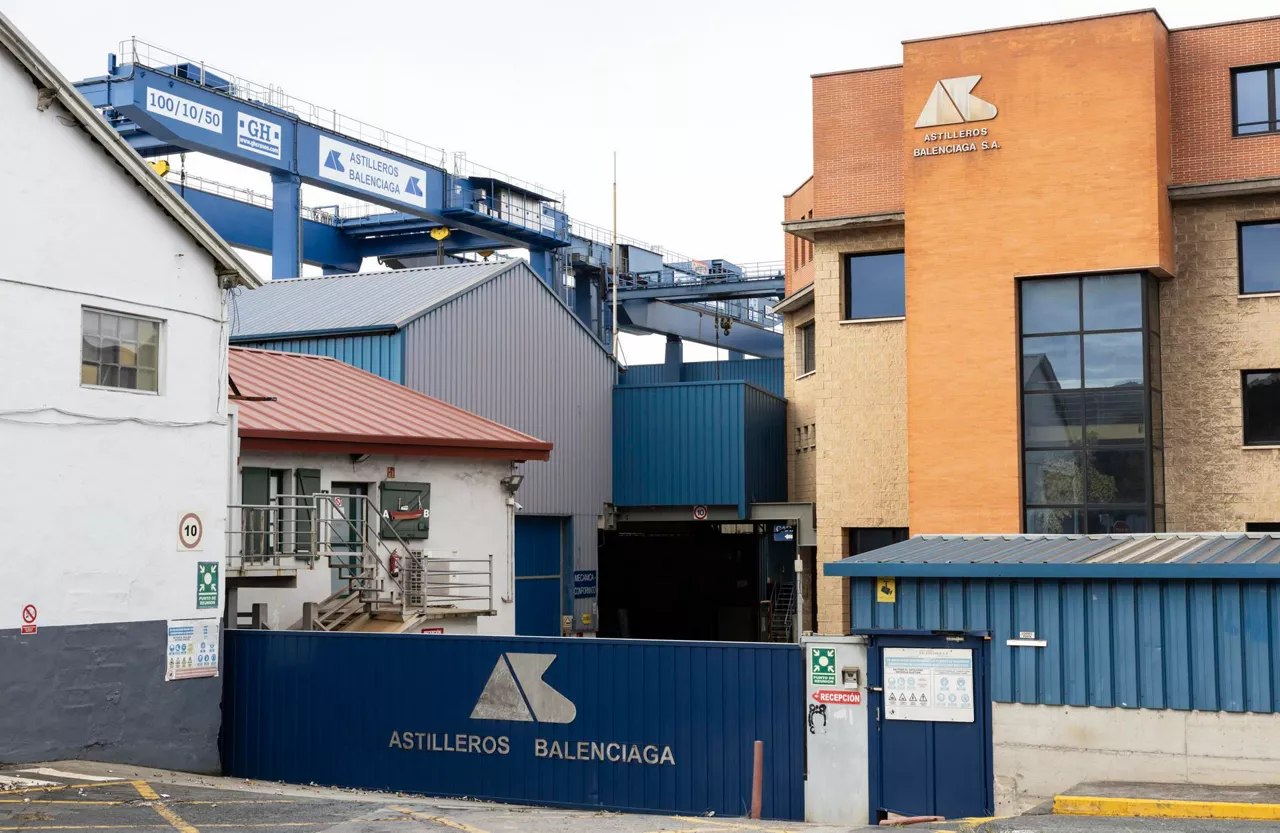
Balenciaga shipyard has signed a sales protocol with the Arab company Abu Dhabi Ports
The Works Council has not yet approved the sale, as EITB Media has learned. The agreement has been signed following intense negotiations this weekend.