
Pepo Márquez: "There is no longer any harmful cultural consumption"


Last year marked a milestone in the live music industry. Macroconcerts, gigantic performances, consolidated their hegemony as the main expression of live music, whether in the media or in the minds of citizens. No one seems to want to lose the sessions of artists that we now hold passively, driven by the algorithm of playlistsor the corresponding streaming platform.
In the midst of the genocide against Palestine, the media El Salto published an article about the participation of the KKR fund, an investment group interested in the military industry and Israeli settlements in Palestine, at various festivals across Europe (Superstruct Entertaiment: Sónar, Viña Rock, Resurrection Fest, Sziget, FIB, Wacken Open Air...).
Jaialdiak
Fermin Muguruza eta Kaotiko ez dira Viña Rock jaialdira itzuliko

In theessay Antineutral , artist Pepo Márquez (Madrid, 1978) (The Secret Society, Grande Marlaska...) and music workers (Universal Music, PIAS, YouTube Music, Rock In Rio, Rolling Stone, The State Union of Musicians, Performers and Composers...) have tried to understand and understand where we have come to go this far, and have tried to make a review of this confusion. "
The book, published by Last Tour, the publisher of the Bilbao promoter, deals with issues such as the ethical economy, the moral economy and the symbolic value of music, and invites us to move from being part of the problem to participating in the solution.
The introduction of investment funds into festivals and the sale of song catalogues has shaken the "cultural sense" of the music industry, as you say in the book.
When I refer to the "cultural sense" of the music industry, I am not referring to a romantic essence or to a moral superiority of certain scenes over others, but to a framework of priority, that is, to the criteria on which decisions are based.
I believe that for there to be a cultural sense, economic logic — indispensable in any industry — cannot be an absolute basis, but a means of protecting a diverse, imperfect and, above all, not entirely predictable creative ecosystem.
Cultural sense is lost when music ceases to be a cultural asset with social, symbolic, and political connections, to be a mere financial asset with a profit.
I don't think it's a clear limit, but there are certain symptoms to help define it: that artistic risk becomes an anomaly that needs to be justified before a financial committee; that festival programming is designed according to the models for obtaining investment returns rather than a narrative culture; that an artist's career is valued according to his ability to generate stable exploitative flows rather than his creativity or his ability to spread scenes; and, above all, that diversity becomes a cosmetic variable rather than a structural bet.
In this context, the "cultural sense" does not completely disappear, but remains in the background, becomes merely decorative.
At what point did this change take place?
I set 2017, rather than a strict date of creation, as a symbolic moment, a year in which a process that had been in the development phase for years was visible - and accepted without much complexity - in which financial capital was boldly incorporated into two areas that had hitherto enjoyed greater cultural autonomy.
On the one hand, the festivals. At that time, the axis of the growth model stopped consolidating local projects and distinctive curatorial identities, and scalability, concentration and international standardization took centre stage. Great groups, festival platforms, cross-shopping and brand synergies stand out.
On the other hand, the massive purchase of catalogues, where the change of course is all the more explicit: the song ceases to be a mere work and becomes a financial resource with a measurable level of profitability, at the level of any other asset with recurring income. The logic of the investment fund is neither cultural nor anti-cultural: it is purely fiduciary.
When I say, "The age of the innocence of festivals ended in 2017," I'm not saying they were pure first places or out of the market. They were always companies. What's over is putting culture as the structural axis of the project, justifying everything else.
The song ceases to be a mere work, and becomes a financial resource of a measurable degree of profitability.
From that point on, the cultural narrative moves on to play the role of added value, a clear main reason, undoubtedly, in a model of financial profit; the most troubling thing is not the inflow of capital itself. The most disturbing thing is that, when the rules of the game are set by capital, the ecosystem is no longer designed to create culture — leaving room for error, conflict, and failure — but to generate lasting profitability.
How did we get here? How and when did we go, as you say inAntineutral , from buying the entrance to a concert of our favorite band with complete innocence to somehow contributing to the genocide in Gaza through our consumption?
I wanted to break the idea that cultural consumption is a politically harmless space.
We're not saying that buying a ticket is financing a bomb. That would be a caricature. In Antineutral, I'm dealing with something structurally, and that's why it's harder for us to accept: all our cultural consumption movements belong to global financial circuits that no longer make a difference between sectors.
A very long process of the disappearance of cultural mediation and progressive financing have brought us here.

Cover author: Santiago Sequeiros
For decades, when you bought a ticket to see your favorite group, the money came and went within a fairly limited chain: promoter, salon, artists, technicians, local vendors, some sponsor. The ecosystem was imperfect, unbalanced, but easy to recognize.
The process of decommissioning this circuit began when the source of the financing – or order – of the industry began to be, instead of its own income, external capital. And here's the point: financial capital has not entered the business to maintain culture, it has been introduced to integrate that culture into a list of assets. From there, a festival, a promoter, a ticketing company or a musical catalog are not cultural projects that require investment, but resources for profitability used by funds that also invest in energy, weapons, infrastructure, real estate or surveillance technology.
How does this leap come about? First of all, by normalizing culture as another sector of the financial market. It starts by calling music "active", festivals "platforms of experience", artists "brands that can be exploited in different vertices.
When large groups take over festivals, promoters and catalogues, cultural structures become pieces that can be exchanged within holdings and investment funds, and when a company ceases to be independent, it ceases to decide on the ultimate purpose of the value it produces.
And finally, our disconnection from the property chain is complete. Nowadays, when you buy a ticket, you don't know — and you can't easily know — who is the ultimate beneficiary of that income. Opacity is not a system failure. It's a prerequisite for the system to work.
Opacity is not a system failure, it's a prerequisite for the system to work.
That is why I say that we have gone from buying a ticket through our consumption to indirectly encouraging the dynamics that sustain structural violence, such as the genocide in Gaza, because the money that we generate as a public no longer stops on the cultural circuit, goes into global funds that allocate that money to sectors and activities that are directly involved in conflicts.
The key is that "indirect." That's what limits the change of era. It used to be where the space of political conflict of cultural consumption was expressed: what messages were spread in songs, what speeches were circulating, what imaginary was spreading. Now, the main political conflict lies in that financial infrastructure that allows that consumption. And that imposes another phase of responsibility that is much more uncomfortable to us, because it does not require censorship or individual boycotts based on the moral level.
When I say that there is no harmful cultural consumption, I am not asking for cleanliness. I am pointing out that the system has been adapted. If we have come this far, it is because we have accepted that the only way to maintain the cultural industry was to leave it to global financial logic, almost without a few public debates.
The most uncomfortable thing of all is that nowadays, the consumption of music, festivals or entertainment does not place us outside the conflict, but within those same economic structures that make it possible.
The consumption of music, festivals or entertainment does not place us outside the conflict, but within those same economic structures that make it possible.
The symbolic value of music (it has the power to create, modify, and assert individual and collective identities) is an advantage or an obstacle to its commercialization?
Both, but not on the same level. The symbolic value of music allows music to be marketed with great success, but at the same time it is a major obstacle to the transformation of music into pure merchandise.
The advantage is clear, because Music is not bought as a mere product, but as an identity device: it puts you within a group, it provides you with explanatory material about who you are, it connects you to others on an affective level. This multiplies its economic value, its ability to loyalty and its cross-sectional exploitation.
But it's also an obstacle, because that symbolic value is not fully programmable. It doesn't come from zero in an office and it doesn't impose itself through investment. It needs the scene, the conflict, the social context, time and cultural legitimacy.

Capital does not produce meaning, but acquires a sense that has arisen outside of its logic. And that is where the tension manifests itself: the more it tries to optimize this symbolic power, the greater the risk of being emptied of what makes it valuable.
Beyond the investment funds that seek direct economic gain, many other companies approach the festivals, even if their message, their practice and their ideology are against the groups that play in them and those who attend them. What do they protect these festivals for and why do they occupy these symbolic spaces?
They seek symbolic legitimacy. No visibility, no fame, no arrival. That's the surface. At a festival they don't buy an advertising medium, but a complete change of meaning from one to the other. A brand associated with a festival does not want to convey to the public that its company is prominent on a cultural level. It has a more effective goal: to integrate it into a space that is already considered valuable, progressive, creative and aligned with various imaginations at the political level.
The festival is an environment of appreciation in which the public relaxes the mechanisms of protection, since it is not in an explicit context of consumption, but in an area of experience, community and common being, which allows the brand to have room to take on a symbolic space that otherwise could never be built.
What are they looking for? They want to narrow the gap between real activity, whether at the level of production, work, environment or geopolitics, and the identity they want to spread.
What do they get? They get normalization, not ideological attachment, but something that's more useful to them: hiding the contradiction.
When a brand is permanently embedded in a cultural space with a clear identity, experience melts the conflict between the business model and the values of the public. It's not resolved. It's left to sleep.
In the meantime, paradoxically, music has lost social value. Most auditions are filtered by platform algorithms and the funding of music that is heard has ceased to be correct (the listener does not pay for what he listens to, the platforms distribute money and the listeners receive the most). What consequences does that have?
The main conclusion is that music no longer articulates the community, it articulates the flow. When audition is crossed by systems of recommendations, the relationship between the listener, the play and the scene weakens. Not because people listen to less music, but because that listening exercise is no longer based on a known social context.
Music no longer articulates community, it articulates flow
This has three clear consequences: the first is the functional disappearance of local scenes. The scenes are built not only on geographical proximity, but also on relational, prescriptive and mutual recognition circuits. When this prescription is not in the hands of cultural agents (rooms, media, shops, programmers, communities) but also in the hands of global platforms, it loses the power to organize scenes.
The second conclusion is that projects that are not compatible with algorithmic logic disappear from the structure. The algorithm does not discriminate on the basis of ideology. It is based on form: duration, hearing appeal, audience profile, consumer sustainability. It punishes the unpredictable. This closes the way to the center of the system to weaker, slower or more positioned proposals.
Thirdly, there is indirect uniformization of the offer, not because all artists have the same sound, but because they all compete under the same performance criterion. Aesthetic diversity does not disappear, but the patterns of itineraries and walking along that path are scarcer.
And at the economic level, the distribution of money imposes a definitive slide: nowadays, the listener does not subsidize what he hears, but what maximizes the volume. This breaks the symbolic link between protection and consumption, and brings the survival capacity of many agents — small stamps, niche artists, peripheral scenes — to scale levels and not to the ability to form community.
When information was published about the role of the KKR fund in the structure of some festivals, the eyes were on groups and artists, not so much on the public. Why did the morality of the decisions of artists and not so much the direct responsibility of the public come to the fore?
Because it's easier to bring conflict to a personal level than to politicize infrastructure.
When information emerged about KKR & Co. Inc. 's participation in the festival structure, the attention system quickly turned to artists with faces and relays.
It's easy to question a group: a public attitude, a gesture, you're asked to give up something. To question the public would require something more uncomfortable: to recognize that the problem is not in the person who climbs on stage, but in the way we collectively participate in an economic circuit that we maintain through our consumption.
Through the figure of the artist, the structural problem becomes an individual dilemma, which is of great use both to the industry and to the public itself, without prejudice tothe logic of ebento, ticket, and experience.As you put it in the book, it's what the Fugazi group used to say in the song "Blueprint," isn't it? "Never mind what's been selling/It's what you're buying/And receiving undefiled."
Those Fugazi verses have been circling my mind for three decades, day by day.
What loopholes do the public and artists have left in front of this giant structure model?
The possibilities are scarce, but there are, and I've picked them up in the book. The only lever available to the public is to direct their protection to traceability circuits: rooms, cycles, stamps and festivals with clear property structures and rooted in the territory.
For artists, the main option is to regain collective bargaining power. At the individual level, there is no real gap between giant structures. Disruption must necessarily be coordinated.
Yes, but it's a tactical, not a structural, interval: clauses, positions in society, symbolic vetoes, celebrity pressures. It can show disagreement, but it doesn't change the basic logic. It serves to buy time, not to change the model. The only viable counterweight is to somehow organize the music sector, in the field of labor relations, at the transnational level.
Many of these festivals, whether they are involved in investment funds or not, are supported by public money. What do you think institutions should put in place to grant this aid?
If the money is public, the aid should not be linked to aesthetics, it should be structural.
I think there are four clear axes:
First, real transparency in the structure of property and the flow of profits. No organization should subsidize an initiative without knowing (and revealing) who will ultimately receive the value that will be generated.
Second, linking them to working conditions. Verifiable standards in hiring, minimum fees for artists and technicians, no outsourcing that causes equality and precariousness among suppliers.
Third, a necessary return to the territory, not in terms of tourist attractions, but in terms of the ability to integrate into the cultural fabric of the territory: programming local artists, stable collaboration with rooms, agents and non-commercial projects, and continuous circuits beyond what happened .
And four, clauses of ethical incompatibility in financing. Not from an abstract morality, but from institutional coherence: if an administration has commitments in human rights or public policies, it cannot subsidize infrastructures involving capital acting in contrast to these frameworks.
You might like
ETS, Nøgen, Hofe, Danielle Nicole and Ibibio Sound Machine at the Zurriola Jazz Festival
The 61 San Sebastian Jazz Festival has announced the names of the groups and artists who will offer free concerts on the beach of La Zurriola, at the Keler Complex, from 22 to 25 July.
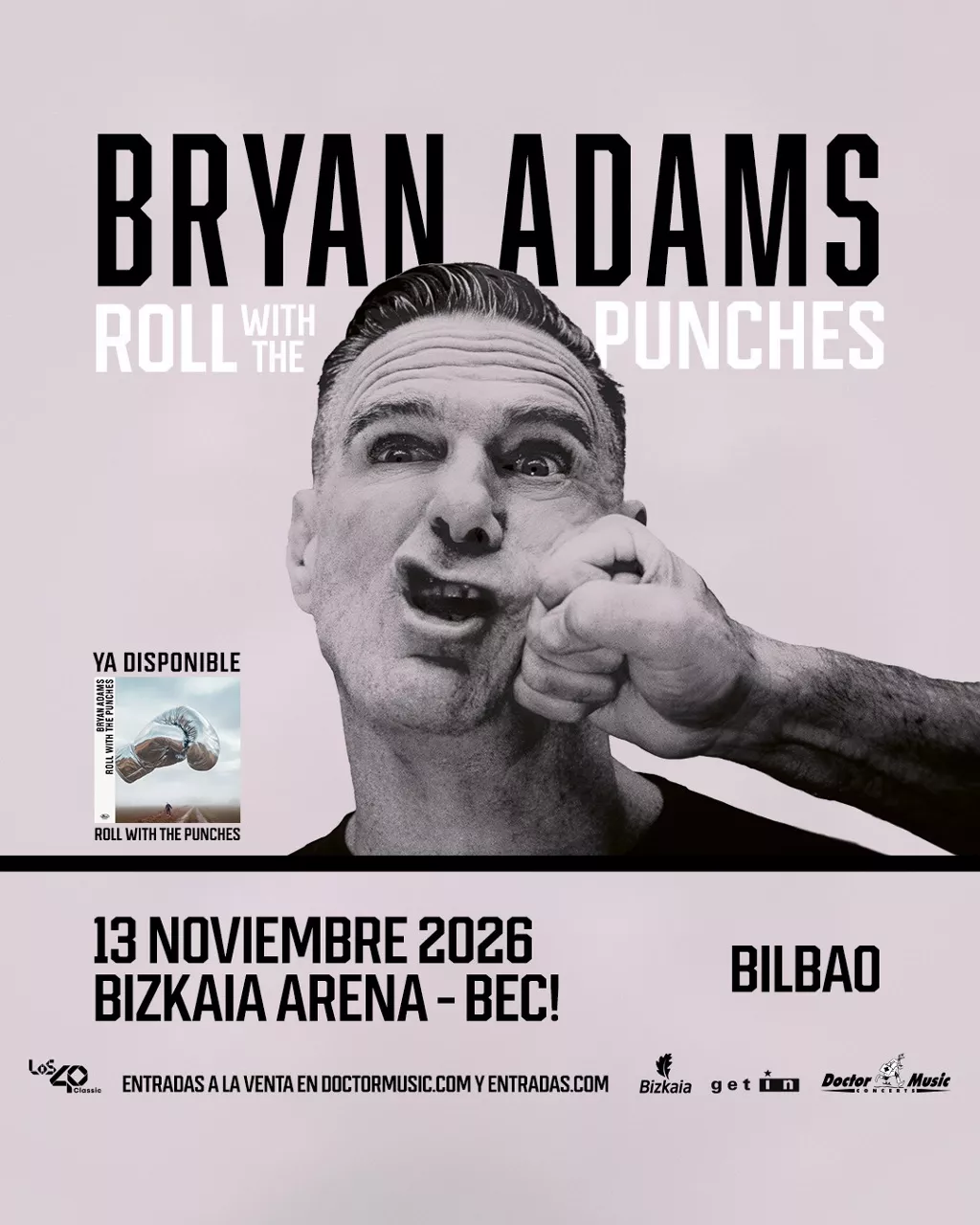
Bryan Adams will play at BEC! on November 13 as part of his "Roll With The Punches 2026" tour
Tickets will be on sale on March 6 at 10:00, from 43 euros on the stands and 62 euros on the track.
Leire Martinez joins the Bigsound Barakaldo poster
The Guipuzcoan singer will perform at the July 3 and 4 festival in Barakaldo with Myke Towers, Lola Índigo, Juan Magan, Omar Montes, Ignacio and Ben Yart.
Ruben Blades plays at the Vitoria jazz festival
The Panamanian musician will perform on July 17 in Mendizorroza accompanied by a big band of 20 musicians.
Janus Lester announces new albums and tours
The Navarro musician will present his new album in December 2026 at the Euskalduna Palace (19) and the Kursaal of San Sebastián (26).
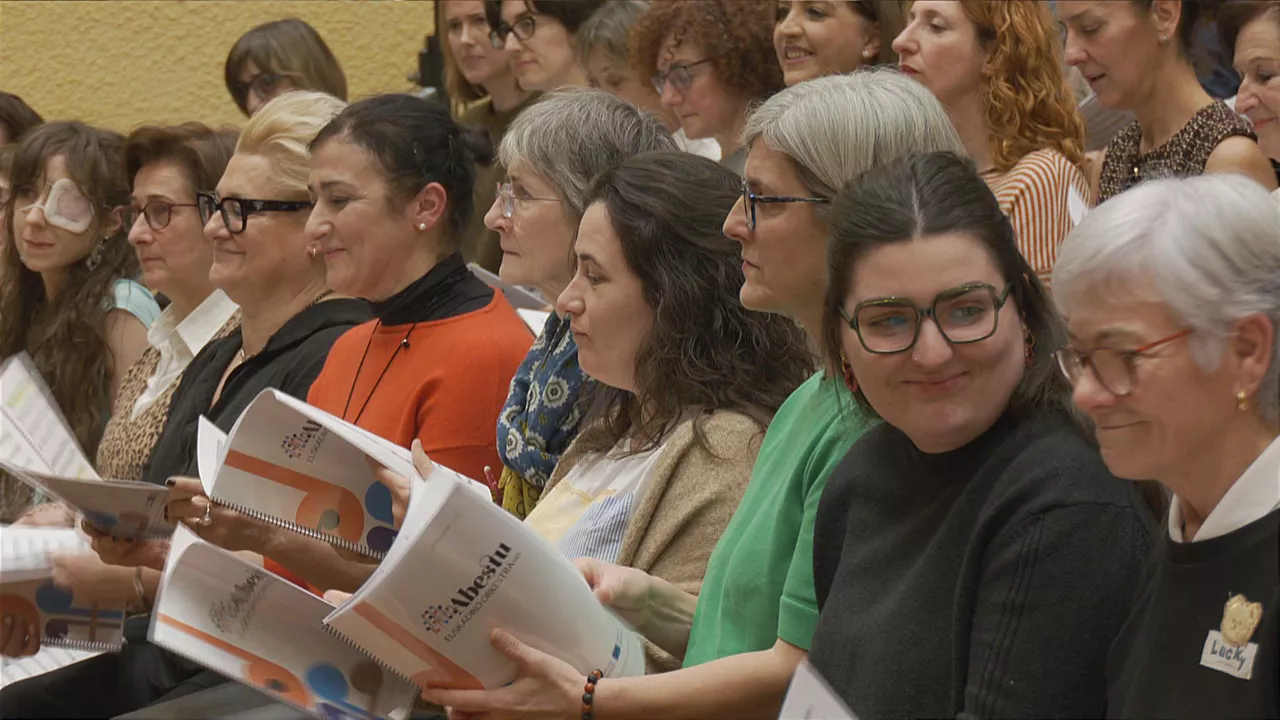
Chorus of 132 amateur singers rehearsing with the Basque Orchestra
The second edition of the project Sing with the Basque Orchestra has reached its equator and the sixth of the ten popular choir preparatory rehearsals have already been held. For two months, every Wednesday, 132 non-professional singers selected by drawing lots from 600 candidates have been working together with the Basque Orchestra to take the stage.
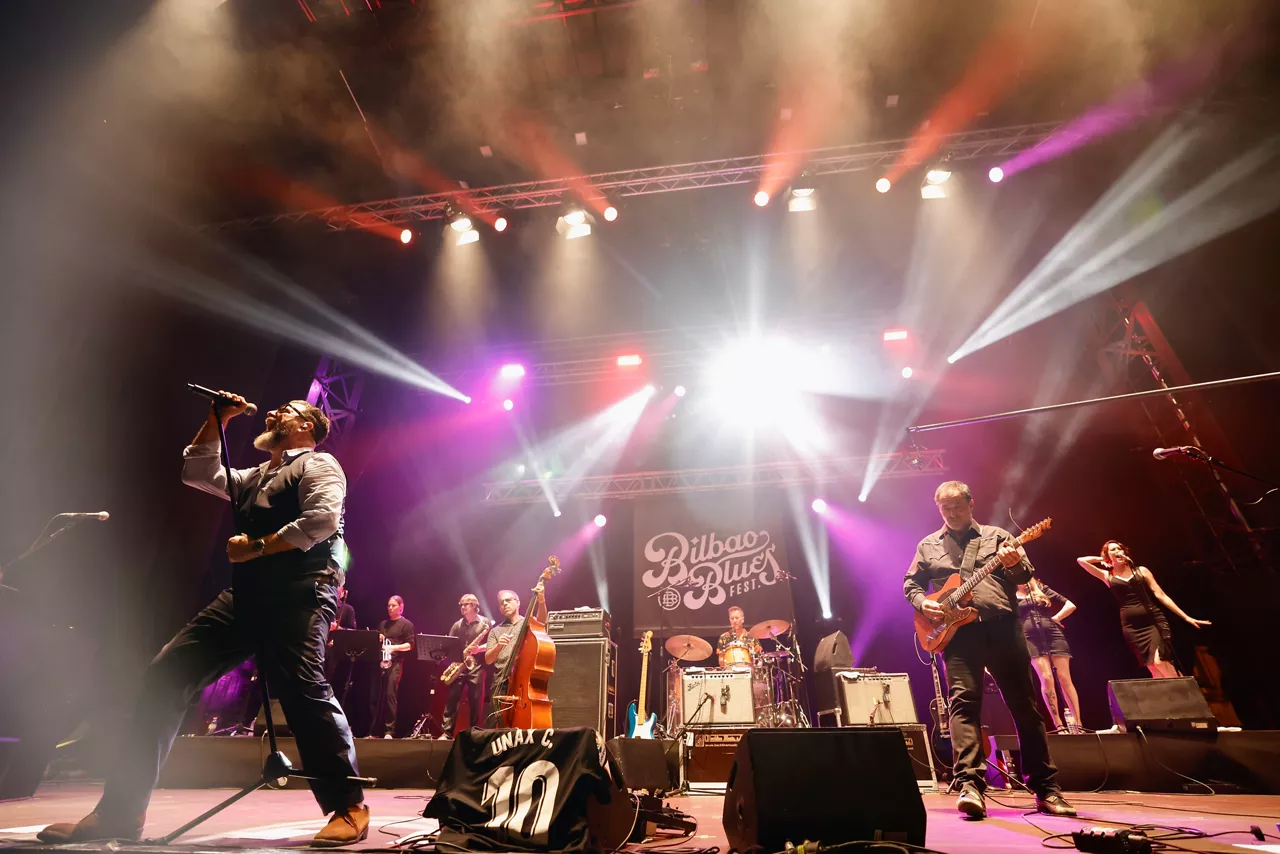
Bilbao Blues Festival premieres a Travellin "Brothers in its quinta edition
The festival offerá más de una decena de conciertos gratuitos entre los días 24 y 26 de julio. El grupo de Leioa recibirá la txapela de honor del festival.
Señea's stay will bring music closer to young people
Señea Bizkaia Rock Campus offers young people between the ages of 14 and 17 the opportunity to learn with "first-class Basque artists".
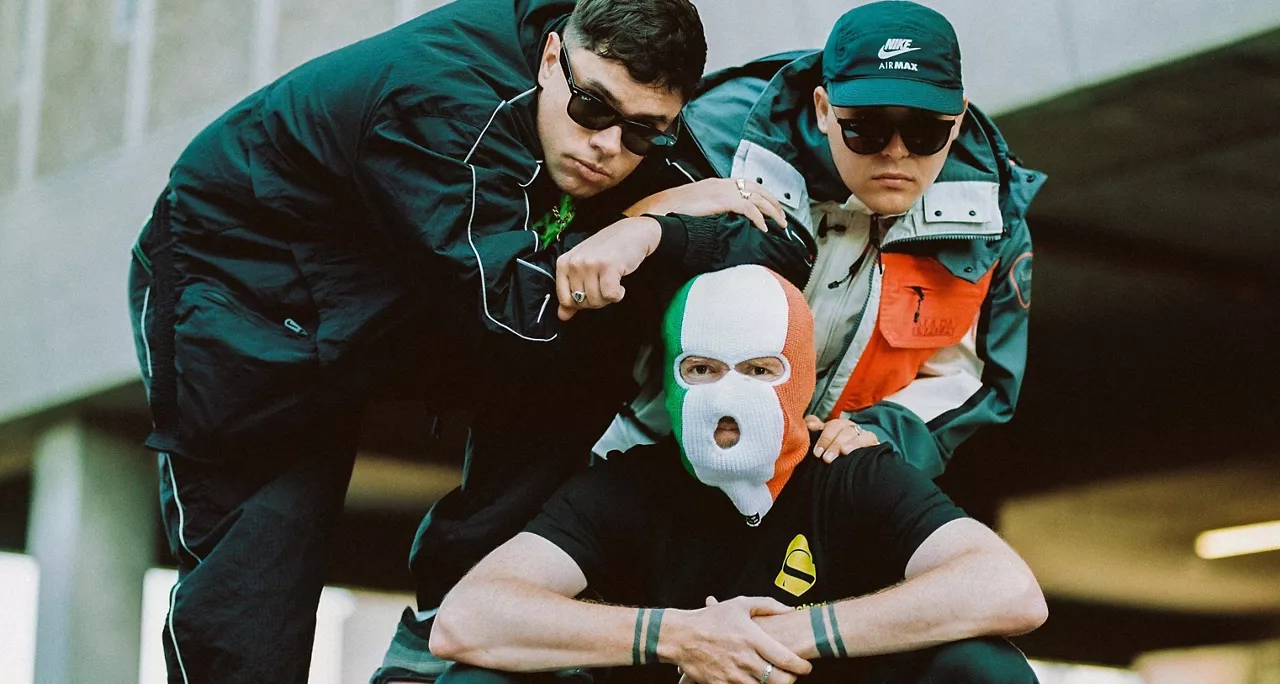
Kneecap will return to Bilbao in June
After playing in last year's edition of the Bilbao BBK Live festival, the Belfast trio will present its new album, "Fenian", this time in the Santana 27 room on June 8.