
Ocean temperature broke every record in 2025
Ocean warming is not uniform, and the hottest areas are tropical and South Atlantic, North Pacific and Southern Ocean, according to a study by 31 organizations and more than 50 scientists around the world.

Corals at the bottom of the sea.

The world's oceans accumulated more heat last year than in any other year, since modern measurements began, and again reached their historic peak, as in the previous nine years. Moreover, oceanic warming is not uniform: the hottest areas are the tropical ocean and the South Atlantic, the North Pacific and the Southern Ocean.
31 organizations around the world and more than 50 scientists have participated inthe research published this Friday by the journal Advances in Atmospheric Sciences .
According to this, by 2025 heat grew by 23 cettajuls, equivalent to 37 years of primary energy consumption in the world (natural sources used to produce electricity or petrol, such as oil, coal or natural gas).
Similarly, ocean warming is not uniform, and some areas are warming faster than others: by 2025, about 16% of the world's ocean surface had broken all records, and about 33% was among the three hottest values in its historical records.
In addition, the study shows that oceanic warming is clearly gora from the 1990s to its historic peak in 2025.
In 2025, the overall average annual temperature of the marine surface was the third warmest since records were recorded, and remained approximately 0.5 ° C above the reference average of 1981-2010, although slightly below 2023 and 2024.
Experts have pointed out that the rise in ocean temperature causes sea level rise , heatwaves and extreme weather events increase and prolong like floods.
The ocean absorbs more than 90% of the excess heat captured by greenhouse gases , making it the climate system's main heat reservoir.
You might like

They found the body of the man missing in Olite
They've been looking for the old man for six days, and this Friday they found the body of ha on a rural road between Olite and Beire.
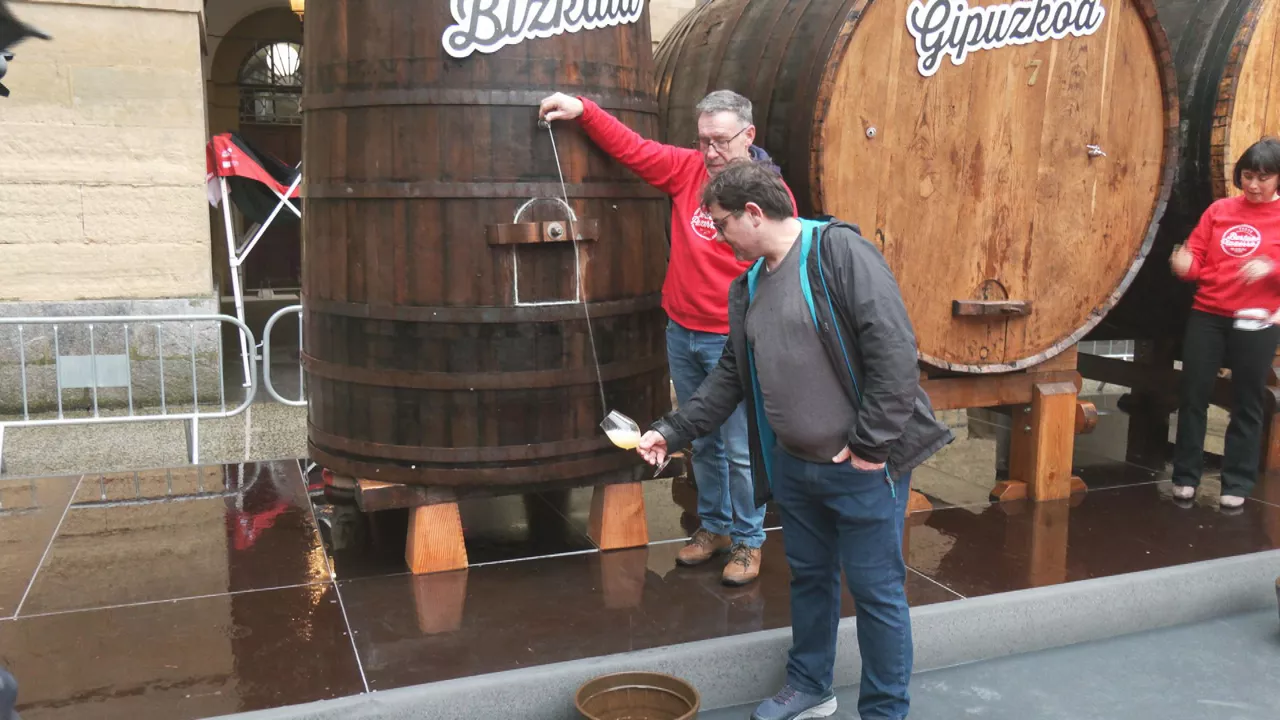
Euskal Sagardoa sidreries have produced 3.1 million litres this year
The 46 sidreries attached to the Euskal Sagardoa Designation of Origin have produced 3.1 million litres of drinks for the new campaign, using 4.4 million kilograms of apples from local fruit trees.
A driver died in an accident at the N-121-B off Arizkun
The accident took place at kilometre 53, off Baztan, and medical personnel, firefighters, ambulances and Foral Police patrols have moved to the scene.

Gipuzkoa plans to vaccinate 42,500 cattle against nodular dermatosis
Gipuzkoa will vaccinate 42,500 cattle against nodular dermatosis during the mandatory vaccination campaign that began this Friday in the territory and will be completed within approximately two months on 1,900 farms.
The two billiards imprisoned in Venezuela have arrived in Madrid
Basque Government Foreign Secretary Ander Caballero said on Radio Euskadi this Friday that Basoa and Martinez "are pretty good."
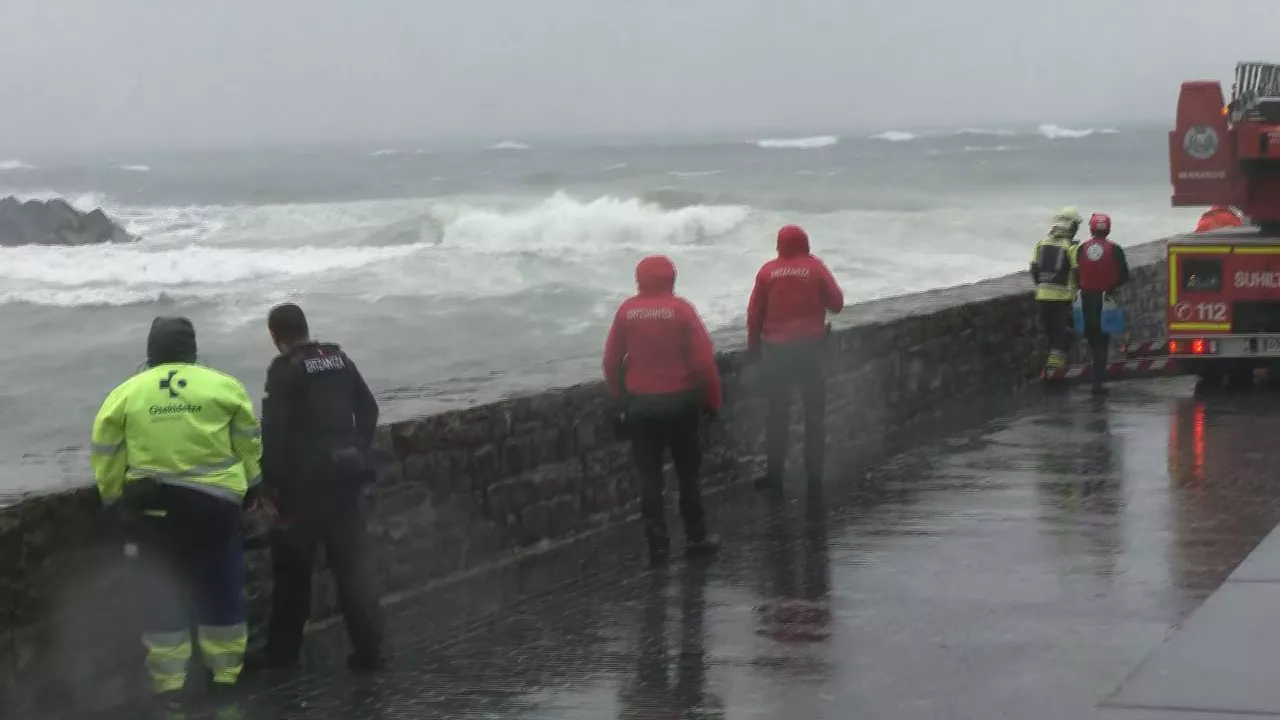
A person died after falling into the river in the vicinity of the Kursaal Bridge in San Sebastian
This is an elderly man who fell into the sea in the morning and died.
Emergency services are looking in San Sebastian for a person who has fallen into the sea
According to the Department of Safety and Security, a witness has reported that a person has fallen into the sea in the Zurriola spigot, where there is strong wind and strong swell, where firefighters, an ambulance and Ertzaintza and local police patrols are deployed.

The two billiards released by Venezuela are "pretty good," according to the Basque Government
In statements to Radio Euskadi, the Secretary of Foreign Affairs of the Basque Government has complained that during the 15 months of detention they have not respected their rights and have suffered a "very serious" situation.

Mali asylum seekers living on the street in Vitoria are transferred to centres run by the Basque Government
Some 30 Malian refugees living on the streets of Vitoria-Gasteiz have been temporarily transferred to various centres of the Basque Government. The Counsellor for Welfare, Youth and Demographic Challenge, Nerea Melgosa, has asked the Spanish Government to fulfil its "obligations" and to restore the administrative status of asylum seekers in Mali.