
A glaciation more than 80 million years ago in Barrika, Bizkaia, has put climate models in doubt
This discovery would reject the possibility of an ice-free Earth planet in the Cretaceous, and break with the idea that it is rooted in the scientific community c that the climate of that time was extremely warm, to the point of being one of the highest temperatures in the history of the planet.


An international team of 16 researchers from Spain, the United Kingdom, France and the United States, led by Juan Pedro Rodriguez-Lopez of the University Institute for Environmental Science Research (IUCA) of theUniversity of Zaragoza (Unizar), has found that there was a glaciation in the cliffs of Barrika (Bizkaia) during the Cretaceous – 82.8 million years ago and 80.96 million years ago – which has forced a rethinking of past climate patterns because they are "very low" latitudes.
This discovery would thus refute the idea that it is deeply rooted in the scientific community: that in the Cretaceous, and in general in the Mesozoic -- between 252 and 66 million years-the Earth lived in a state of 'super-greenhouse', with a very warm and ice-free climate, and reached one of the highest temperatures in history, according to Unesco.
TheBarrika Glaciation, identified on the cliffs of Bizkaia , shows irrefutable evidence of 'tidewater glacier' or 'tide glaciers' at very low latitudes, around 35 ° N, just during the period when it is one of the hottest Mesozoic models.
The ice fronts of these glaciers sailed directly into the ocean for 1.84 million years, and large icebergs were released directly from the front of the glaciers into the sea water. These blocks of ice and the dynamics of the glaciers themselves left glacial deposits between 82.8 and 80.96 million years in northern Iberia.
Paradigm shift
"300-255 million years ago, no evidence was found of glaciers reaching the sea from the icehouse of the Permic Carboniferous," explains Juan Pedro Rodriguez-López. In the case of Barrika, the discovery is "a paradigm shift that forces us to question the very basis of paleoclimatic models , at least in the Mesozoic. "
"The data documented in the barrel require a thorough assessment of the paleoclimatic indicators currently used, and the geochemical instruments used to reconstruct past temperatures suggest a systematic overestimation of Cretaceous paleotemarma, "the researcher said.
This is important, because understanding these past events depends on the accuracy of future projections of global climate change.
Thus, Barrika's research provides critical data for refining global paleoclimatic models and understanding the Earth's system's response to extreme global warming conditions.
You might like
The future of the Guggenheim project for Urdaibai is about to be clarified
Today the board of the Guggenheim Museum will hold a deliberative meeting. As EITB learned a few weeks ago, the majority will support the withdrawal of the project.

A trucker died in an accident at the AP-8 in Irun and the road was cut off in the Baiona sense
Two trucks have been involved and one of the drivers has been trapped, causing queues of about five kilometres.

600 Biscayans over the age of 65 are participating in a project to learn to live longer and better
The study of the Biobizkaia Institute aims to prevent addiction and protect health, but it doesn't just stop at medical exams. Participants also enjoy nutrition talks, microbiota and habits to help them improve their well-being.
The Spanish Government will promote the accession of the Basque Country and Catalonia to UNESCO and the International Tourism Organization
In addition, the Spanish Government has called for a "broader statute" that allows "the development of the cultural and tourism competences of these territories", an announcement that President Pedro Sánchez has framed in the agreements with Junts.

The Government will create artificial marshes and raise the levels of future buildings to cope with rising sea levels
In the worst-case scenario, sea levels could rise by 0.72 metres by 2100, which will directly affect 32% of the Basque population (more than 700,000 people) of the river valleys on the coast or near the mouth, and the Basque Government has therefore initially approved the Territorial Sectoral Plan for the Protection and Management of the Coast (PTS).

A man has been arrested in Santurtzi for wearing 2,070 counterfeit Athletic T-shirts
The material seized would have a market value of 132,000 euros, according to estimates by the Bizkaia Civil Guard. The detainee is charged with crimes against industrial property a0.

A man has been arrested in Álava on charges of manipulating photos of minors with AA and creating child pornography
According to the police, the detainee took pictures of minors on the street or in public pools and manipulated them with artificial intelligence to appear naked.
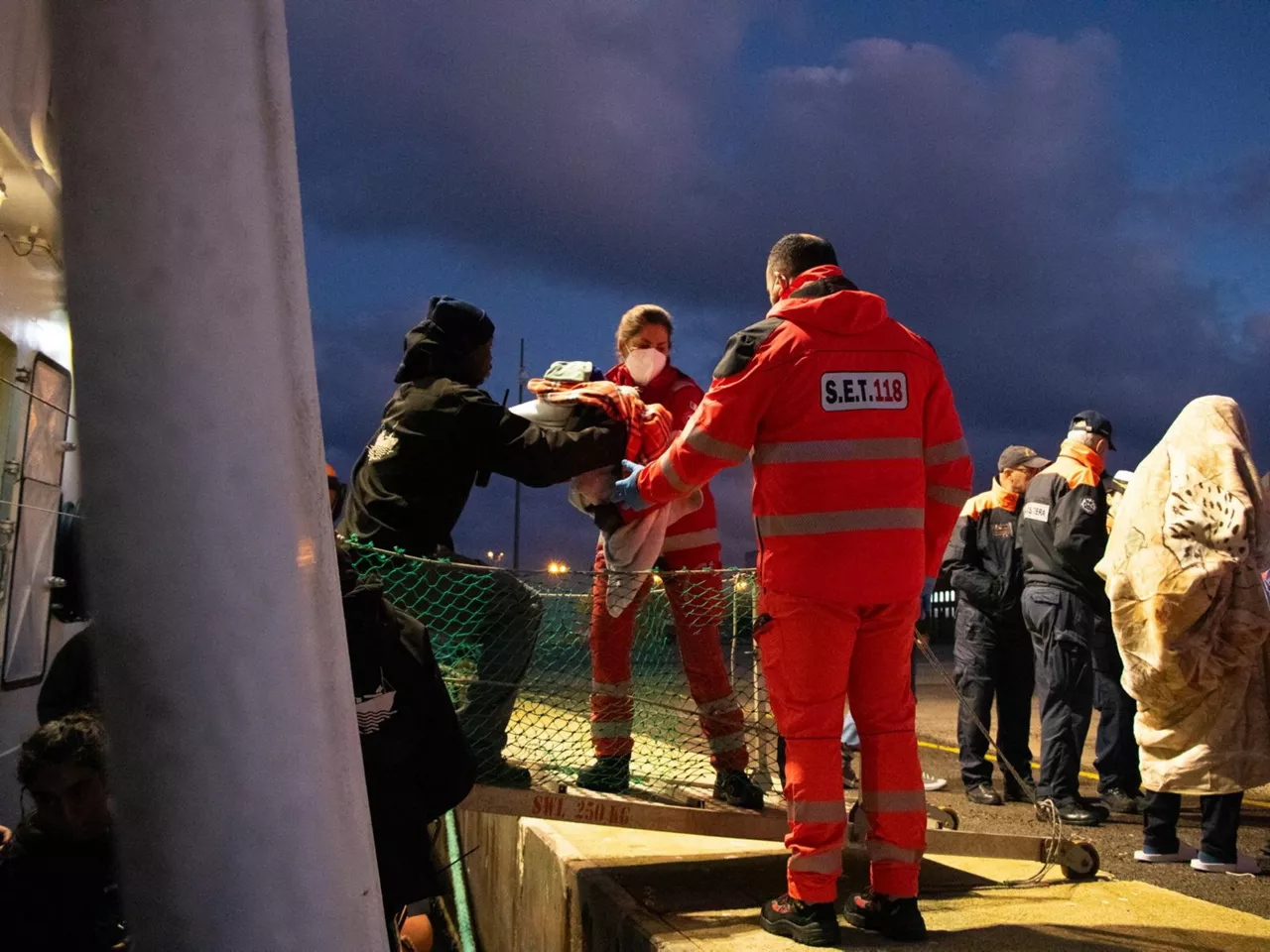
Father Mari has landed 53 people in Italy after three days of sailing
Father Mari has landed 53 of the 56 rescued in the Mediterranean last Friday at the Italian port of Brindisi, where the two-month-old baby and his parents were treated by the Italian Coast Guard for extreme malnutrition and dehydration.
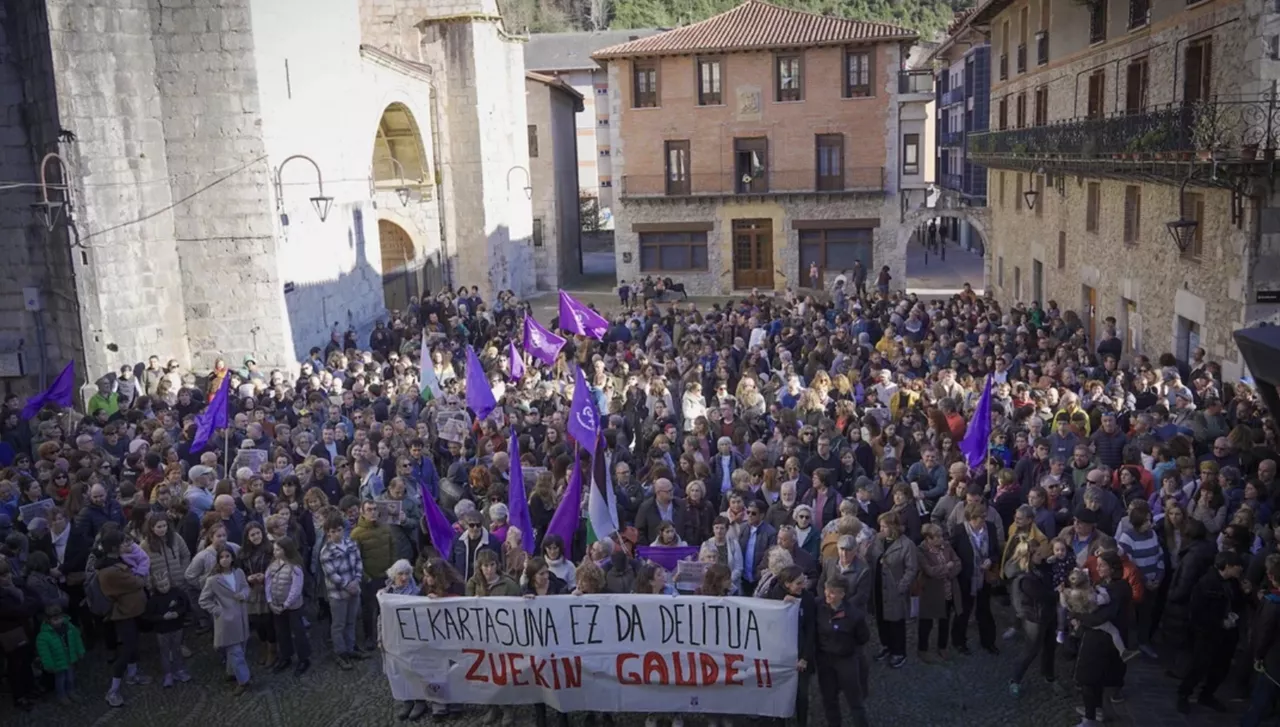
Hundreds of people have gathered in Zestoa to support the six accused of "feminist solidarity."
Six residents of the town will be tried next week for a crime against moral integrity. It is the former partner of one of the defendants who has filed the complaint on the grounds that he has been harmed by his reputation as accused of male violence years ago.