The European Court of Justice has warned that every Member State must recognise homosexual marriages in another EU country
The European Court has issued this obligation in a case affecting Poland and two Poles married in Germany, who requested that the marriage certificate be transcribed in the Polish Civil Registry so that they could be recognized there, but the authorities refused to do so.


The Courtof Justice of the European Union (ECJ) today stated that EU Member States are obliged to recognise homosexual marriages in another EU country, even if homosexual marriages are not permitted under the country's internal rules.
The case concerns two Poles married in Berlin in 2018, one of whom also has German nationality, who requested that their marriage certificate be transcribed in the Polish Civil Registry for recognition in Poland. But the Polish authorities denied this recognition on the grounds that Polish law does not permit same-sex marriages.
The case reached the Supreme Administrative Court of Poland, which brought a preliminary question of interpretation of European legislation before the Court of Justice of the European Union.
In its reply, the Court of the EuropeanUnion states that 'the refusal by two citizens of the Union who have exercised their freedom of movement and residence in the Union to recognize a marriage legally concluded in another Member State is contrary to Union lawbecause it violates that freedom and violates the right to respect for private and family life '.
Member States are 'obliged to accept the legally acquired status of marriage in another Member State in order to exercise the rights conferred by Union law', the Court adds.
However, the court specifies that this does not implythat same-sex marriage must be included in domestic law.
However, when a Member State decides to establish a single way of recognising marriages concluded in another Member State, such as transcribing the marriage certificate in the Civil Registry, it must also apply this means to same-sex marriages.
"Spouses, as citizens of the Union, have the freedom of movement and residence in the territory of the Member States, as well as the right to a normal family life, both when they exercise it and when they return to their Member State of origin," the court has argued.
Its refusal 'may cause serious administrative, professional and private objections, forcing spouses to live as single in the Member State of origin', the Court of Justice of the European Union has specified.
You might like

Yellow vests called for demonstrations on Saturday, and Macron accuses Trump of manipulating revolts

Von der Leyen blames several states and other actors for the migration crisis in Ceuta

Milei calls Sanchez a "dictator" and accuses him of promoting an "invasion" in Ceuta

Partial curfews will be imposed in several French cities due to riots

Macron holds the far left responsible for the violence and conveys his support to the police and traders
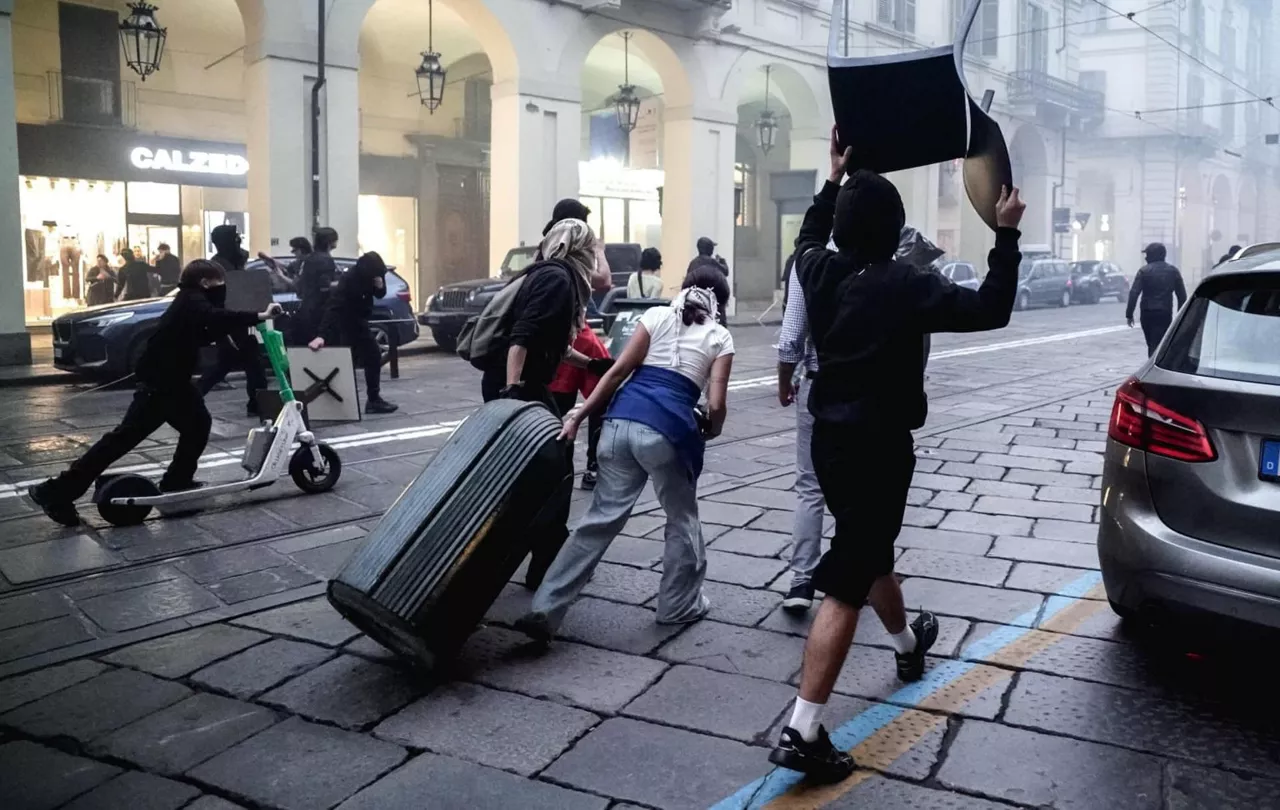
Violent protests in Italy and Albania against rising prices

Riots erupt again in Paris the day after the protests

The Pope reappears in the Vatican to pray for the Angelus

Consequences of the protests in France: one person has died, 1,200 have been arrested and there is destruction everywhere