Trump will also play the World Cup to broadcast the story "America is Back"
The President of the United States has promised the "greatest, safest, and most wonderful" World Cup and will take advantage of the rendezvous to project himself, even though the contradictions may become apparent.


Going on the spectacular White House website offers an experience similar to watching a Hollywood trailer, military helicopters, warplanes, giant flags, fireworks and, in the middle of it all, Donald Trump. The images suggest a story: America is back.
This is the message that Trump wants to convey to the world through the World Cup, the biggest international sporting event alongside the Olympic Games.
The US president has tried from the outset to link the event to his own image, as evidenced by the fact that he has taken the lead in the Working Group for the World Cup, which is completely unusual in the case of a president, and has given priority to the event in his public appearances.
It will be the greatest, safest, and most wonderful World Cup in history, Trump declared in the White House, flanked by FIFA President Gianni Infantino, who in December presented him with the organization's Peace Prize.
Even if it's the World Cup in North America, the United States has assumed the role of host from the beginning, 75 percent of the games will be played in the United States, including the two semifinals and the final, and Trump wants to be the face of the tournament.
32 years after the 1994 World Cup, the United States is once again at the centre of world football. This time, moreover, football is one of the fastest-growing sports in the country: it competes with baseball to be the third most followed sport in the United States, behind football and basketball.
Sporting: the goal of projecting a story
The use of sport — both great victories and organizational successes — for political propaganda is nothing new. Ever since it became a massive spectacle, political power has used it to enhance its image. From Mussolini's 1934 World Cup in Italy to Hitler's propaganda operation with the 1936 Berlin Olympic Games — partly frustrated by Jesse Owens — there is no shortageof examples.
One precedent comparable to Trump's claim is the 1984 Los Angeles Olympics. In the final years of the Cold War, Ronald Reagan understood the symbolic value of the Games and wanted to link his image to that success.
Now, the World Cup provides a unique platform for Trumpre to expand his America, and the President of theUnited States is willing to seize that opportunity.
Jules Boykoff, a political scientist and former footballer, explains in Red Card that the World Cup is a political lifeline for Trump, a tool that, wrapped in the collective emotion of sport, projects to the world the image of leadership, unity and organizational success.
The need for sportwashing that Boykoff talks about is no accident. Trump's political situation is not at its best. Polls show that his approval rate is between 36% and 40%, one of the lowest figures in his history. The Epstein case casts a shadow on the president, and international politics, especially the Iran conflict, has eroded his public image.
America's Cracks
The World Cup is an opportunity for Trump to strengthen himself and his project, but it also has its risks, and the contradictionsbetween the America that Trump wants to show and the real America can be exposed.
The World Cup requires what the writer Jorge Dioni calls the "economy of movement": the massive and cross-border flow of people, capital and services, and this kind of economy also requires workers who accept precarious working conditions, usually migrants.
While FIFA presents the World Cup as a global and open celebration, the Trump administration has increased barriers to access to the United States.
Vice President JD Vance has made it clear that everyone is welcome to come and see this spectacular event, but when it's over they'll have to leave.
Polemics
Thus, it remains to be seen whether Trump will succeed in spreading the image of the country he wants. For the time being, the organization of the tournament has been punctuated in recent months by various controversy. High ticket prices and the proliferation of VIP packages, the working conditions of the workers associated with the event, and infrastructure and transport problems have played a major role in the media.
A weekend shooting in Kansas City has left nine injured, making Kansas City one of the World Cup's main hotspots, the official venue for Argentina, England, Algeria and the Netherlands.
In the last few hours, U.S. immigration authorities have banned a Somali-born arbitratorfrom entering the country despite having a visa in place and being selected by FIFA to serve as a judge. The reason is that he came from Somalia, whose citizens are severely restricted from entering the U.S.
On the other hand, concern has spread among migrants and fans that ICE Immigration and Customs Enforcement officers may make arrests in the vicinity of the stadiums.
Trump's America may clash with another America drawn by the songs of Kendrick Lamar and Jason Isbell, or by the texts of Ta-Nehisi Coates and Sarah Kendzior.
You might like
Yellow vests called for demonstrations on Saturday, and Macron accuses Trump of manipulating revolts
Von der Leyen blames several states and other actors for the migration crisis in Ceuta
Milei calls Sanchez a "dictator" and accuses him of promoting an "invasion" in Ceuta
Partial curfews will be imposed in several French cities due to riots
Macron holds the far left responsible for the violence and conveys his support to the police and traders
Violent protests in Italy and Albania against rising prices
Riots erupt again in Paris the day after the protests
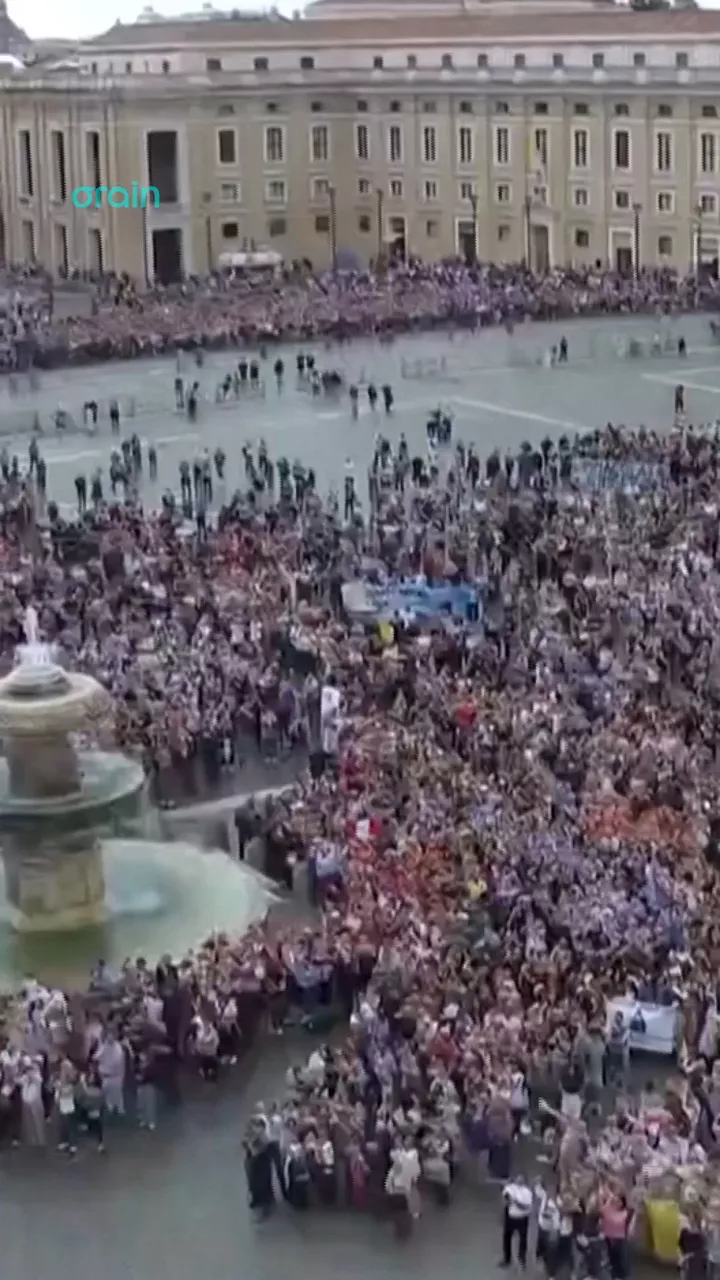
The Pope reappears in the Vatican to pray for the Angelus
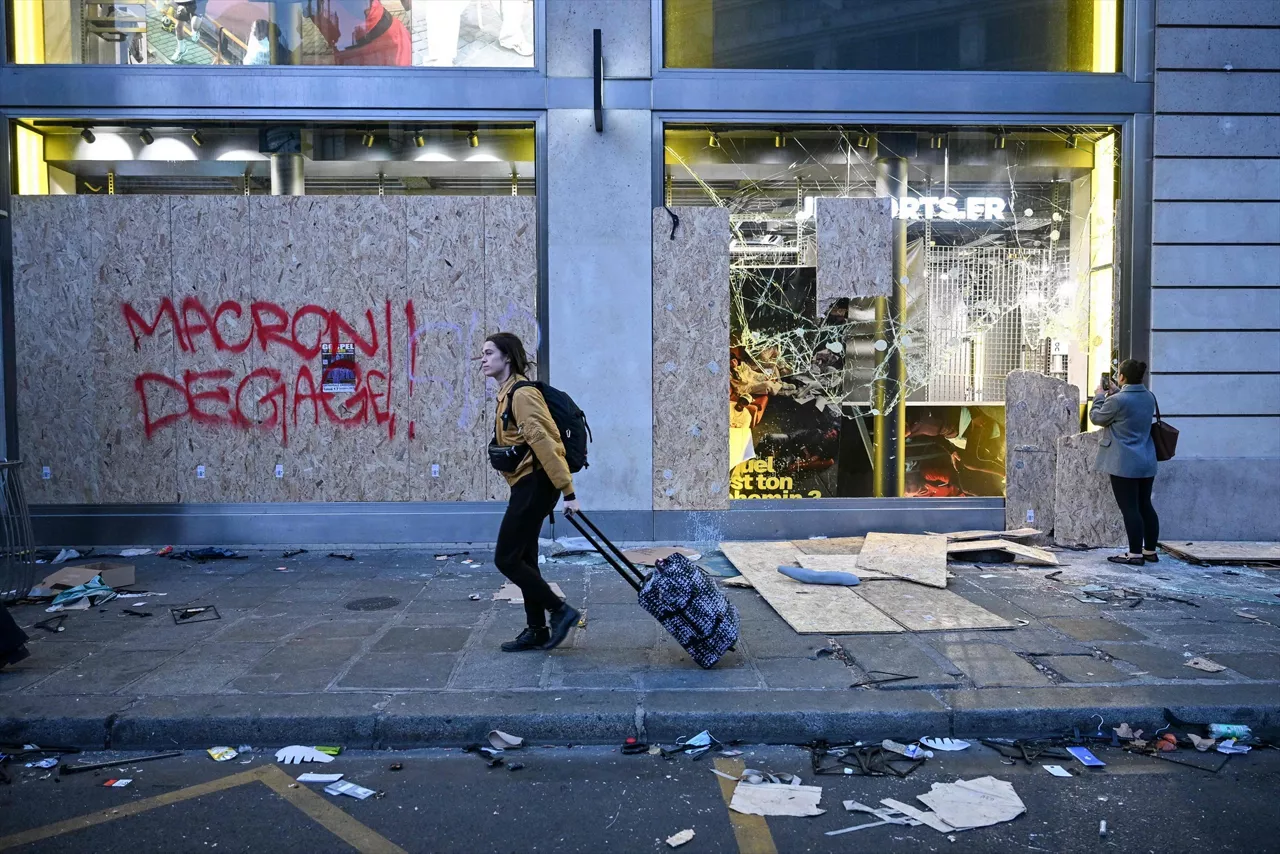
Consequences of the protests in France: one person has died, 1,200 have been arrested and there is destruction everywhere