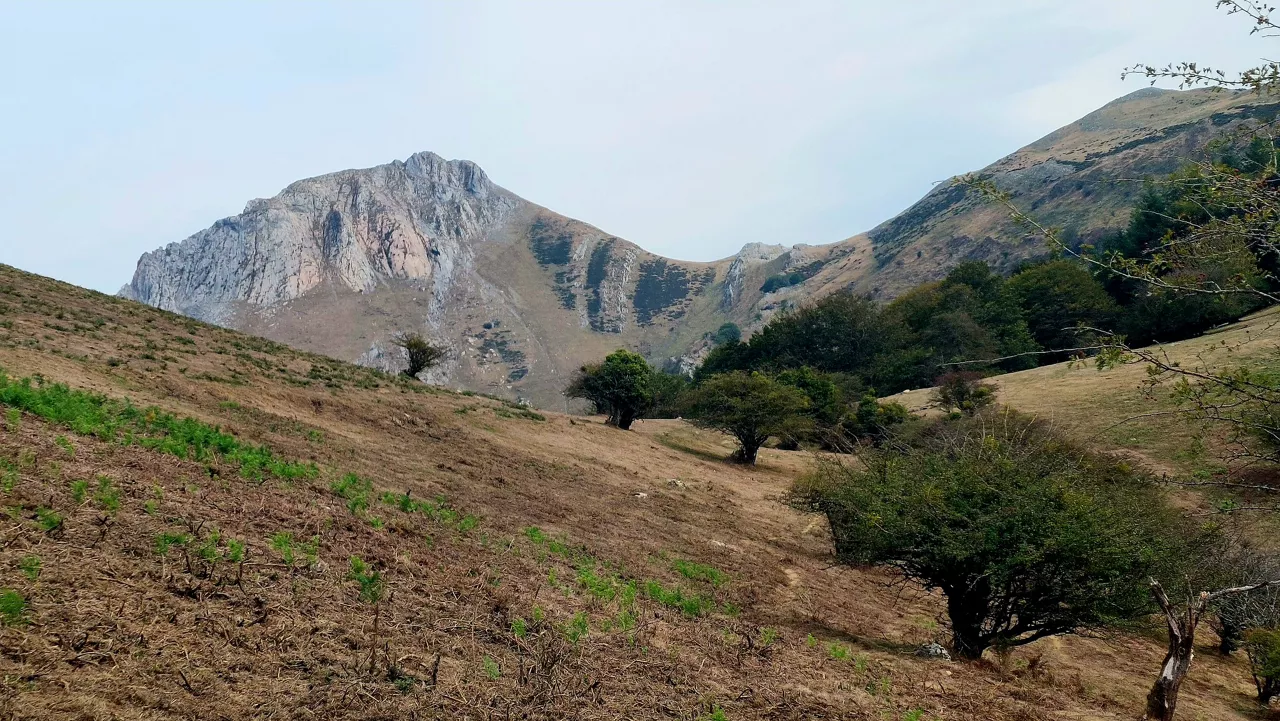
Why and how long is this heat?


The weather has divided the Basque society these days between those who enjoy the heat, those who are annoyed, and those who look at it with concern, for by different factors thermometers are at summer levels.
On Wednesday, for example, mercury has risen above 25 ° C in many parts of the North Side and has reached 30 ° C in the Pyrenees.
The heat wave is common at this time, as the summer of the St. Martins takes place in the middle of November. This warm period is usually due to the Föhn effect, but this year Claudiahas joined the blurry that has increased that heat.
What is the Föhn effect?
The starting point of the Föhn effect is the damp and hot air that penetrates the peninsula from the southwest, which rises to the top of the Iberian plateau and the peninsular mountains. As it gains altitude, it cools and dries up (0.6 ° C up to 100 meters). Once it passes the peninsular mountain lines, however, it descends again and compresses and heats up as it reaches the Cantabrian and Pyrenees mountains (1 ° C down to 100 meters).
This year, moreover, this natural Föhn effect has been accentuated by the deep blur of Claudia circling the Atlantic, which is sending a great deal of air to the Basque Country from very far south. This set of factors explains, therefore, the heat and wind that is taking place in the Basque Country these days.
How long will the heat last?
As the blurring of Claudia approaches, thermometers will begin to decline progressively from the southwest of the peninsula to the northeast.
Claudia is already playing in the south and west of the peninsula, but the centre of the blur will not reach us, though it will affect us.
Friday will be the last hot day. On Saturday the thermometers will drop a little bit and over the weekend it will rain here and there, if any, towards Saturday evening, but not much.
Monday comes the real change
Claudia is being pushed north by an anticyclone, which will cause the wind to enter the north, and consequently the thermometers to fall sharply.
Next week's highs will be equal to the lows we've had this week. The highs will be between 9 and 14 ° C and the lows between 5 and 10 ° C. It will be fog and rain from Monday in the sky.

You might like
Changing atmosphere this week
Autumn atmosphere for the weekend
Sunny coming week

Heavy rains have left large pools of water in several villages in the South Basque Country
Yellow warning for heavy rains also this afternoon

Yellow warning for heavy rains today and tomorrow afternoon

Rain and rain till the weekend

After the rains, the weather will be more stable today, but faint showers are expected in the afternoon
Yellow notice for Saturday afternoon in the ACV due to heavy rains