
Outstanding transfers: what are they? What are the negotiations?
In addition to the five powers that should be exercised in the course of these weeks, the CSC has 15 other transfers recognised by the Statute of Autonomy. In order not to get lost in the confusion of competences, this is the updated list of outstanding transfers.


46 years ago the Gernika Autonomy Statute was adopted, but today the rule has not been fully complied with. In the long list of competences collected in that distant 1979, there are still 20 who are waiting to be handed over to the Basque Government.
In July , five of them were agreed and signed by the President, Imanol Pradales, and the President of Spain, Pedro Sánchez. The final approval, all in order, must be made at the Joint Transfer Commission on 16 December (which was actually scheduled to take place in December).
Outstanding transfers classified by area are:
Social Security
Undoubtedly one of the most delicate and complex competences, if not the most complex, as a result of which the two governments agreed to split the transfer. The first step will be this Friday with the transfer of non-contributory benefits and school insurance.
1) Mutua assistants
The Basque Government would assume the direction and guardianship of the Mutual Partners (Labour Mutual Societies) on the basis of of the Minimum Living Income for the transfer of this transfer, since the Government would like to follow a similar model of management and financing.
(2) Labour and Social Security Inspectorate.
It is a question of increasing the competence of the Labour and Social Security Inspectorate — in fact, it was transferred in 2011 — but there is no record of the benefits that have since been transferred.
(3) Social Security contribution benefit Marine Social Institute
The majority of contributory benefits, i.e. retirement benefits, permanent incapacity, orphan's pension and widows' pensions, but also unemployment benefits, which are now in the hands of the Spanish Government, remain to be transferred.
In addition, the Gernika Statute provides for the transfer to the Government of the Marine Social Institute, which is responsible for managing the benefits of the special regime for fishermen, as well as other matters affecting the maritime and fisheries sector.
The first part of Social Security benefits (non-statutory and school insurance) is valued at about EUR 100 million.
More inflated is the provision for managing the remaining pensions and benefits, which would amount to EUR 822 million per year.
(4) Wage Guarantee Fund
According to the Statute, the management of the Wage Guarantee Fund (FOGASA) is the responsibility of the Basque Country, which is responsible for paying wages and compensation to workers in cases where a company is insolvent or in competition with creditors.
(5) Management of the Social Security Economic System.
It is one of the greatest knots of this competition, the most difficult to untie. Proof of this has been the most entrenched negotiation in recent years. The Statute itself states that the change of hand must be made without breaking the 'single box' and respecting the principle of solidarity. In the event of transfer, the Government will assume the power to register and punish companies, but also the affiliation of workers, the management of contributions and the control and postponement of quotas.
Infrastructure
(6) Ports
The Government assumed responsibility forthe management and management of the coastline in April last year, according to which, with the exception of the ports of Bilbao and Pasaia, the rest depend on the CAPV, since the two large ports of Bizkaia and Gipuzkoa are classified as of general interest and managed by the Spanish State.
However, the Basque Government has always argued that both should be subordinate to the Government of Vitoria. In the case of the Port of Pasaia, it proposes an adaptation by decree through the transfer of goods, rights, personnel and resources. With regard to the Port of Bilbao, the Executive of Pradales proposes to deepen the management model.
(7) Airports
As in the ports of Pasaia and Bilbao, the airports of Foronda (Vitoria-Gasteiz), Bilbao and Hondarribia are of general interest and therefore dependent on the State.
This transfer, which has been the source of many tensions over the years, continues to be negotiated between the Government and the Spanish Government. In the latest proposal made by Lakua, it is proposed to maintain the classification of general interest, but leaving the management to the CAPV.
 Bilbao Airport, in a EFE file photo.
(8) Tourist Paradores
The Basque Government has been responsible for tourism since 2011, but the paradores of Hondarribia (Gipuzkoa) and Argomaniz (Álava) are dependent on the Spanish public company Paradores de Turismo, and the company Turespaña is the concessionaire .
The Government proposes that the transfer be carried out in two phases: in the first phase, the concession would be maintained; in the second phase, the Basque administration intends to subrogate the staff of the two Paradores.
Public security
(9) Traffic and road traffic
40 years ago the Basque Government assumed the competence of Traffic, but the intention is to extend the powers in this area. Among other things, the Basque Government has requested the granting of traffic permits and the organisation of vehicle registration or examinations of drivers or examiners.
(10) Municipal electoral regime.
The elections to the Basque Parliament and the forum-elections fall within the competence of the Basque Country, but the Spanish State regulates common elements such as the census, electoral boards or electoral resources.
The Basque Government proposes to the Spanish Government to transfer the entire organization of municipal elections to the Basque Country, but always leaving it to the Foral Governments, as the Statute states.
Finance, Finance and Business
(11) Official credit and credit and banking management.
The Statute recognizes the Basque Country's self-government in the financial field, but the Basque Government believes that the Basque Institute of Finance could be given a more active role. It would like to have the tools to manage public credit so that it can channel funding and guarantee programmes for Basque companies.
The Gernika Statute also provides for the powers of banking management and supervision, which have not yet been developed.
(12) Private insurance
Given the competence to manage and supervise the private insurance sector, the Government may regulate and control the insurance companies operating in the Basque Country by creating its own entity.
(13) Agricultural insurance
The Basque Country has exclusive competence in the areas of agriculture, livestock and economic development, although the management of agricultural insurance is centralized in the State Agricultural Insurance Organization (ENESA).
The Basque Government supports the amendment of the law so that the Basque Country can assume the functions of ENESA, but without changing the state agricultural insurance system.
(14) Centres for Public Works Studies and Experimentation (CEDEX)
In this case, the Government would like to extend the competence for scientific and technical research functions (transferred in 2009), which, according to the Government's latest proposal, would strengthen the Basque Country's cooperation with the State, while maintaining general coordination, personnel management and infrastructure within the competence of the State.
(15) Promotionand financingof small and medium-sized industrial enterprises e
Industry, energy and mining services have been the competence of the CSC since the 1980s, but mechanisms have not yet been developed to support this type of company.
You might like
The judge has ordered that the bank accounts of the former directors of Acciona and the Erkolan cooperative be searched
With these proceedings, the UCO intends to continue investigations into this part of the "Koldo case" in relation to the alleged bites charged for public works awards.

EH Bildu welcomes the new transfer agreement, but calls for a "peer-to-peer" relationship with the state
Pello Otxandiano welcomes "everything that increases the ability of the Basques to decide on issues that affect our daily lives and the well-being of our citizens."
These are the five powers that the Basque Government will assume this Friday
The spokeswoman for the Basque Government, Maria Ubarretxena, has announced that the central and Basque governments will sign on Friday the transfer to the Basque Country of five other competences of the 1979 Gernika Autonomy Statute, including unemployment benefits and non-contributory social security benefits.

Esteban believes there are no irregularities in the Getxo Palace case, but if proven otherwise, action will be taken
We can accuse the PNV of trying to cover up irregularities related to the Irurak Bat Palace in Getxo, so it calls for political accountability.

The Basque Government has asked the Sanchez Government to be serious: 'We cannot continue with this dynamic'
Maria Ubarretxena, Counsellor for Governance, Digital Administration and Self-Government and spokesperson for the Basque Government, has recalled that there are still issues to be negotiated, but has stressed that they cannot always be working against the clock. "We ask for seriousness and another way to start negotiations," added Ubarretxena.
The Basque Government closes the transfer agreement in extremis
The spokeswoman for the Basque Government, Maria Ubarretxena, has confirmed that the meeting will take place tomorrow at 10.30 a.m. in Madrid, after two days of contacts with the Spanish Government.
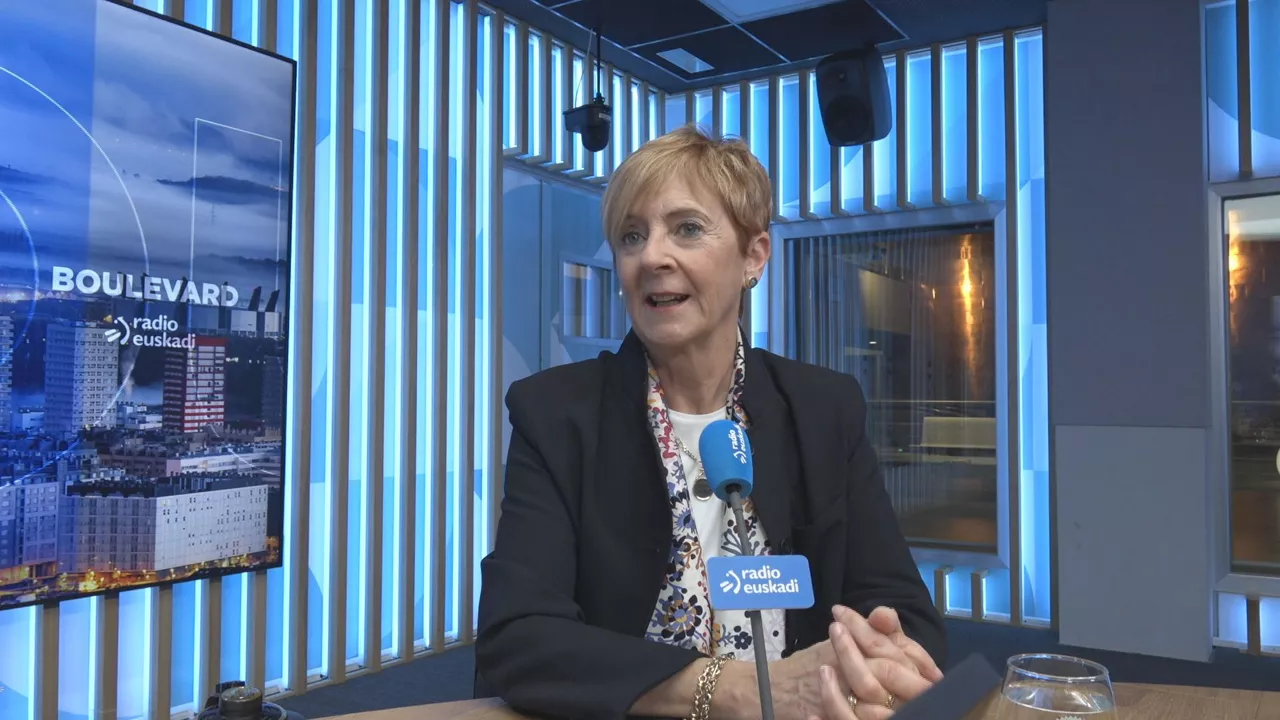
Arantza Tapia: "The Spanish Government, whatever it may be, likes to conduct negotiations until the last minute of the last day."
Interviewed today on Radio Euskadi, the former councillor of the Basque Government has said that he hopes that the negotiations on transfers will continue and has assured us that this is not a matter of 'haste', since the Gernika Statute is an 'binding' organic law, which is already 45 years old.

Today will be news of the transfer meeting, the second day of the medical strike and the farmers' protests at the border
Today, January 15, 2026, the Government will decide whether the conditions for attending tomorrow's meeting of the Joint Transfer Commission are in place; the doctors in Osakidetza will have a second day of strike, after yesterday's, to demand their own status; and the farmers and farmers in Hego Euskal Herria will make a tractor march towards Biriatu.

Pradales and Ubarretxena will decide on Thursday whether the conditions for meeting the Joint Transfer Commission are met
The meeting with the Spanish Government is scheduled for Friday. The Lehendakari and Counsellor will first assess compliance with the "necessary guarantees" for the signing of the transfer. As EITB has been aware, there are "constant contacts to reach an agreement" and "progress" has been made.
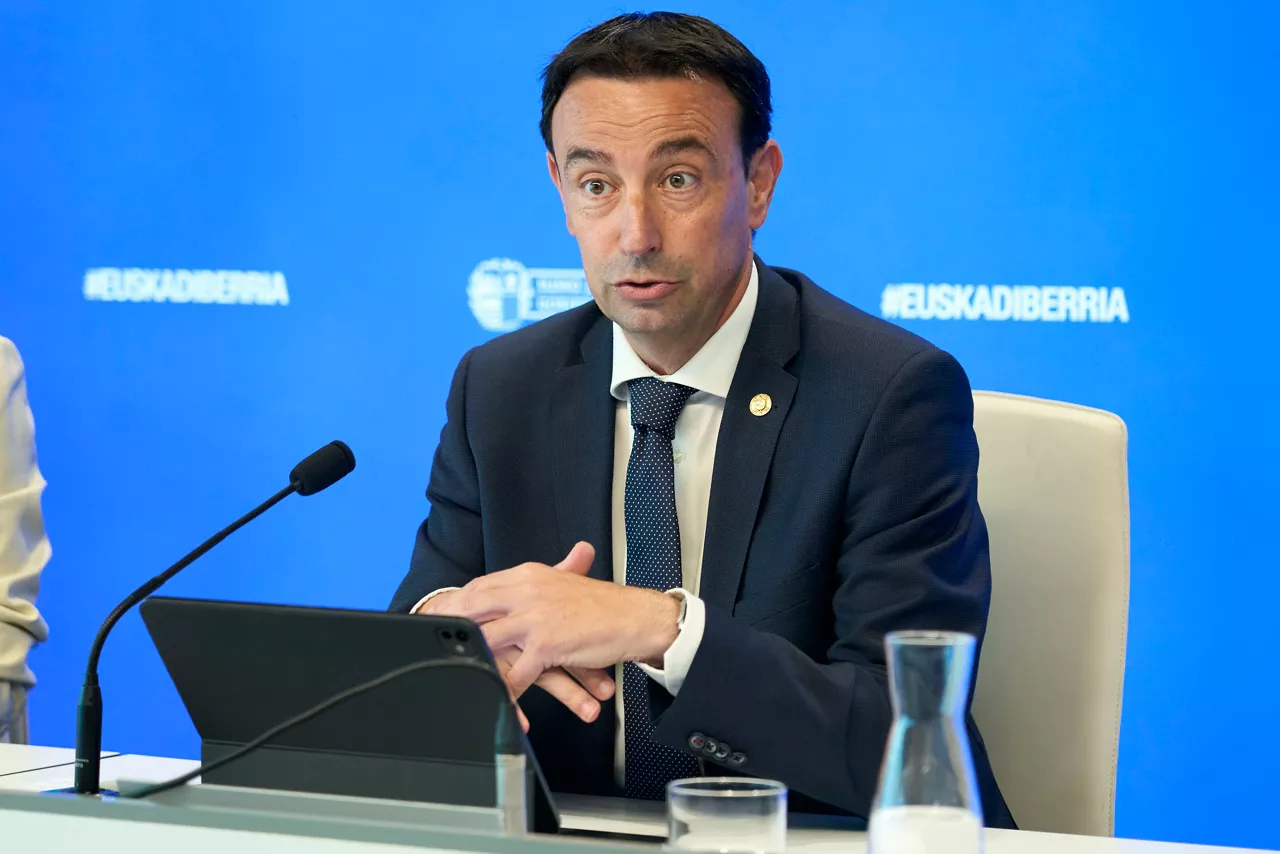
Torres said the competition agreement could be concluded today
The Socialist Councillor has not hesitated. The day after tomorrow the Joint Transfer Commission will meet after the agreement has been concluded in the next few hours.