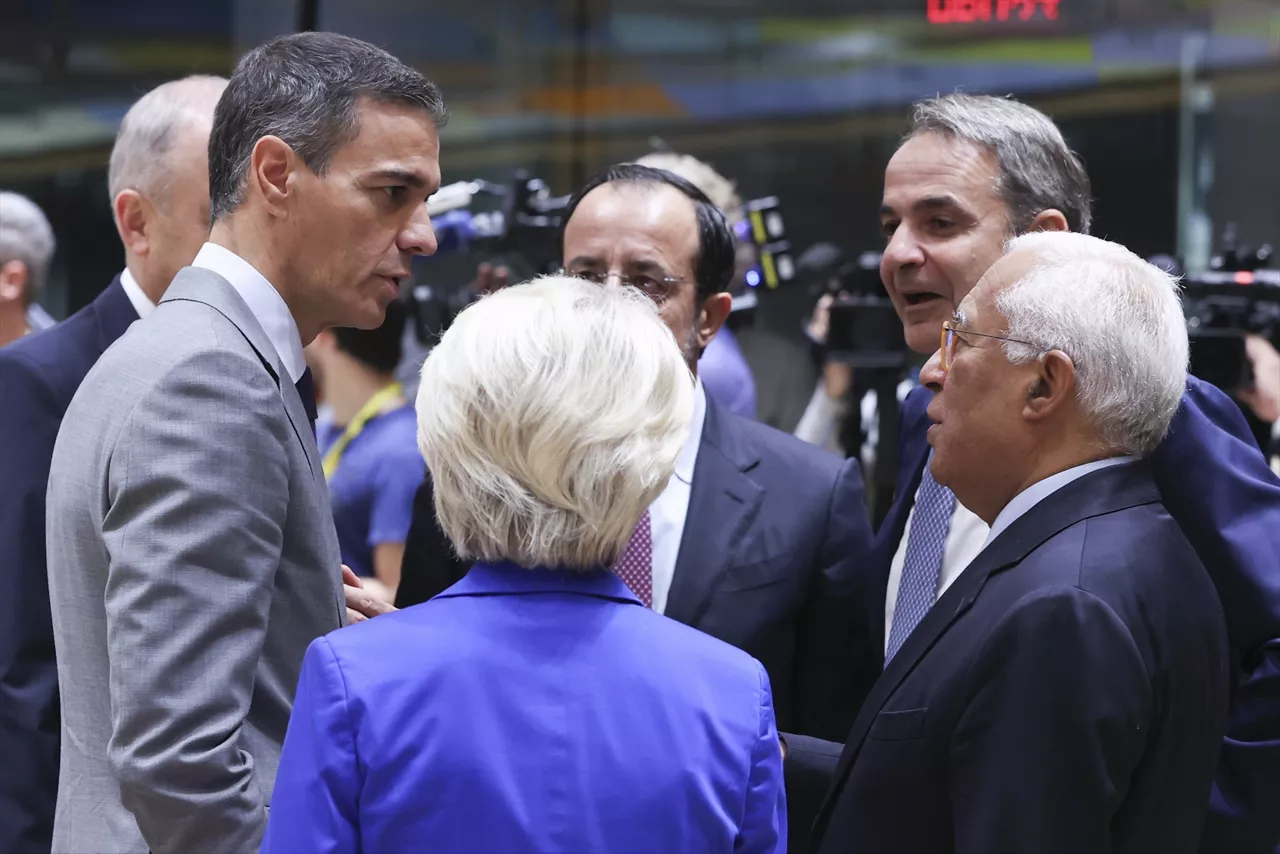
The Keys to Trade Competition between China and the United States: Tariffs, Rare Lands, and Court Rulings
These will be the main themes of US President Donald Trump's visit to China, invited by President Xi Jinping, from 13 to 15 May.


U.S. PresidentDonald Trump will make an official trip to Chara from 13 to 15 May at the invitation of Chinese President Xi Jinping, one of whose main topics will undoubtedly be tariffs.
These are the keys to understanding the trade rivalry between the two giants over tariffs.
Tariff war
The trade war between the US and China broke out shortly after Trump's return to power in January 2025, and within a few months the trade blockade between the world's two largest economies reached its peak.
At its worst, the US average tariff on Chinese goods reached 127.2%, while China responded with tariffs of up to 147.6%.
Control of rare lands
In early April last year, China imposed restrictions on the export of rare lands (samarium, gadolinium, terbium, disprosio, lutecio, scandio, and itrio) in the context of the trade war with the US.
This decision affected sectors such as defense, aeronautics, automotive, or energy, and the lack of semiconductors caused major disruptions in production. Months later, in October, China increased its control over technology linked to other sectors (mining, caldereria, recycling).
Trade truce
In May 2025, the US and China reached a pre-agreement that gave a respite to the world economy, and then in August both sides decided to extend the agreement before Xi and Trump met last October in the South Korean city of Busan.
There, both sides agreed to a one-year suspension, which reduced the US average tariff rate from 57% to 47%.
China, for its part, suspended the additional U.S. product tax for one year and pledged to abolish the additional rates on agricultural products, but maintained the additional 10% tax on certain goods.
They also agreed to suspend controls on the export of rare lands, and to temporarily freeze the charges on ports which they applied to each other.
Judicial decisions
The situation worsened again in February, when the US Supreme Court partially revoked the tariffs imposed by Trump under the International Emergency Economic Powers Act.
Following this ruling, the Administration appealed to Section 122 of the 1974 Trade Act to apply a new 10% general tariff to most imports, but last week the International Court of Commerce also blocked this levy on the grounds that the Government had wrongly argued this rule for the introduction of general tariffs.
However, the scope of the latter ruling is limited: the court did not issue a universal order and only blocked the collection for three plaintiffs involved, forcing the remaining importers to continue to pay while a possible appeal from the Government is resolved.
Uncertainty
The real impact of these court rulings on US customs is still uncertain, because the rulings have not uniformly eliminated all the burdens in question, and Washington has tried to replace part of them with new legal bases.
You might like

Partial curfews will be imposed in several French cities due to riots

Macron holds the far left responsible for the violence and conveys his support to the police and traders
Violent protests in Italy and Albania against rising prices
Riots erupt again in Paris the day after the protests
The Pope reappears in the Vatican to pray for the Angelus
Consequences of the protests in France: one person has died, 1,200 have been arrested and there is destruction everywhere

Israeli settlers attack diplomats from France, Belgium and Poland in the West Bank
France on fire for student protests and 'yellow vests'
Riots and dozens of detainees in protests in Paris and other French cities