What's an explosive cyclamesis?
The arrival of 'Goretti' depression has put the weather phenomenon back in the spotlight.
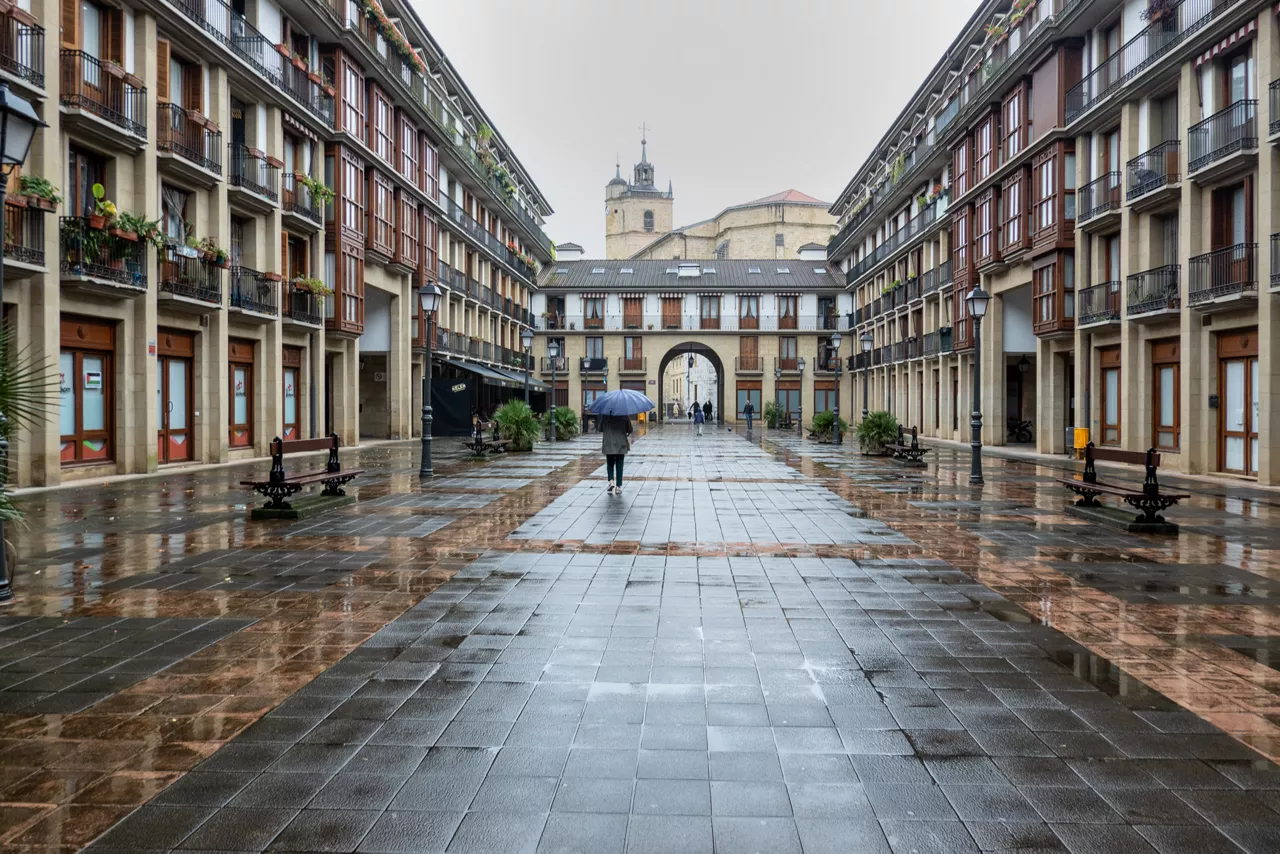
Explosive cyclamesis. Photo: EFE/Juan Herrero.
Explosive cyclamesis Goretti will affect Western Europe this week and will also affect the Basque Country. It usually causes names, odes, alarm and confusion, i.e. explosive cyclamesis.
We shall then explain clearly and easily what this phenomenon consists of.
What does explosive cyclamesis mean?
This is thetechnical term used by meteorologists to describe the process of a very rapid depression, that is, when the central pressure drops sharply in a very short time. In fact, it occurs when the central pressure of the depressionfalls by more than 20 milesin 24 hours.
How does this phenomenon come about?
It occurs when very different masses of air interact, such as a hot front and a very cold front, and when conditions are in place to suddenly reinforce a depression in the upper layers of the atmosphere.
What effects does it have on the Earth's surface?
Explosive cyclamesis, in itself, does not cause bad weather, but a depression that is reinforced jada ,which can produce very strong winds, heavy rains, snowfall and strong sea storm in a short time.
You might like
The clouds, the sun coming and going, and the rain
The weather will be variable over the next few days, usually it won't get much wet, but there will be a tendency to rain for several days. The sun will also appear occasionally, and temperatures will fluctuate, depending on the day.
The three phenomena of the total solar eclipse are visible, thanks to augmented reality
The pearls of Baily, the diamond ring and the spectacular suncrown can be seen from 8:27 p.m. on August 12. The weather has shown us these phenomemoos in the third installment of reports on the important astronomical event.
Eighth and Last Day of the May Warming: Starting on Friday, temperatures will drop sharply
The orange alert remains active in the ACV, while in the Navarre Bank and the French Basque Country the yellow warning has been activated.
A stifling heat for the seventh day, though on the coast the breeze has given some rest
The highs have been measured in the inner valleys of the Cantabrian ledge. Llodio, for example, has reached 38.5 degrees, the highest ever recorded in May. Tomorrow, Thursday, we will remain on orange alert for persistent high temperatures.
It's snowing in Aralar in May
Images recorded by Txomin Rezola and David Aznárez in Aralar on May 15
Rainy stuff again: gloomy atmosphere and falling maximum temperatures
It will rain more frequently near the coast, but as the day progresses, the maximum temperatures will be around 15 degrees Celsius in the north and around 12 to 14 degrees Celsius in the interior.
Unstable weather will continue and in the afternoon there will be stormy weather, especially in Navarre and the North
As the day progresses, the cloud cover will increase and there will be stormy showers everywhere. In the middle and south of Navarre and the Northern Basque Country, the yellow warning will be activated in the afternoon.
Spectacular rain in Villava
This afternoon, in Villava, a spectacular storm has fallen. For half an hour, rain and hail have fallen heavily, turning some streets into streams. However, the storm has not caused any significant damage.
The shadow of the moon will be engraved on the surface of the Earth on the day of the solar eclipse
On August 12, the day we will be able to enjoy a complete solar eclipse, several balloon probes will be launched from the stratosphere to obtain images of the eclipse.
Petral comes the weather, black sky and cool temperature
From Monday afternoon, instability will prevail, with rain falling throughout the week and temperatures falling sharply, with highs around 13-14 degrees on Thursday and Friday.