
Basque cultural fabric: intense but asymmetric
In 2024, almost 20,000 cultural events were registered in the three territories, according to the Kulturklik portal, which means an average of 55 cultural events per day in the Basque municipalities.


In 2024, some 20,000 events were registered on the Kulturklik portal, a platform promoted by the Basque Government that brings together the cultural programming of the territory. In other words, an average of 55 cultural sessions per day were held in the Basque municipalities. However, behind this fruitful harvest lies a more complex reality: culture does not reach all corners equally.
The available data reflect intense programming. Among concerts, plays, festivals, exhibitions, conferences, etc., the Basque Country has a continuous cultural activity throughout the year. Music predominates: concerts accounted for 31.8% of the total programming in 2024 (6,342 events), followed by theatre (21.3%) and audiovisual screenings (11.8%). The rest are made up of other disciplines such as dance shows, exhibitions and other activities.
Most of the events are concentrated in a small number of municipalities, the most populous: the three capitals, Bilbao, San Sebastián and Vitoria, accounted for 48% of the total, with an average of more than 3,000 organized annually. With the exception of the capitals, only 36 municipalities exceeded the threshold of 100 years, including Getxo (557), Tolosa (338), Barakaldo (335), Durango (334) and Zarautz (277).
Gipuzkoa is the territory with the highest cultural density, with 11.1 events per thousand inhabitants, followed by Álava (9.7) and Bizkaia (7.5), the latter with the highest volume of events (8,662). The difference is therefore not only in quantity, but also in number of inhabitants. In some regions of Gipuzkoa, such as Tolosaldea, Urola Costa, Alto Deba or Donostialdea, there were more than 10 events per thousand inhabitants in 2024.
With regard to the type of event, as noted above, the predominance of music has been 6,342 concerts (31.8 per cent), 4,239 theatre performances (21.3 per cent), audiovisual screenings accounted for 11.8 per cent of the total, conferences and days 11.5 per cent, exhibitions 6.9 per cent and dance performances 4.3 per cent.
Three out of four events were held in enclosed areas, especially in the Donostialdea, Llanada Alavesa, and Gran Bilbao, where the format has exceeded 76%, and eight out of ten events were held for a single day.
Need to belittle more Euskera?
In the Basque cultural landscape, the use of the Basque language is a fundamental element. In 2024, about half of the events took place in Basque or bilingual languages. This average, however, varies from territory to territory and from region to region. In Gipuzkoa, six of the seven regions exceeded the 50% barrier, while in Alto Deba and Urola Costa more than half of the programming was in Basque.
In Álava, on the other hand, no region has reached these proportions, with Ayala (38.3 per cent in Basque and 11.6 per cent in both languages) being the area most close. This difference shows the cultural progress of the Basque Country, but there are still shortcomings in some areas of the southern part of the territory.
Annual festivals, mostly musical
The festivals held each year deserve a separate chapter. In 2024, 677 festivals were held in the Basque Country, of which half were musical. They were followed by film and audiovisual festivals (88), theatre (70) and dance (49). In addition, nearly a hundred mixed festivals, such as music and dance, were organized, 64 aimed at various disciplines, such as literature, poetry, photography, video games and fashion.
Although the offer is varied, the trend of geographical concentration with all the events is repeated: 21 municipalities took over 70% of the festivals. The capitals are again at the forefront: Bilbao, with 134 festivals; Vitoria, with 86; and San Sebastián, with 71. The most notable in terms of the number of participants are the Festival, the Jazz Festival and the BBK Live, with more than 100,000 attendees, although there is no official system.
With regard to the format of festivals, 25 per cent were held outdoors (only 16.5 per cent of all events are held outdoors); dance (48.5 per cent) and music (30.1 per cent) predominate in outdoor spaces; in addition, 68 per cent of festivals lasted more than one day.
In terms of antiquity, half of the dance festivals have more than 25 editions, while the music festivals are younger: only 18.4% are over 25 years old, the oldest being the Musical Fortnight of San Sebastian, which last year completed 85 editions before the Festival (72 editions).
Distribution of equipment: fluctuating
All these cultural events require a physical infrastructure. The Basque municipalities have 3,757 cultural equipment: 1,189 are public (libraries, cultural houses, museums, halls...) and 2,568 are linked to the cultural industry (producers, publishers, companies, shops, academies...).
The distribution is asymmetric: Bizkaia has 49.1% of all equipment, Gipuzkoa 36.2% and Álava 14.7%. It is no coincidence that the areas with the most infrastructure are also the ones with the most programming.
There are areas where it's a bit difficult to guarantee access to culture: municipalities with fewer than 10 events a year, regions with hardly any programming in Basque, or places that don't offer cinema and other activities like that. The cultural gap is not always obvious, but it exists. Kulturklik is useful for general photography, but it has a limit, it's voluntary and it doesn't include all the events. In particular, activities organized by alternative circuits and local actors are excluded.
Therefore, although the cultural fabric of the Basque Country is intense, consolidated and diverse, it has its lights and shadows. There is a solid foundation: a large number of events, a wide network of festivals, a solid infrastructure and a growing commitment to the Basque Country. But there are also urgent challenges: balancing supply territorially, giving visibility to small towns, ensuring the sustainability of festivals and strengthening the presence of the Basque Country in all regions.
Adding up the data mentioned above, the question is clear: What can be done to ensure that culture reaches all people on an equal footing? To strengthen the centralisation of resources or to prioritise decentralisation that favours the role of small municipalities? Regardless of the model, it is essential not to forget that culture is a right and must therefore be guaranteed to all citizens regardless of where they live.
You might like

A 36-year-old Basque mountaineer was seriously injured in Asturias when a rock fell as he climbed
Apparently, the stone has fallen about 300 metres above where the woman was, who has suffered severe head trauma and has been transferred to the Asturias General University Hospital (HUCA).
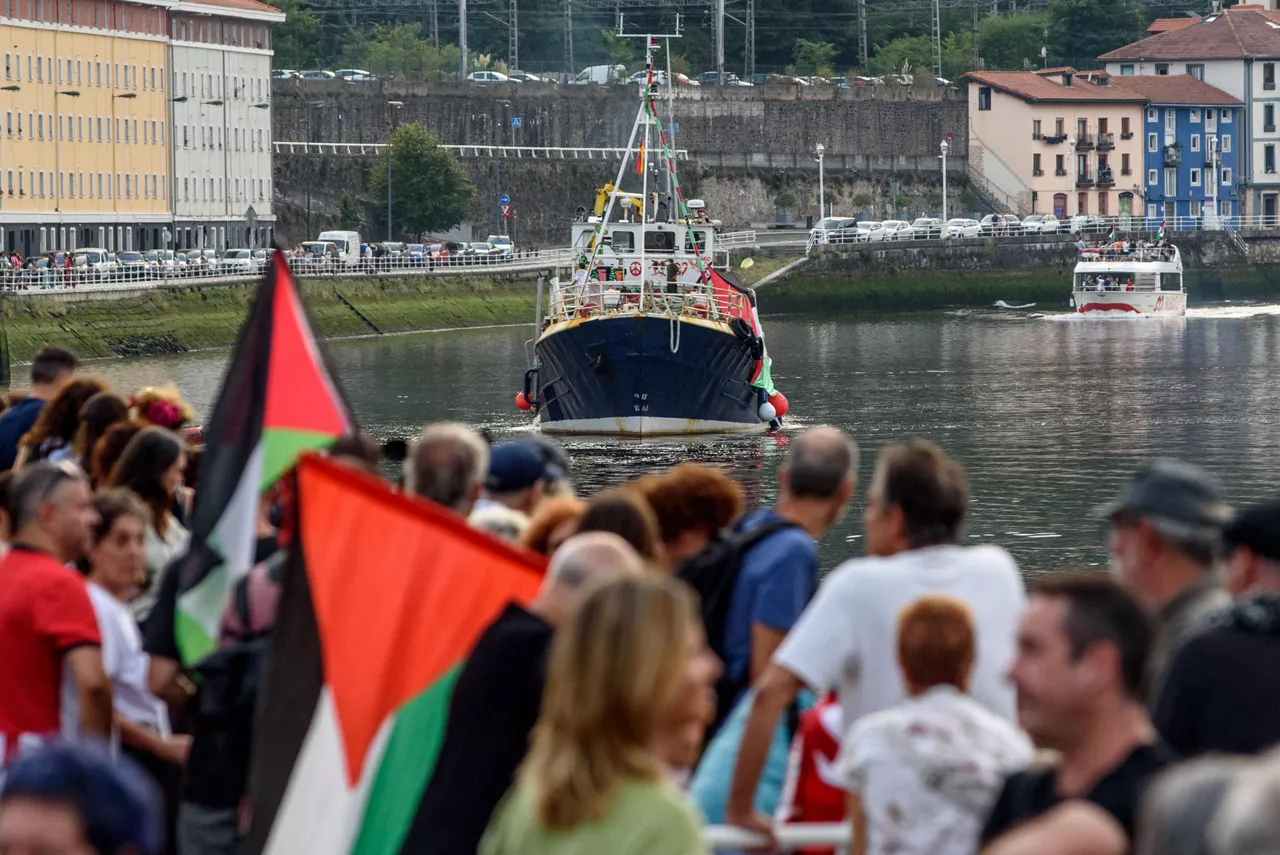
Hundreds of people received the Freedom Flotilla ship in the Basque Country
He plans to stay in the Basque Country until Tuesday, the 8th, when he will leave for Vigo and then continue to other areas of the Mediterranean. During the ship's stay in Bilbao, various events have been organised, including conferences, performances, a Palestinian fair and a press conference with activists from the flotilla.
A 25-year-old woman has been arrested in Elciego on charges of running over her partner
He has been charged with attempted murder in the area of domestic violence. The incident took place around 7.30 a.m. on Saturday morning. The detainee has been transferred to police stations and, once the proceedings have been completed, will be brought before the court.
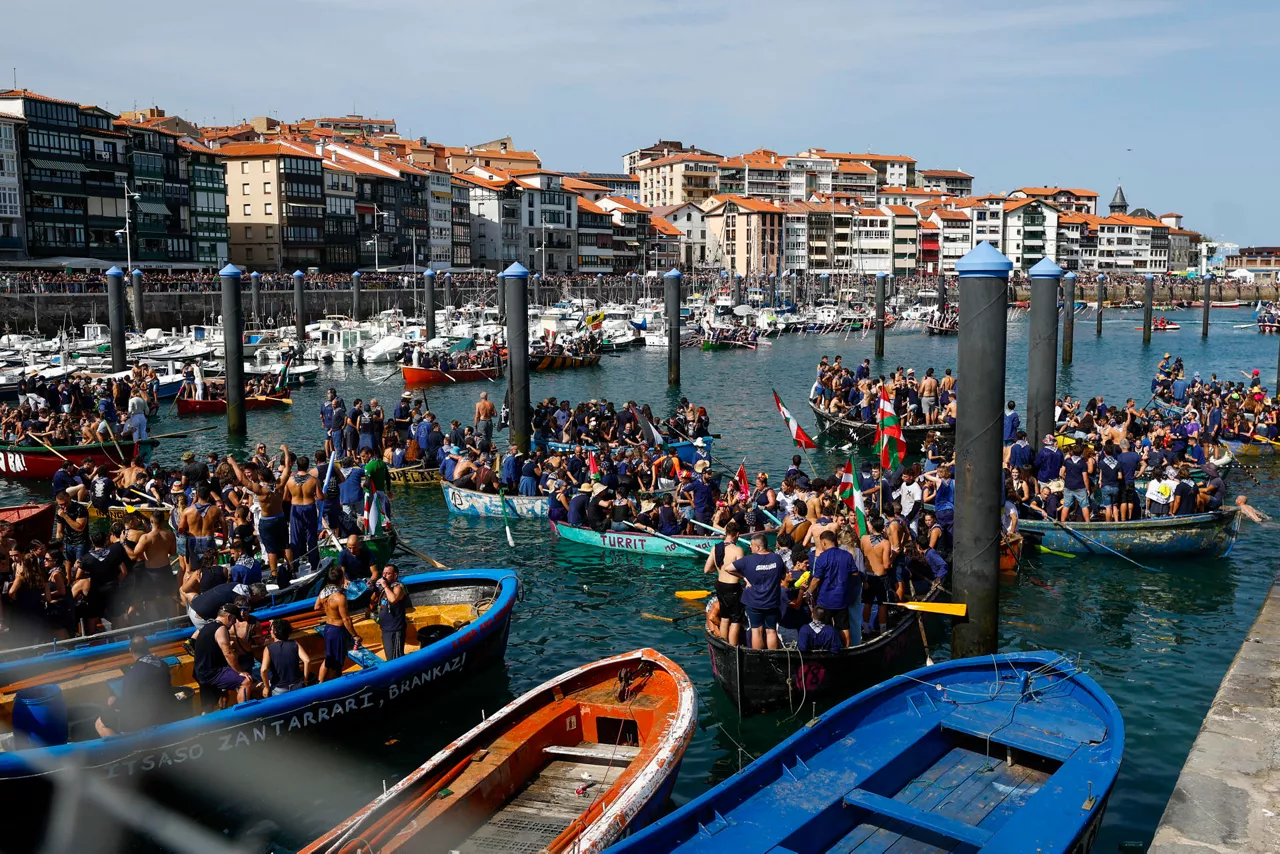
A 20-year-old boy died on Lekeitio's Geese Day after falling off a fence; the celebration was suspended
The young man, who was in the harbor following the test of geese, has fallen from a height of about two metres. Thousands of people have gathered in Lekeitio today and the event was developing normally until the accident.
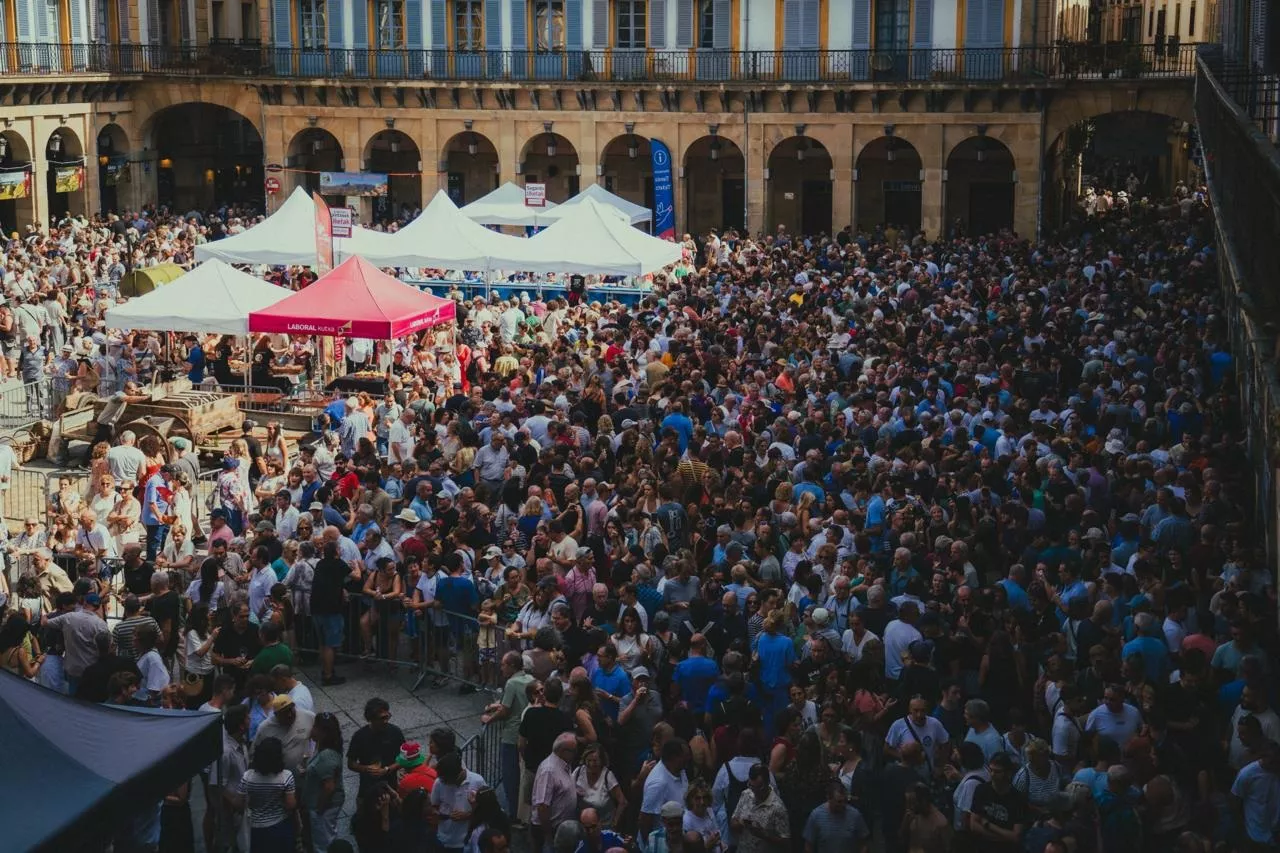
Nearly 4,000 people have gathered at the Sagardo Eguna in Donostia
They have the opportunity to taste cider from 32 cider shops in Gipuzkoa. They have threatened the day with music from trikitilaris and bertsolaris. One of the most emotional moments has been the act of tribute to Jabier Ansorena and Marian Matas.
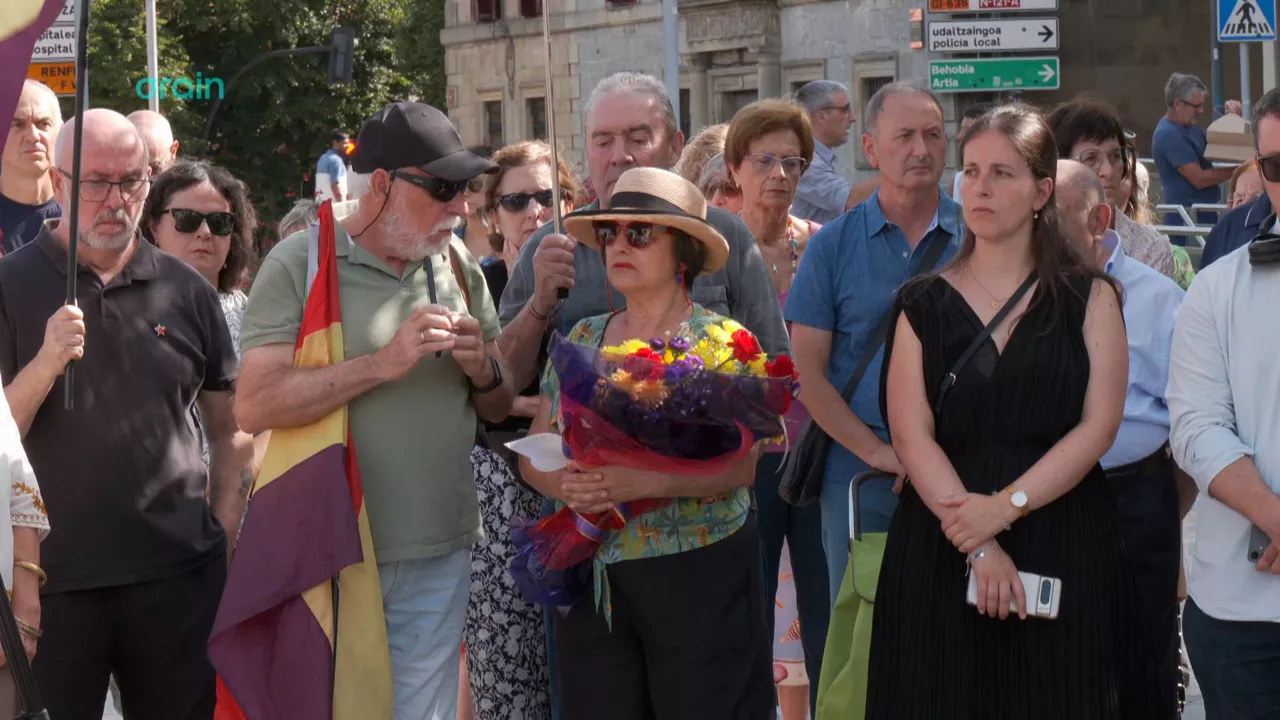
September 5th has been declared Local Democratic Memory Day in Irun
The Irun City Council has declared 5 September as Local Democratic Memory Day, with the support of all the political groups of the City Council, which today commemorated all the Iranians who suffered a military coup, war and dictatorship.
The Ertzaintza arrested a man in Urduliz accused of throwing bottles at three people
The attack took place at around 6.20 p.m. near the metro station, where a group of some 200 people had gathered in the vicinity, and the detainee had previously been arrested for similar events.
Three people have been arrested in Gernika on charges of forcing a 14-year-old pregnant girl to marry
An investigation is also under way into a 17-year-old, the alleged father of the child, who has not been located.

Tests on the Mole's underground passage trains begin next week
The infrastructure will be available by Christmas, according to the forecasts of the Basque Government.
The alleged perpetrator of Barakaldo's murder is still at the police station awaiting testimony before the judge
The Ertzaintza continues to investigate, and early hypotheses suggest that "sentimental" may be the cause of the incident.