135 people arrested until 13:00 in France on the second Saturday of protests against the increase in life prices
French Interior Minister Laurent Núñez has said that the morning has been quiet compared to last week, when only one demonstration is allowed in Paris, in which Mélenchon asked Macron to respond to protesters "demands before leaving."
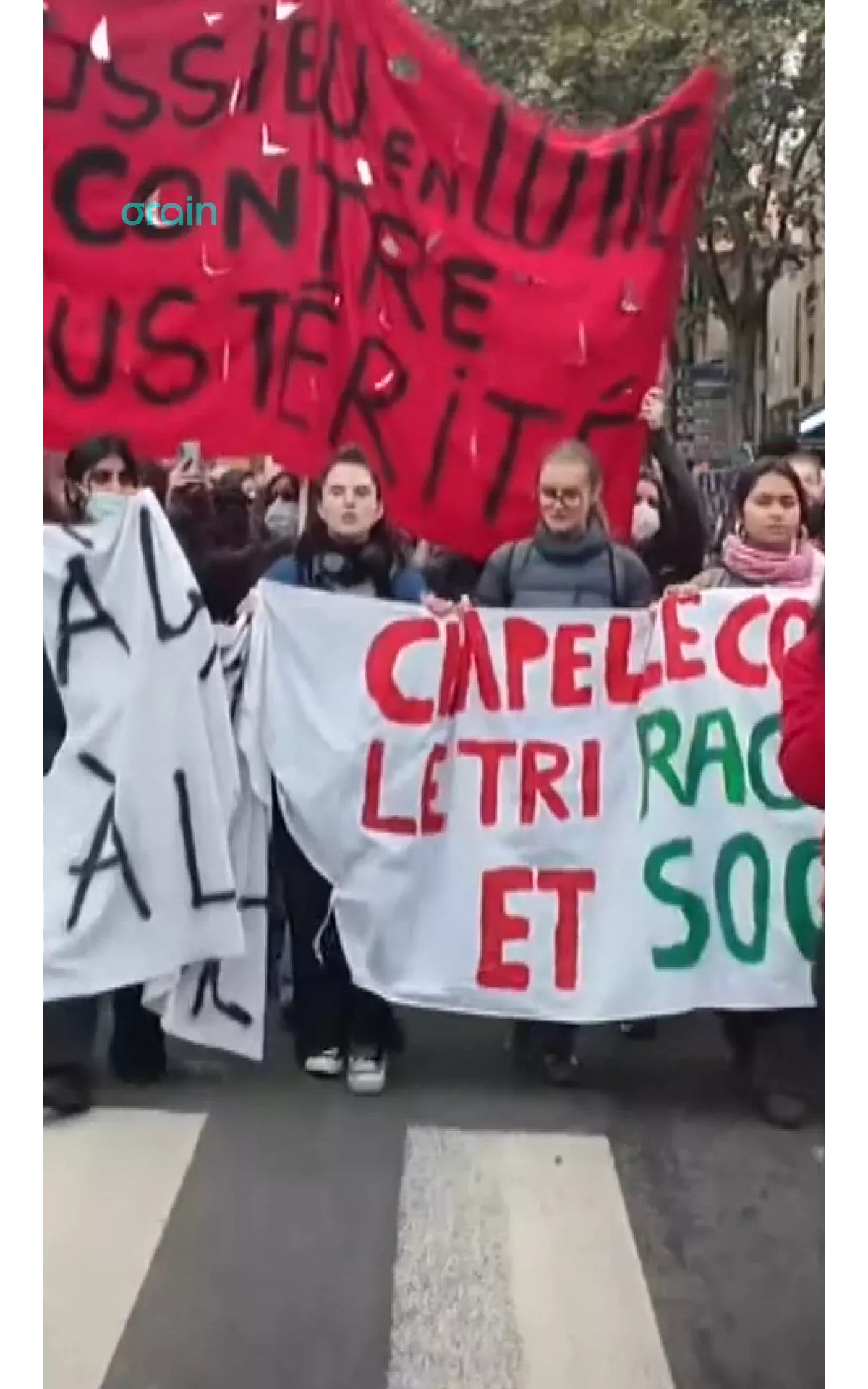

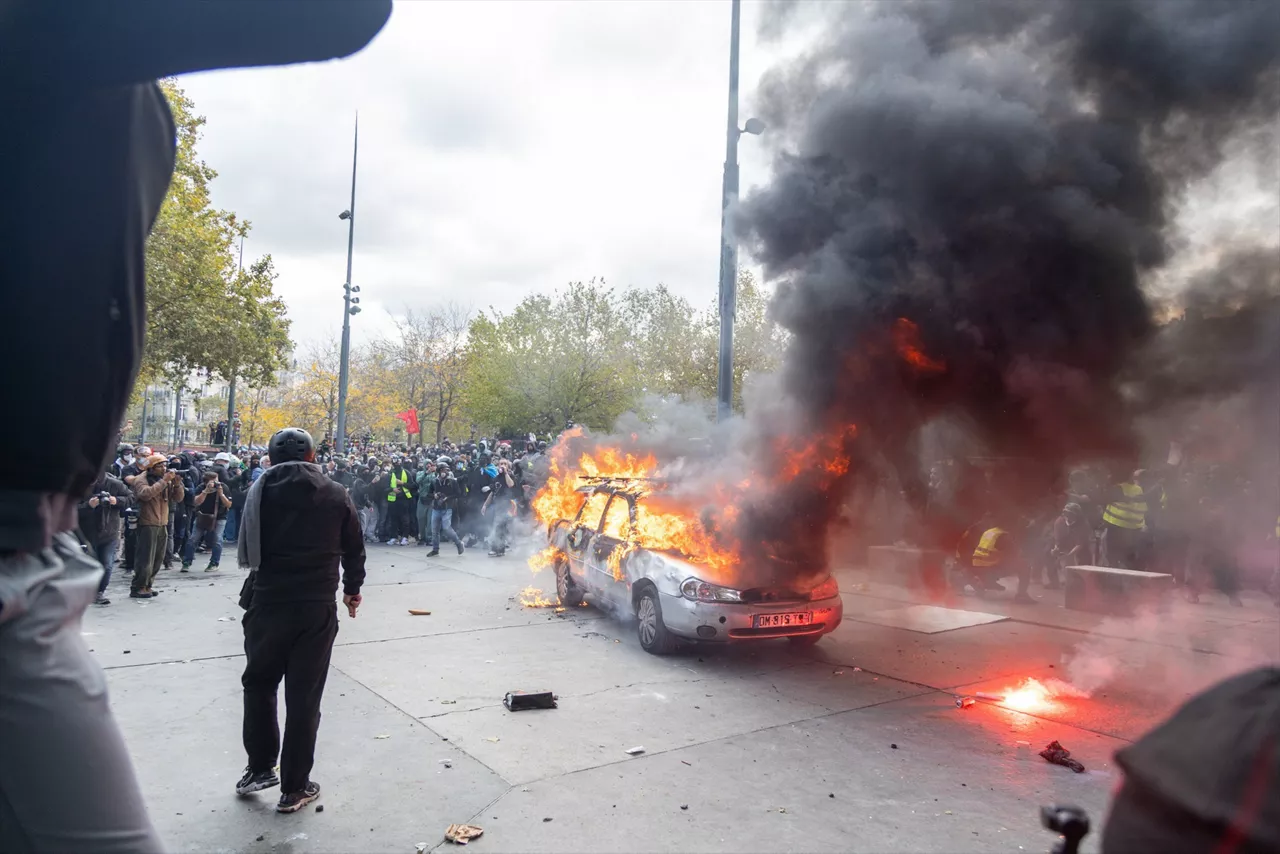
The French security forces arrested 135 people until 1 p.m. this Saturday, onthe morning of a demonstration that brought together 35,000 people in the country's major cities. It was notuntil noon that serious incidents occurred, according to the French Minister of the Interior, Laurent Núñez.
In statements to the French media, Núñez pointed out that 136 actions were carried out by demonstrators in the morning, almost half of the 264 that took place last week. He explained that "much of the arrests have been related to flow controls and the discovery of material for use as a weapon".
The minister recalled that on 17 October, 60,000 people gathered in demonstrations until noon, on a day marked by violence and looting.
In order to prevent the riots of the previous week from happening again, the French Government has establisheda large police apparatus , reducing concentrations in several cities and otherpreventive measures .
During the morning mobilizations, there have been moments of tension in Lyon between demonstrators and police forces, who have used tear gas to disperse various groups.
In Marseilles, the prefecture has exceptionally authorized an interunion demonstration, although rallies were initially banned, and night restrictions affecting minors in the centre and in certain shopping malls have also been extended to adults for Saturday and Sunday nights.
Mobilizationshave also been banned in Nancy, Belfort, Rouen, Le Havre, Toulon and Limoges , with the aim of developing what was seen last weekend.In Nice, where rallies are prohibited, police, gendarmes and riot control units have reinforced their presence in the city centre through armoured vehicles and riot control to ensure security, protect shops and enforce the ban, the government said.

Measures taken in Paris
In Paris, the France Insumisa (LFI) party of Jean-Luc Mélenchon has announced that it will abide by the route established by the Prefecture following the rejection of the appeal by the judiciary, which has called for a rally at 14:00 in the Italian Gate and has called on the French people to mobilise 'for young people, against the high cost of living and against the authoritarian drift of the government'.
The LFI leader has urged French President Emmanuel Macron to give in to protesters "demands before taking" the way out "of the Elysée in May, and has said that otherwise the mobilizations could be repeated every week and even call for a general strike.
Unlike this march, in Paris the route proposed by the student groups and the yellow vests between the Plaza del Bastilla and the Opera, as well as the CGT trade union demonstration planned between the Bastille and the Plaza de la Nación, has been banned.
At the same time, municipal services have been working since Thursday to remove trash cans, glass containers, shared bicycles, large objects and other items that could be used as launch or fire materials. Specific patrols have also been organized and instructions have been given to secure the works and, where possible, to fill the ditches.
Local authorities have also recommended that traders remove debris, terraces and furniture before noon, and many establishments have reinforced their facades for fear of looting.
Similar measures have been taken in thecities of Pau, Rennes, Marseille, Orleans and Tours , where preventive devices have been put in place, and authorities have reported that officers have detained objects that could be used to commit violent acts.
In the French Basque Country, it was possible to hold the planned demonstration in Baiona, but in the morning there were major traffic jams in Irun, according to police checks.
You might like
Canada and the EU have agreed a strategic alliance, but have postponed the relationship until 2027
El Paso, Texas: from host city to detention center
French government warns of high risk of public order incidents on Saturday

Maria Corina Machado thanks the United States for opening the door to "freedom" in Venezuela
Netanyahu and Eisenkot call for an investigation into possible foreign interference in Israeli elections
Flavio Bolsonaro declares himself "elected president of Brazil" and then retracts
Bolsonaro arrives in the United States fleeing Brazilian justice
What are the next steps in forming a government in Israel?
The French Senate has decided to tighten the law to prevent looting and riots