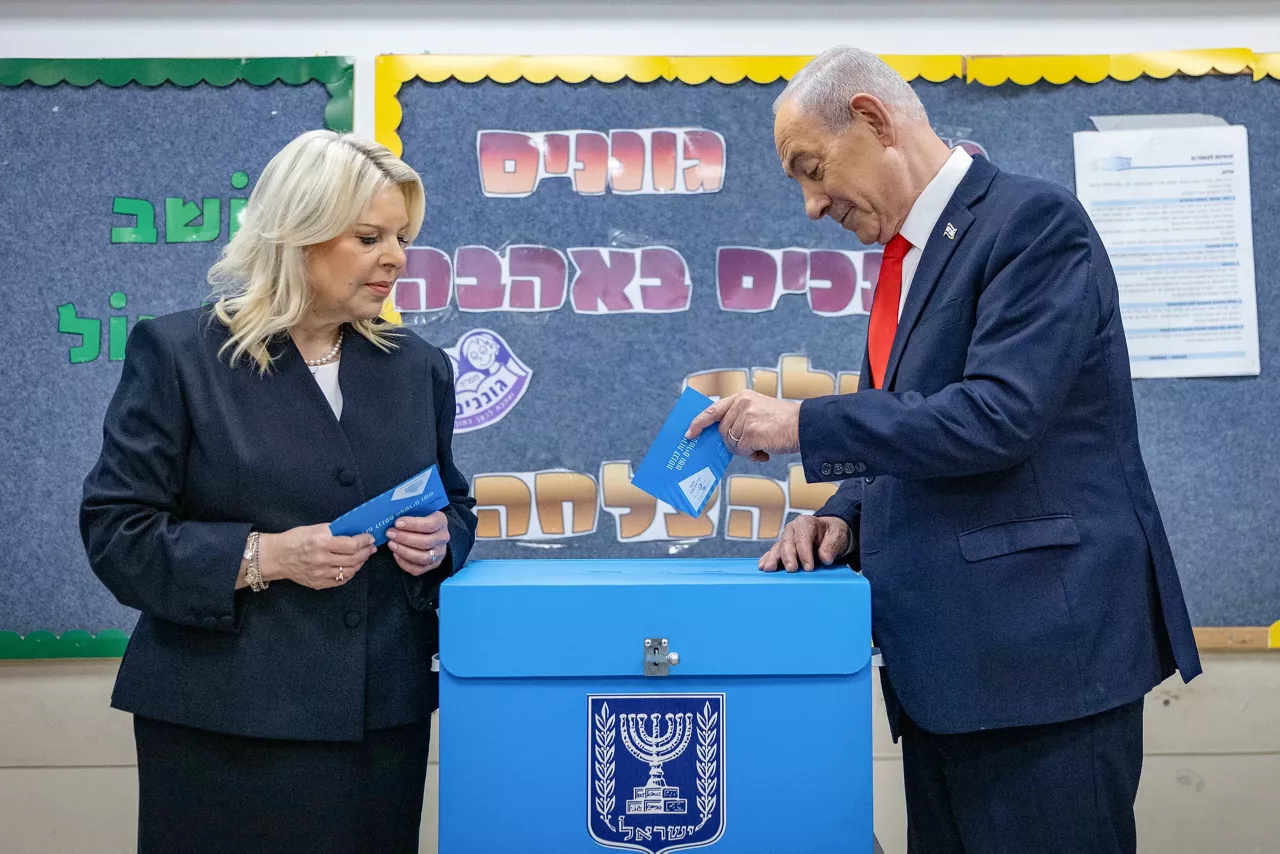
Netanyahu has won the election, but he will not be able to form a government, according to polls
The Israeli parliament, with 120 seats, has a majority of 61. If the opposition bloc of Eisenkot and Netanyahu did not get that number, the support of the Arab parties, both of which reject it for the time being, would be key to forming a government.


Israeli Prime Minister Binyamin Netanyahu has won the general election in Israel by winning between 24 and 25 seats (he won 32 in 2022), but his bloc has not won the majority needed to govern (61 seats), while the opposition group has won between two and three more seats, according to polls published by the country's major channels.
The opposition blocwould win 52 to 53 seats: 21 to 23 Gadi Eisenkotin Yashar!; 12 to 14 Beyajad, led by Naftali Benet; 9 to 10 Yair Golan Democrats; and 7 to 9 Israel Beitenu, the Avigdor Liberman party.
Netanyahu's bloc, on the other hand, would gain about 50 seats: 24 to 25 for the president's Likud; 6 to 8 for Aryeh Deri's ultra-orthodox Shas; 6 to 7 for Itamar Ben Gvi's Jewish Power; 6 for Bezalel Smotrich's Religious Zionism; and 6 to 7 for Yaakov Asher Torah's United Judaism.
Arab parties would win between 17 and 18 seats, with a high turnout among Palestinians with Israeli passports.
The Joint List, which includes the leftist parties Jadash, Taal, and Balad, would win 10-11 seats, while the Islamist Raam would win 7.
The Israeli Parliament, with 120 seats, has a majority of 61. Since the Eisenkot bloc and Netanyahu's bloc do not reach that number, the support of the Arab parties, both of which reject it for the time being, is key to forming a government.
You might like
Canada and the EU have agreed a strategic alliance, but have postponed the relationship until 2027

El Paso, Texas: from host city to detention center

French government warns of high risk of public order incidents on Saturday

Maria Corina Machado thanks the United States for opening the door to "freedom" in Venezuela
Netanyahu and Eisenkot call for an investigation into possible foreign interference in Israeli elections
Flavio Bolsonaro declares himself "elected president of Brazil" and then retracts

Bolsonaro arrives in the United States fleeing Brazilian justice
What are the next steps in forming a government in Israel?
The French Senate has decided to tighten the law to prevent looting and riots