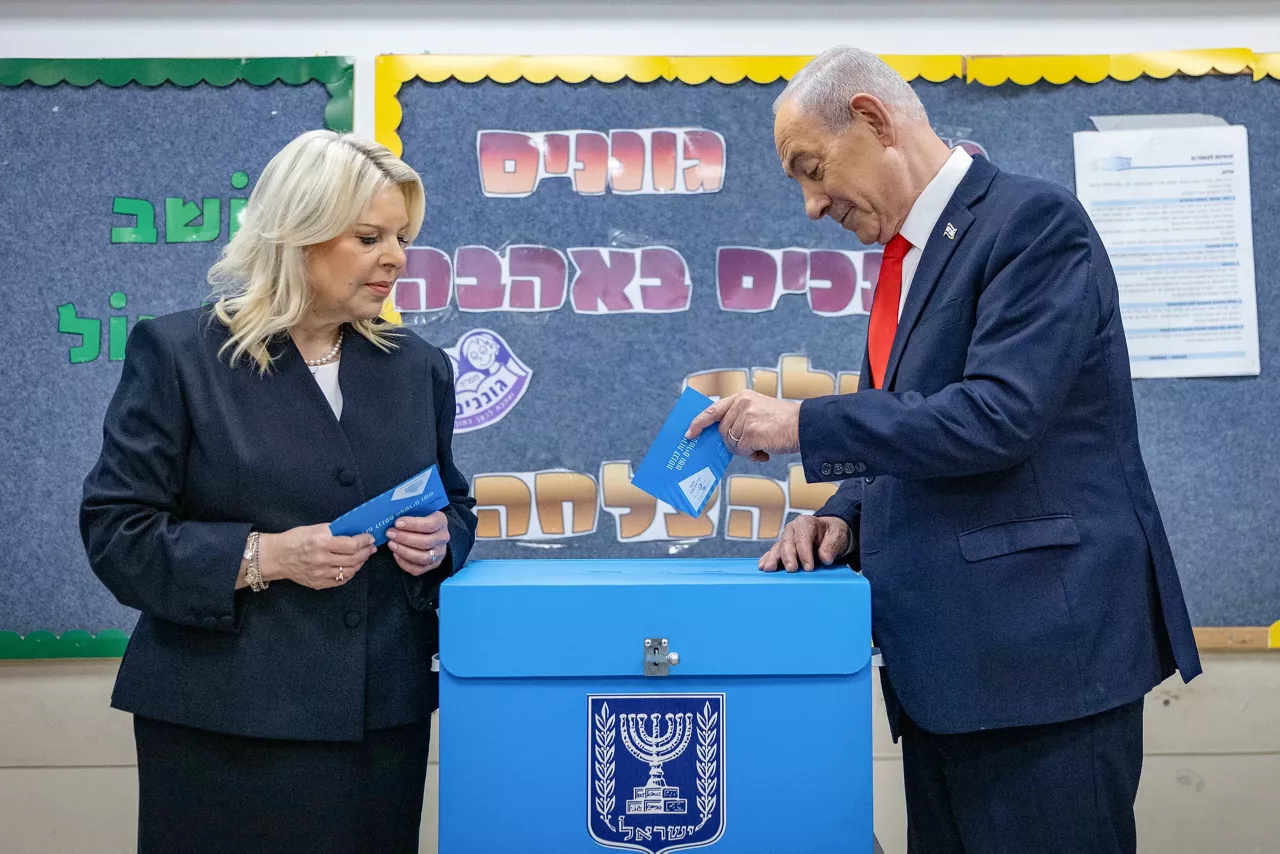
Netanyahu's leadership, under scrutiny in the Israeli elections
More than 7.3 million Israelis are called to vote; the election will be marked by the offensive against Gaza. Polls put the opposition ahead of Benjamin Netanyahu's bloc, but without a sufficient majority to govern.

Benjamin Netanyahu and Gadi Eisenkot on a poster announcing the candidates.

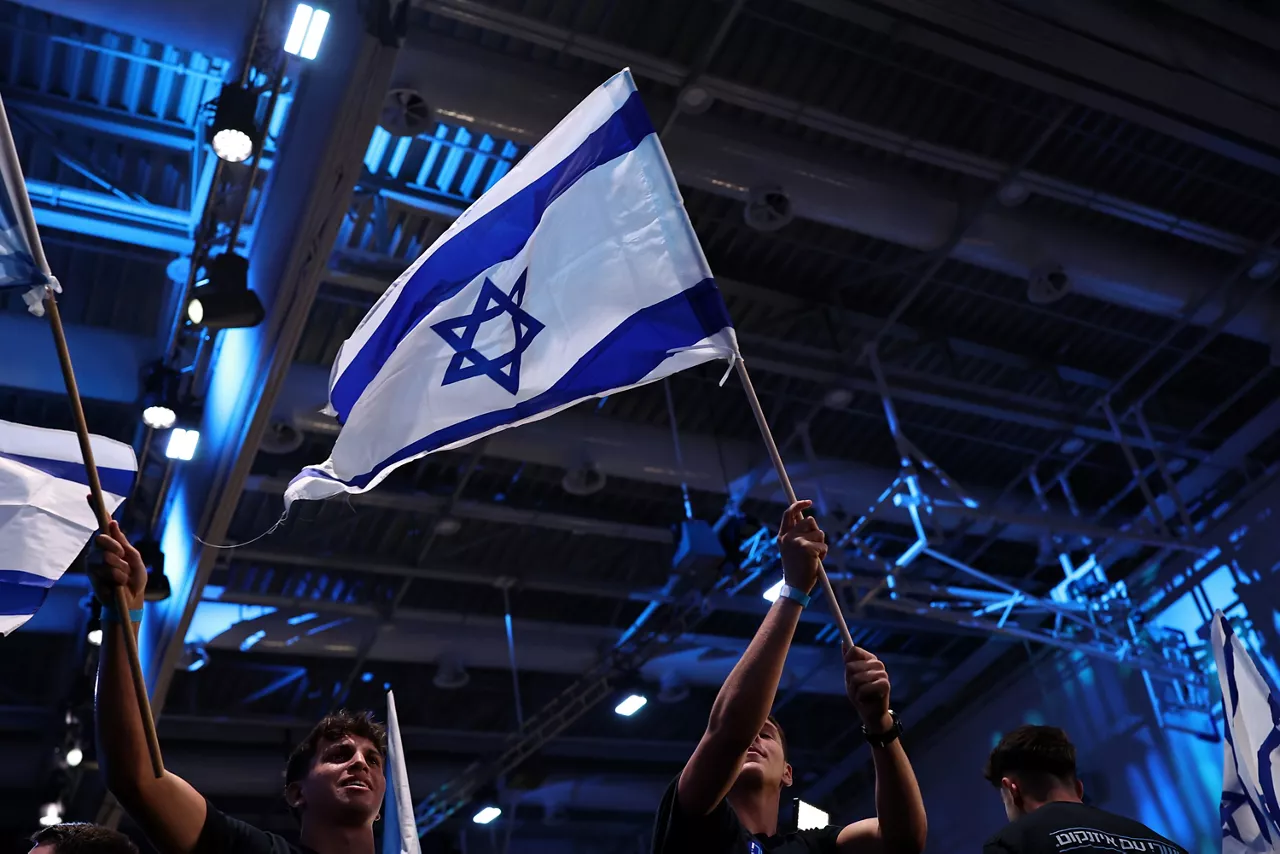
Israeli polling stations are open to elect members of the 26th Knesset (Israeli parliament) and decide whether Prime Minister Binyamin Netanyahu will remain in power. The legislature has been marked by Hamas's attacks on October 7, 2023, the offensive on Gaza, and military escalations in the Middle East.
According to the Central Electoral Commission, 7.3 million people have the right to voteand the polling stations will remain open until 10 p.m. A total of 12,018 polling stations have been set up throughout the country, including Israeli settlements in the occupied West Bank.
A total of 38 parties stand for election, but only 11 are expected to exceed the 3.25% voting limit required to obtain representation in Parliament. The polls point to very close competition and the difficulty of any of the two major blocs obtaining the necessary majority to form a government.
Opposition ahead of Netanyahu
According to the latest polls broadcast by major Israeli television stations, the opposition bloc led by former army chief Gadi Eisenkot is in a better position than that of prime minister. Polls have given him 52 to 56 seats, while Netanyahu's bloc would receive 50. These figures would leave both far from the 61 seats needed to win a parliamentary majority.
Arab parties would win between 14 and 16 seats, according to polls, but opposition support is not guaranteed.
The Eisenkot bloc, leader of the center-right Yashar party, comprises several opposition parties.
Netanyahu, for his part, leads Likud with the support of ultra-orthodox Jewish parties and ultra-nationalist parties. Prominent representatives of his current government include Finance Minister Bezalel Smotrich and National Security Minister Itamar Ben Gvir.
War and political crisis mark the campaign
The election comes after a turbulent legislature, marked by massive protests against Netanyahu's judicial reform and Hamas attacks on October 7, 2023, hostage-taking, and Israel's subsequent offensive against Gaza .
This situation is compounded by military escalations against Lebanon and Iran, which have heightened tension in the region in recent years.
The vote will also make it possible to assess the participation of the Arab population in Israel, which accounts for about 20 per cent of the country's population and 17 per cent of the electorate. This section of the population, made up of Palestinians with Israeli citizenship and their descendants, has the right to vote, unlike the Palestinian population in East Jerusalem.
First results after polling stations closed
The Central Electoral Board has warned of the possibility of rumours and misleading content circulating on the Internet throughout the day, and has therefore asked the public to verify the origin of the information before sharing it.
Although the general vote will take place today, members of Israel's diplomatic missions abroad voted on 15 October, and the active military began voting on 21 October.
That is why, according to the Fly & Vote initiative promoted by the American organization AID Coalition, at least 67,000 people have returned to the country to participate in the elections, mainly from Europe and the United States.
The first polls will be conducted after the polling stations are closed and the first guidance on the outcome will be given, but the final composition of Parliament and negotiations to form a government will determine whether Netanyahu succeeds in remaining in office or the opposition succeeds in removing him from office.
You might like

Canada and the EU have agreed a strategic alliance, but have postponed the relationship until 2027

El Paso, Texas: from host city to detention center
French government warns of high risk of public order incidents on Saturday

Maria Corina Machado thanks the United States for opening the door to "freedom" in Venezuela
Netanyahu and Eisenkot call for an investigation into possible foreign interference in Israeli elections
Flavio Bolsonaro declares himself "elected president of Brazil" and then retracts

Bolsonaro arrives in the United States fleeing Brazilian justice
What are the next steps in forming a government in Israel?
The French Senate has decided to tighten the law to prevent looting and riots