Arcellor Mittal has rejected the ERE affecting the Legasa and Salvatierra factories
The management has made this decision public during the mediation session held at the Navarra Labour Court. The UGT, the majority union at the Legasa factory, has called off the strike.

Protests over the ERE.

Themanagement of Arcelor Mittal has suspended the EREaffecting the plants of Legasa (Navarra) and Salvatierra (Álava), as announced on Monday, which has led to the suspension of the indefinite strike scheduled for 1 July.
The management and the social part met on Monday at the Navarra Labour Court to hold a mediation session on the occasion of the strike, in which the management announced its decision to reject the ERE, as reported by the majority UGT union at the Legasa plant.
The unions decided to call an indefinite strikefollowing the last meeting of the negotiating table , at which Arcelor Mittal concluded the negotiation of the ERE without agreement and announced the granting of a minimum legal compensation to the 33 workers who were to be dismissed from the Legasa centre, without the possibility of retirement and transfer.
In the opinion of UGT, with the rejection of the ERE, the company "tacitly accepts what was unanimously stated in the negotiation at the negotiating table: that the unilateral decision of the company affected only the workers of the Navarre centre, since an investment plan would be drawn up to enable it to increase the workforce for the other centre (Salvatierra)."
Following the announcement by the management,\ u00A0 UGT has decided to call off the indefinite strike, but has stressed that if a new ERE is presented for the group's centre in Legasa, "it will continue to defend the interests of all workers, without ruling out any possibility during the negotiation, with the aim of ensuring the maintenance of employment and industrial activity".
You might like
The five investors interested in buying Tubos Reunion will meet with the unions next week

ELA and LAB demand "more leadership" from the government to convene employers to negotiate their own SMI

SpaceX and Tesla are considering merging to create a tech giant backed by Elon Musk
Wine unions announce mobilizations in Rioja Alavesa in search of an agreement
There will be news: the lehendakari meeting with ELA and LAB, the cold front and protests in France
Denis Itxaso advocates new measures to rent empty homes

The average income in the Basque Country increased by 7.2% in 2024, to 28,170 euros
LAB's General Coordinator calls for participation in the November 11 general strike to channel citizens "demands
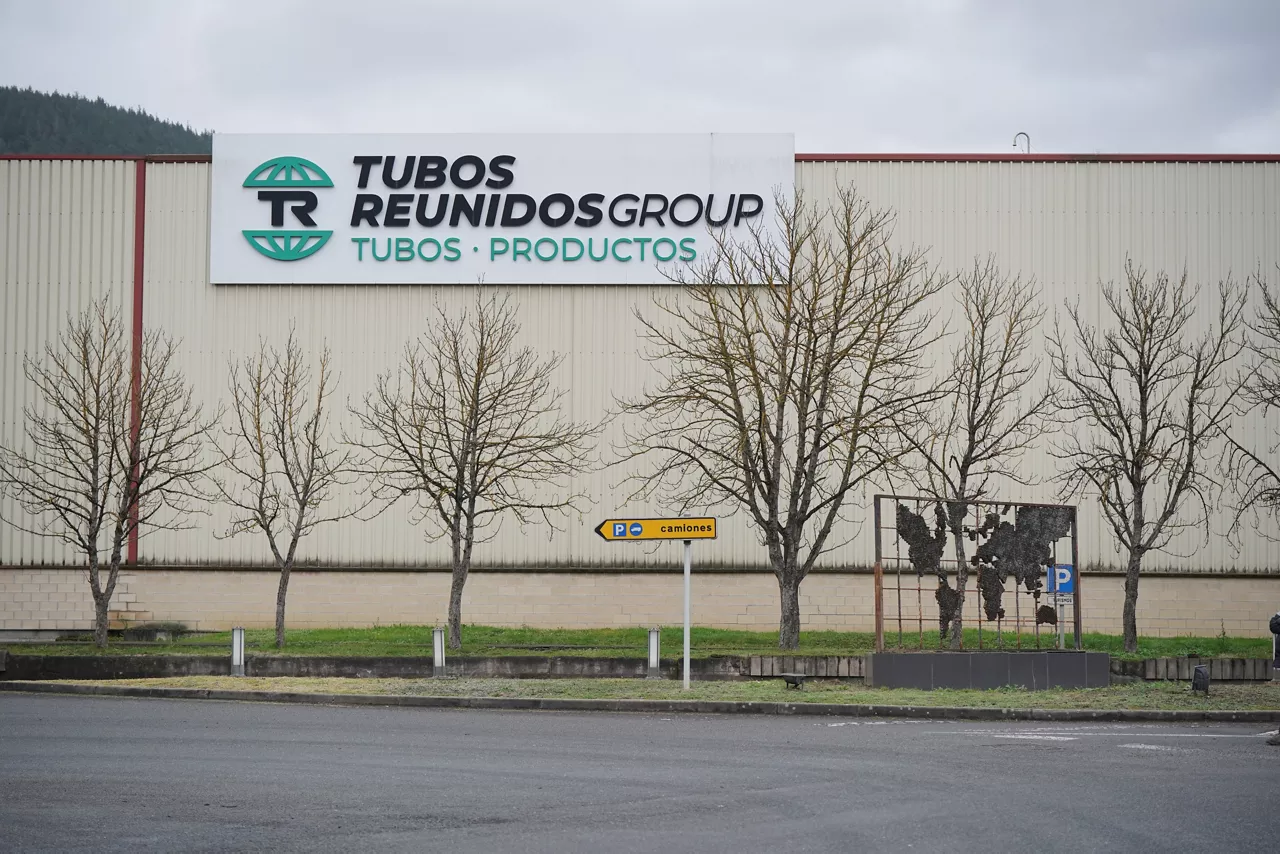
The top five offers from Tubos Reunion propose reducing staff and changing working conditions