X-ray of rents in Hego Euskal Herria Which municipalities are the richest and poorest?


Hego Euskal Herria is located at the top of the economic map of the State. It is the territory that accumulates the greatest wealth, with an average personal income of 19,500 euros for the Basques of the South. However, under this apparent prosperity, the distribution of income reveals strong contrasts between territories, regions, towns and neighbourhoods. This report will analyse, through data, experts and witnesses, the gaps in income between Álava, Bizkaia, Gipuzkoa and Navarra.
The X-ray of the income of the citizens and families of Hego Euskal Herria shows us the skeleton of a prosperous but fluctuating people. Throughout the State, our territory is at the top of the economic map, since the Basque Country and Navarre are among the territories with the greatest wealth of the State, the average personal income (19,500 euros) far exceeds the Spanish average.
According to the National Institute of Statistics (Atlas of the Distribution of Family Income, 2024), the Basque Country leads the ranking of the State, with a personal income of 20,279 euros, ahead of Madrid (18,856 euros), the Balearic Islands (18,854 euros) and Catalonia (17,477 euros), while Navarra remains fifth, but above the average, with 16,941 euros.
However, under this apparent prosperity, the distribution of rents reveals strong contrasts between territories, regions, towns and neighbourhoods. This report will analyse, through data, experts and witnesses, the gaps and evolution of rents in Hego Euskal Herria that are hidden in the shadow of wealth.
Professor of Applied Economics at the UPV/EHU Faculty of Labor Relations Jon Bernat Zubiri has explained that personal income is the sum of all income earned by an individual throughout the year, that is, the salary, profits and interest received, among others. However, as an average, the expert has stressed that high incomes "greatly" increase this variable.
Gipuzkoa leads the personal income in Hego Euskal Herria, with an average of 19,619 euros in 2023 (the last available data at the territorial and municipal levels), followed by Bizkaia (18,738 euros) and Álava (17,806 euros).
With regard to Álava, Bernat points out that "there are two Alaveses", since Vitoria is the capital with the greatest industrial weight, but that all the inhabitants of Álava outside the Plains live in regions dependent on the primary sector, so that they "fall behind" in terms of income.
By region, the differences are more pronounced, with Plentzia-Mungia leading the classification with 20,697 euros, while at the other end the Ribera de Navarra with 14,183 euros.
Only four regions exceed the average personal income of 20,000 euros: Plentzia-Mungia, Alto Deba, Donostialdea and Estribaciones del Gorbea. To this end, the economic expert points out that they have higher capital incomes in these regions. In fact, with the exception of the Alto Deba, the employment and salary data are not good in these three regions.
Municipalities with the highest personal income
As for the municipalities, Laukiz (25,434 euros) is the municipality with more than 1,000 inhabitants with the highest average personal income in our country, followed by Getxo (24,626 euros), Maruri-Jatabe (24,145 euros) and Loiu (23,145 euros), all from Bizkaia.
Moreover, of the 25 municipalities with the highest incomes of at least 1,000 inhabitants, 13 are from Bizkaia. The rest, 8 are in Gipuzkoa, 3 in Álava and 1 in Navarre. The majority are relatively small villages, with less than 10,000 inhabitants. However, if we do not look at the number of neighbours, the data vary: five municipalities with fewer than 300 inhabitants are the richest, with more than 25,000 euros.
In this regard, the UPV professor has targeted wealthy people. As far as Laukiz is concerned, he has referred to the urbanization of Unbemendi, "where a large number of Basque entrepreneurs live." He has stressed that income is not generated in this municipality, nor is it affected by the majority of the quadrillions, "but since the rents of a few are very high, it puts the average personal income at the top of the classification."
As he explained, a similar situation is experienced in Getxo, Loiu, Barrika and San Sebastián, for example, "because of this residential phenomenon of rich people they have a high personal income, not because wages and profits are generated there."
Of the 250 municipalities with the highest average personal income in the State as a whole, 112 are from Hego Euskal Herria; that is, 45 per cent of the richest municipalities in the State are Basque municipalities.
Moreover, of the 25 richest municipalities in the whole state, 8 are around us: five in Bizkaia, two in Álava, and one in Gipuzkoa.
Garai

This situation is even more noticeable in small municipalities, such as Garai (Bizkaia), which is one of the municipalities with the highest average personal income (24,905 euros) and family (78,372 euros), of which Lázaro Milikua is a native. The neighbour acknowledges that it is the town with the highest income, but that this money is not visible on the street.
Municipalities with the lowest personal income
The reverse is to the south. Of the 25 small municipalities with more than 1,000 inhabitants, 24 are in Navarre and Castejón has the lowest income (11,850 euros). In addition to those in Navarre, this list includes Oyón de Rioja Alavesa, with an average of 14,035 euros.
By region, the Ribera de Navarra predominates in this group, with ten of its lowest municipalities, six of which are among the lowest incomes. Regardless of the number of inhabitants, the lowest municipalities belong to this region, followed by other municipalities in Rioja Alavesa and Estella, such as Navaridas, the poorest, with an average of 11,111 euros, and Andosilla, with 12,152 euros, among others.
Sestao.

In Sestao, the uncertainty and daily struggle to reach the end of the month is evident. Although some interviewees say that their economic situation has "improved" or remains "stable," most agree that the cost of living has risen "far above wages."
The main concern of these citizens is access to housing, since rents exceed EUR 900. This is unpayable for many, especially for those who live in a municipality that has historically been the 'cheapest' village in the whole of the Left Bank.
Navarre municipalities lead income growth
The evolution data for the period 2016 to 2023 show the largest increase in the municipalities with the lowest starting income. Of the populations with at least 1,000 inhabitants, the largest increase is in Yerri (53.5%), followed by Cabanillas (48.6%), Barrika (45.9%), Ultzama (45.6%), Maruri-Jatabe (44.9%), Azkoien (43.1%), Beregi (41.9%).

Of the 25 large municipalities that have increased their average personal income most in the last eight years, 15 are in Navarre, six in Bizkaia and four in Gipuzkoa.
If we look at the territory as a whole, the average personal income has sometimes almost doubled in this period, as in the municipalities of Biurrun-Olcoz, Deiu and Izagaondoa in Navarre, with an increase of up to 98.8%.
In any case, the UPV expert has stressed that this is a nominal increase, and that the increase in prices invalidates much of this increase, "which is particularly serious when considering the evolution of small wages, which are most affected by the increase in primary goods and housing."
Zarautz

This neighbour of Zarautz, for his part, has pointed out that the increase in the cost of living in recent years has aggravated the day to day. In his opinion, it is regrettable that prices have taken the upward trend, and he has also pointed out that wages are not rising at this rate. He has said that the gap between wages and the cost of living makes it increasingly difficult to move forward.
Family income, another way of measuring
Family income, calculated as the sum of the total income of a household, provides a complementary picture. In general, trends are similar to those of personal income, with Gipuzkoa and Bizkaia in the first place, while Navarre has a greater internal dispersion.
Personal income is the unit of consumption of individuals (according to the scale of the Organization for Economic Cooperation and Development), while family income reflects aggregate household income. However, the map of income of Hego Euskal Herria varies little when comparing personal and family income, albeit with nuances. The richest regions remain the same: Plentzia-Mungia, Alto Deba, Donostialdea, Estribaciones and Estribaciones.
One of the most striking cases is the mountain area, where the personal income is maintained in the central area, but the family income is significantly reduced, while the data from the Region of Pamplona and the Baztan-Bidasoa are increasing in the latter case.
In general, extremes are repeated, but internal differences show how the economic picture varies by looking at both types of income: the difference depends not only on what each person earns, but also on how much income is accumulated under the same housing.
The map of territorial inequality paints very striking provincial contrasts. In Álava, the proportion of municipalities in the lowest income deciles is very high: more than one third of municipalities are in decile 1, in the group of populations with the lowest family income, 10%, the highest percentage in the whole table. In contrast, in Bizkaia and Gipuzkoa there are 4.4% and 1.1% respectively.
From the intermediate deciles, the pattern is reversed: Gipuzkoa is the province with the highest relative weight of municipalities at high levels of income, especially in deciles 8 and 9, where it exceeds 2% and 15%, followed by Bizkaia, which has the highest concentration in decile 10 (17.7%).
Navarre has a more homogeneous distribution, and Álava, despite having a strong presence in the most vulnerable groups, has several municipalities at the highest level of the table, 7.5% in the 10th decile.
The wealthiest neighborhoods, where?
The income map of Hego Euskal Herria shows the gaps between rural and urban areas, north and south, centre and periphery, but also between the wealthiest and poorest neighborhoods. According to data from the census section of the INE, the smaller administrative unit, the income gap occurs mainly in large municipalities and capitals. And the internal differences within municipalities are more pronounced when considering family income.
Bilbao is the municipality with the largest gap between neighborhoods: the homes of Abando and Deusto have an average family income of 81,000 euros more than those of Otxarkoaga and San Francisco. In Getxo the contrast is also evident: the richest neighborhoods of Hego Euskal Herria, such as Neguri and Las Arenas, are present, where the family income of Itzubaltzeta/Romo is twice as high.
Getxo.

Getxo is among the wealthiest municipalities in Bizkaia, but the difference between the data and the reality of the street is becoming more and more evident. Despite high personal income, life has become extremely expensive. As a result, many citizens have pointed out that the economic situation and quality of life in the municipality has "deteriorated" in recent years, especially due to the increase in housing and basic goods.
With regard to the historical differences between neighbourhoods, there are many opinions on the street, although many experts and citizens agree that the gap between Las Arenas and Itzubaltzeta/Romo, for example, in terms of housing, is narrowing. The prices in the areas remain high, and in Itzubaltzeta/Romo and the surrounding neighbourhoods "have become extremely expensive", which has blurred the economic gap.
In Vitoria-Gasteiz, the gap is up to 78,000 euros; among others, the areas of Abetxuku and Zaramaga are well below the wealthy areas, such as Mendizorrotza.
In San Sebastian, too, there is a great imbalance: the wealthiest neighbourhoods, such as Miraconcha and Aiete, triple or quadruple the family income of Egia and Intxaurrondo. In Irun, the economic boundary is between north and south; and in Eibar and Arrasate, where the division between factory areas remains evident.
Mondragon.

Arrasate's neighbors have made it clear that personal income and living conditions in recent years have not been good enough. Although wages are thought to be "high," they believe the situation has worsened. They say that the employment map depends on services and industry in the municipality, where the unemployment rate is worrying, as it is "higher than that of neighbouring municipalities."
In Navarre, the gap is wider in large towns. In Pamplona, the difference between Iturrama and Ermitagaña and the northern neighbourhoods of San Jorge and Chantrea exceeds 43,000 euros. In Tudela, the east-west gap within the municipality is evident, with a difference of 29,000 euros.
The analysis of deciles on family income reinforces this image of polarization. Neighbourhoods with incomes of more than €54,841 per household are part of the richest 10% of families in Hego Euskal Herria, while the poorest 10% are below the average of €20,000.
The distribution shows that there is a great dispersion between the upper and lower sections, and that the imbalance is even more pronounced if one considers the poorest and richest neighbourhoods.
In spite of his income, Bernat has stressed that in most of the regions around us today, citizens with both high wages and high profits cannot stay in the region where they live, and go to work abroad, "except in the wealthiest suburbs of the capitals."
Thus, although family and personal income do not have a direct impact on the development and well-being of a place, the economic expert has explained that it indirectly affects life. "In fact, if there are high-income people in a neighbourhood or municipality, they will consume services and products, often at the request of nearby businesses or companies, which will result in an opportunity for development and well-being, provided they are able to create good jobs and businesses."
You might like
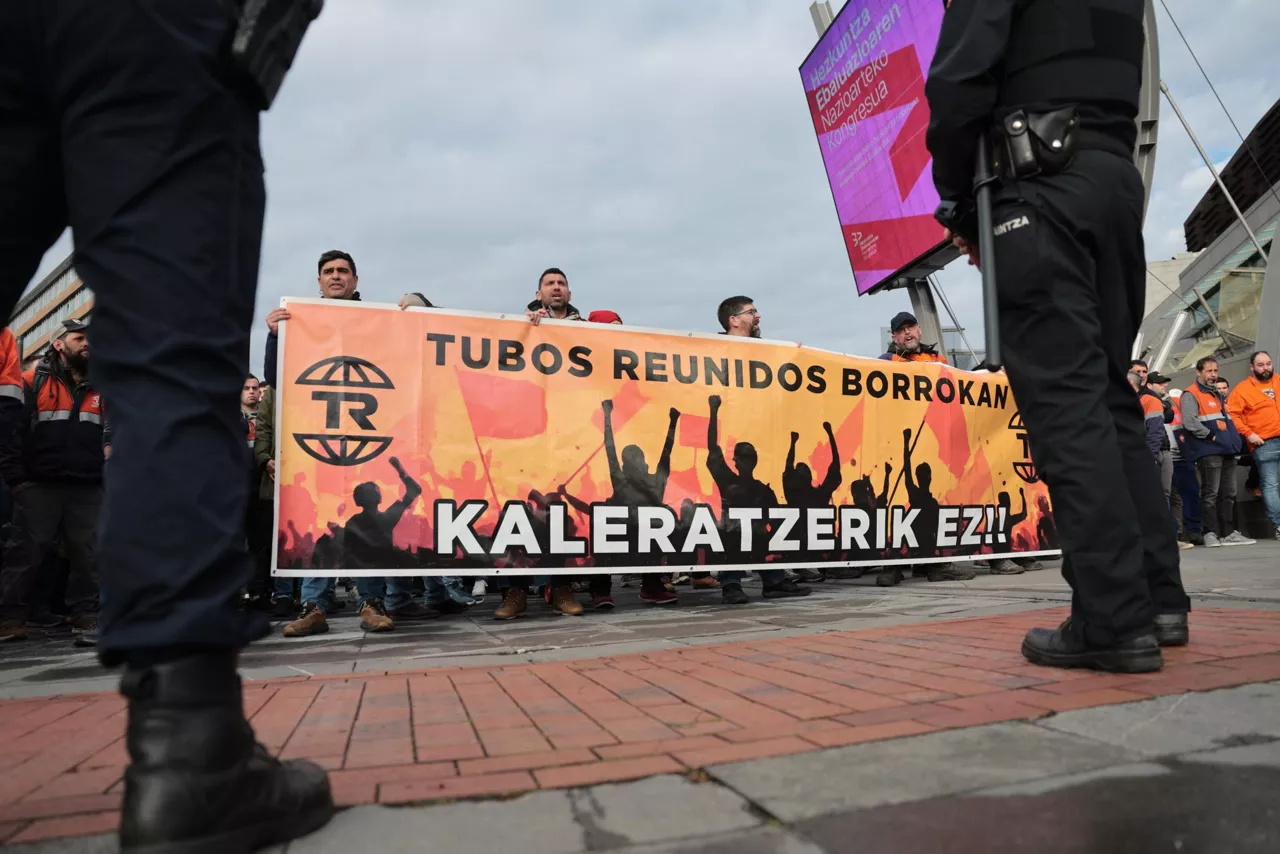
The five investors interested in buying Tubos Reunion will meet with the unions next week

ELA and LAB demand "more leadership" from the government to convene employers to negotiate their own SMI

SpaceX and Tesla are considering merging to create a tech giant backed by Elon Musk
Wine unions announce mobilizations in Rioja Alavesa in search of an agreement

There will be news: the lehendakari meeting with ELA and LAB, the cold front and protests in France

Denis Itxaso advocates new measures to rent empty homes
The average income in the Basque Country increased by 7.2% in 2024, to 28,170 euros
LAB's General Coordinator calls for participation in the November 11 general strike to channel citizens "demands
The top five offers from Tubos Reunion propose reducing staff and changing working conditions