Joxe Azurmendi, a philosopher and thinker, died at the age of 84
Jakin highlights that "you have left us a great thought. We will continue to work on it, as you have always asked of us, without deifying you (or anyone), but recognizing teachers." This historical journal stresses that Azurmendi's thinking was fundamental to the renewal and promotion of the Basque Euskera and Basque culture in the 1960s and 1970s.

Joxe Azurmendi.

Zegamarra thinker and philosopher Joxe Azurmendi died in San Sebastian on Tuesday at the age of 84, according to Jakin magazine .
Jakinstresses that "you have left us a great thought. We will continue to work on it, as you have always asked of us, without deifying you (or anyone), but recognizing the teachers." This historical journal stresses, in a note published today, that Azurmendi's thought was fundamental to the renewal and promotion of the Basque Euskera and Basque culture in the 1960s and 1970s. "
The philosopher began his intellectual career in the Franciscans of Aránzazu and in the 1960s moved to Germany, where he studied philosophy, and alsoto Rome , where he studied theology, to return to the Basque Country after Francoism.
In the 1980s he left the Franciscans and began working as a professor at the University of the Basque Country (UPV/EHU) . Until his death he was an emeritus professor at the Faculty of Philosophy of San Sebastian .
Jakin aldizkaria
The philosopher who has thought for the Basques of his time and his future is gone
In 2010 he was appointed honorary academic of Euskaltzaindia and in 2012 he received the Eusko Ikaskuntza-Humanities, Culture, Arts and Social Sciences Award .
With 'History, Race, Nation' won the Basque Country Literature Award in 2015 for the best essay in Basque.
In addition, in 2018, the Provincial Council of Gipuzkoa awarded him the Gold Medal of that territory. He received it along with the other promoters of the magazine Jakin, but was unable to attend the event.
Short biography
Azurmendi, known as Asurmendi (19 March 1941, Zegama), published his first articles in 1960, Jakin and Anaitasuna-That same year he began working on Bitoriano Gandiaga's poem 'Elorri' (1962).
During those years he worked as a collaborator and assistant director of Jakin , as a typist, among others. In 1964 he became a priest and in 1965 he moved to Rome to study theology.
In 1966 he moved to Germany, where he spent twelve years collaborating with Jakin, Zeruko Argia eta Anaitasuna–\u00A0, and with Jose Luis Alvarez Txillardegi and other leftist thinkers he worked on texts on Marxism for young people in the Basque Country.
Azurmendi published 'Green Words' and 'Language, Ethnicity and Marxism' in 1971, with poems written in the 1960s.
In those years he also prepared the book 'Kolakowski' (1972) and participated in the first courses organized by the UEU in 1973. In 1975 he published the book 'Man is a pure animal' and between 1973 and 1977 taught language and literature at the MunsterNational College.
In 1976, after the death of dictator Francisco Franco, he returned to the Basque Country for a few months and joined Jakin Taldea Joan Mari Torrealdai, Joseba Intxausti and Paulo Agirrebaltzategi.
You might like

The Council will launch a virtual league between Guipuzcoan municipalities to promote healthy ageing

The storm has left two dead in Valencia, where the government is preparing a restraining order
The remains of Neanderthals have been found for the first time in Navarre in the caves of Abaunz

There will be news: Vaccinations in the ACV and flu vaccination in Navarre, Adam GOIDI and protests in France

The Invisible Breast Cancer Bill

Red alert continues in Valencia and Alicante for storm Adam heading for Catalonia

More than 200,000 people are called to be vaccinated against influenza and covid in Navarre today

A talo with record jokes: Barakaldo gets the longest in the world
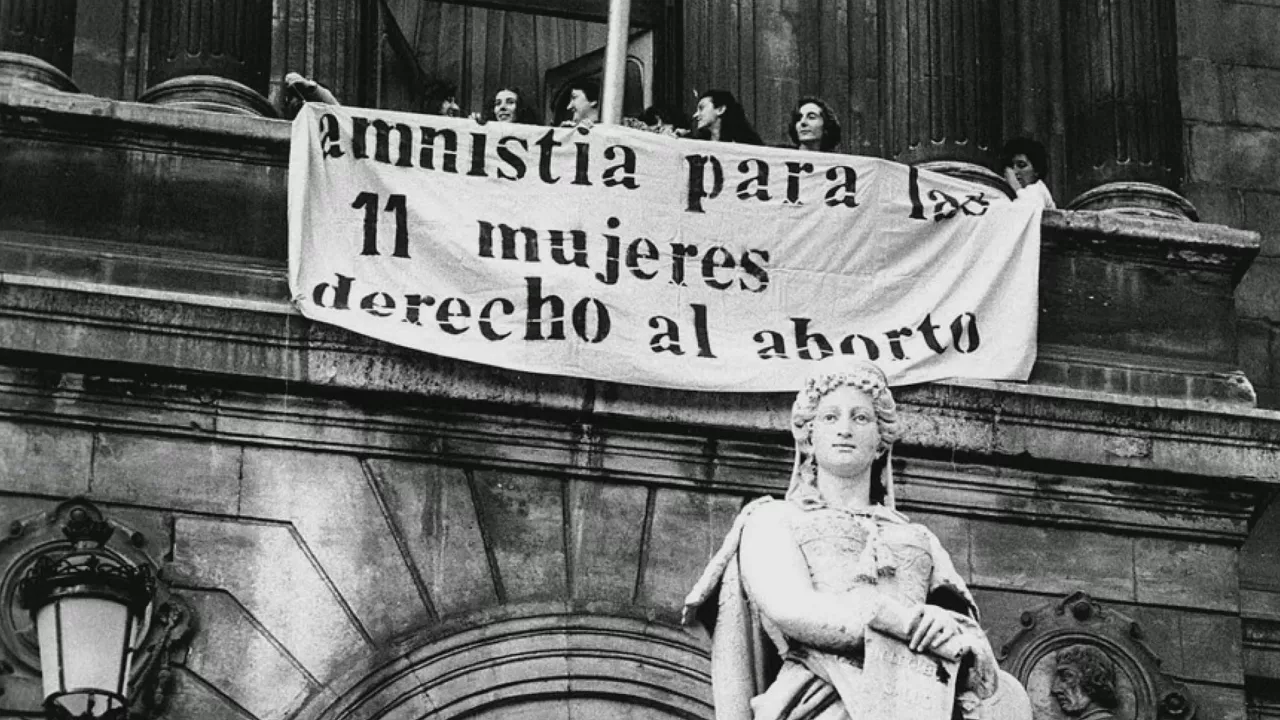
The "Basauri Eleven" case, convicted of abortion in the 1970s, turns 50