Hormonal Therapy for Menopause (MTH): Is it safe and appropriate for all women?
Does it increase the risk of breast cancer? When should we start taking it? We've cleared up these and other doubts with Virginia Canales, a gynaecologist at Osakidetza.


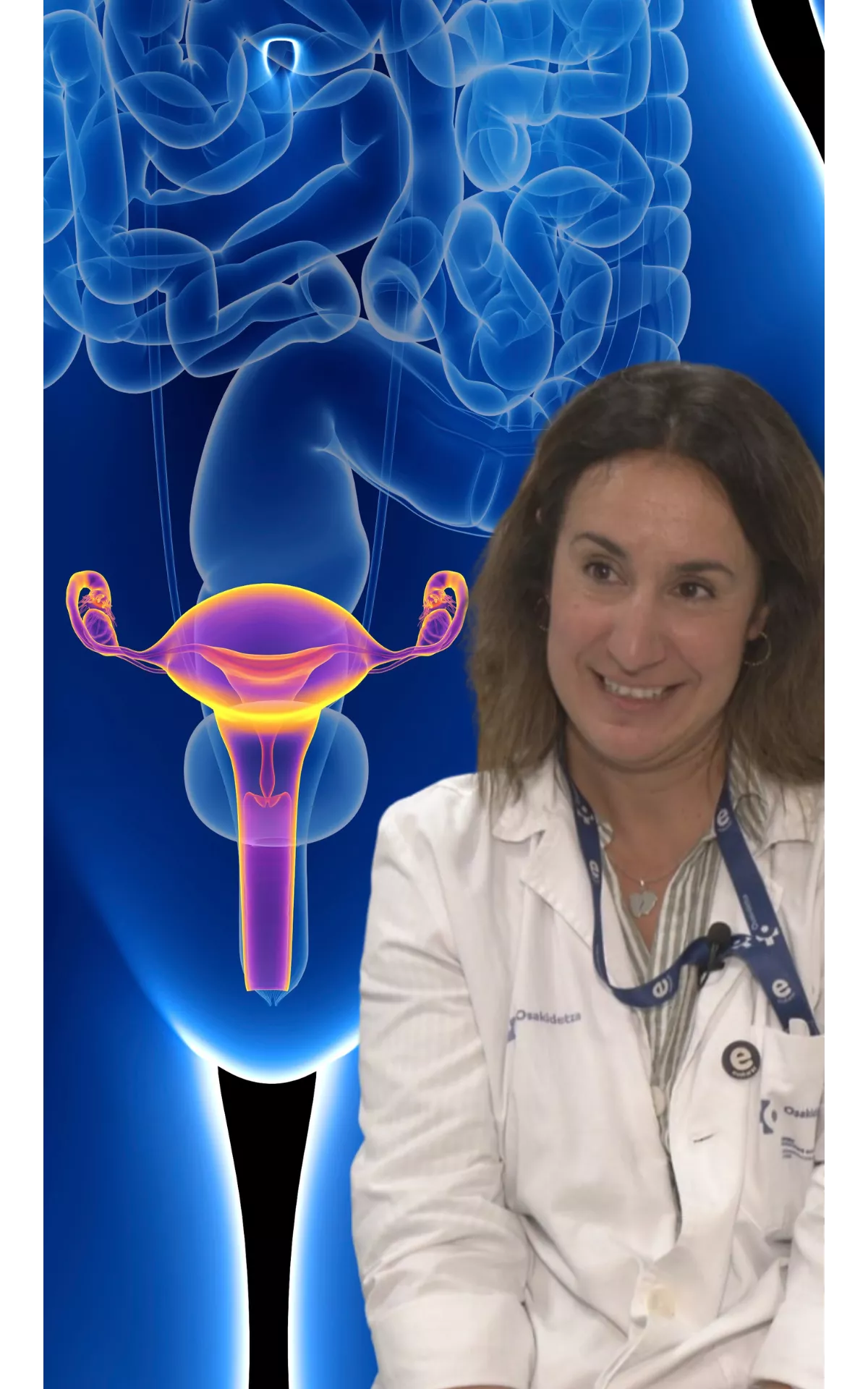
Hormone therapy for menopause (MTH) is a treatment for women with moderate or severe menopause symptoms that acts as a protector if administered at the right time.
We spoke with Virginia Canales Arrasate , a gynecologist at Urduliz Hospital (Bizkaia) at OSI Uribe, breaking myths and resolving doubts about the treatment that science has determined is safe and effective for women.
Which woman is it suitable for, and when should it begin?
Although studies in previous decades raised questions about the safety of hormone therapy for menopause,e gungo's scientific evidence supports its use; however, gynecologist Virginia Canales emphasizes a key requirement: eez is preventive treatment. "It is suitable for women who are in perimenopause or menopause and suffer symptoms that directly affect their quality of life," she explains, "especially when symptoms are moderate and severe."
When women arrive at the gynaecology office with these symptoms, they are given a medical examination and a questionnaire to detect possible contraindications beforeprescribing treatment.
Although there are no strict age limits, the medical recommendation is to stop menstruation definitively (after at least 12 consecutive months without menstruation) and begin treatment in the first ten years. In this "window of opportunity", structural and vascular changes in the body caused by estrogen deficiency are restored, "as is the case in the endothelium of blood vessels".
The shadow of the 2002 WI investigation
The 2002 trial of the US Women's Health Initiative (WHI) linked menopause hormone therapy to increased risk of breast cancer and heart attacks, and for decades hormone therapy has been considered harmful.
Later, this macro-study was retouched, especially with regard to the profile of participants: women with an average age of 63, many of whom had previous pathologies and had menopause for more than ten years.
Physiological menopause usually occurs around the age of 50, but symptoms may begin years earlier.
What does it consist of and in what format?
The aim of this therapy is to replace natural estrogen loss . Currently, when Osakidetza doctors prescribe hormone therapy for menopause, they do so in many formats: pills (orally), splashes, gels and sprays (transdermal pathway), as well as creams and eggs (via vaginal).
If the patient has a uterus, estrogen should be administered in conjunction with gestagen (progesterone), which can increase the risk of endometrial cancer in the uterus while estrogen protects bones and the cardiovascular system; the function of gestagen is precisely to reduce this risk.
Hormone therapy for menopause should not exceed 5 years
Benefits and risks
According to Canales, "patients perceive clinical improvementalmost immediately from the first month. "In the short term, heat, sleep difficulties, and vaginal dryness and pain in sexual intercourse are mitigated.
In the long run, "taken for months or years," treatment helps preserve bone quality — reduces the risk of fractures from osteoporosis — and protects cardiovascular health — reduces the likelihood of heart attacks.
As for the potential risk, Canales explains, "there are risks, but you have to know the context." That is, the likelihood of any woman suffering from breast cancer throughout her life is 12%, and if you do this treatment over the years, the percentage increases slightly, to 14%.
"If the patient has symptoms and is malfunctioning, the benefits are much greater than that slight increase in potential risk," the gynaecologist says, although the patient will always have the last word.
Drug supply problems
In recent months, the supply of these drugs to women undergoing hormone therapy for menopause has been low, affecting mainly transdermal treatments (splashes, gels and sprays).
The reason lies in the increase in demand, explained Virginia Canales, a gynaecologist at Osakidetza, who explains that doctors increasingly prescribe transdermal and less oral pathways because skin "avoids staying in the liver and reduces the risk of clotting alterations." This change of approach has triggered demand for drugs, which they cannot cope with today.
You might like

Residents are working to clean up the municipalities most affected by the isolated depression in the Adam Heights

Benta Berri residents will remain on protected rental terms

The Council will launch a virtual league between Guipuzcoan municipalities to promote healthy ageing

The storm has left two dead in Valencia, where the government is preparing a restraining order
The remains of Neanderthals have been found for the first time in Navarre in the caves of Abaunz

There will be news: Vaccinations in the ACV and flu vaccination in Navarre, Adam GOIDI and protests in France

The Invisible Breast Cancer Bill

Red alert continues in Valencia and Alicante for storm Adam heading for Catalonia

More than 200,000 people are called to be vaccinated against influenza and covid in Navarre today