Pradales defends his road map for the new statute while the opposition calls for concrete answers
In leading the process of renewing self-government, the president has promised to do everything in his power and has called on parties and actors to step forward. The General Policy Debate ended at 7 p.m. with replicas from the groups.


The General Policy Debate took place today in the Basque Parliament in a calm and calm manner, despite the atmosphere of the recent elections. The President, Imanol Pradales, has defended his road map to address the main challenges facing the ACV, with the new statute at the centre. Meanwhile, the opposition has called for concrete responses to the challenges .
The President opened the debate in the morning, and after explaining the main challenges, he highlighted the negotiation of thenew political pact to "make a qualitative leap in our self-government "through broad agreements.
In this regard, it has called on political parties, institutions and educational, social and economic actors to take a step forward and has promised to do everything in their power.
The president has set five "country commitments" for the second part of the legislature: climate change, artificial intelligence, competitiveness and quality employment, education and comprehensive well-being.
With regard to education, he has acknowledged thepoor results of the PISA report and has announced that the digital strategy will be reviewed to improve pupils' reading skills. "They are not what we want for the Basque Country. And we cannot accept them. This government will stand up. It is up to us to assume our responsibility. Self-criticism is essential for improvement.

In the afternoon session, during the round of replicas to the groups, theChief Executive of Vitoria-Gasteiz addressed EH Bildu to demand that "fully endorse" the legacy of José Antonio Agirre and condemn "this afternoon" the violence of ETA.
In this way, the president has accused the coalition of the abertzale left of referring several times in recent months to Aguirre's legacy without fully supporting his speech.

Group shift.
During the round of groups Joseba Díez Antxustegi, spokesman for the PNV, has strongly supported the management of Pradales in the Basque Parliament and has demanded "loyalty" and "discretion" from EH Bildu and the PSE-EE in negotiating the new statute.
In his view, it is "essential" to agree on a new status that responds to the challenges facing the Basque Country today. "Can we be responsible and can the three political traditions we are negotiating comply with what we have agreed?" he asked.

For his part, EH Bildu has agreed on the diagnosis made by the Lehendakari, but has been critical of the management, and has considered it time to move from words to deeds.
He has warned that the rise of the extreme right is a "real threat," and he has been convinced that we are facing a change of era. He has also placed the threat of Artificial Intelligence. "In the face of the authoritarian threat, we are ready to seek points of encounter and put Aguirre's legacy into practice.
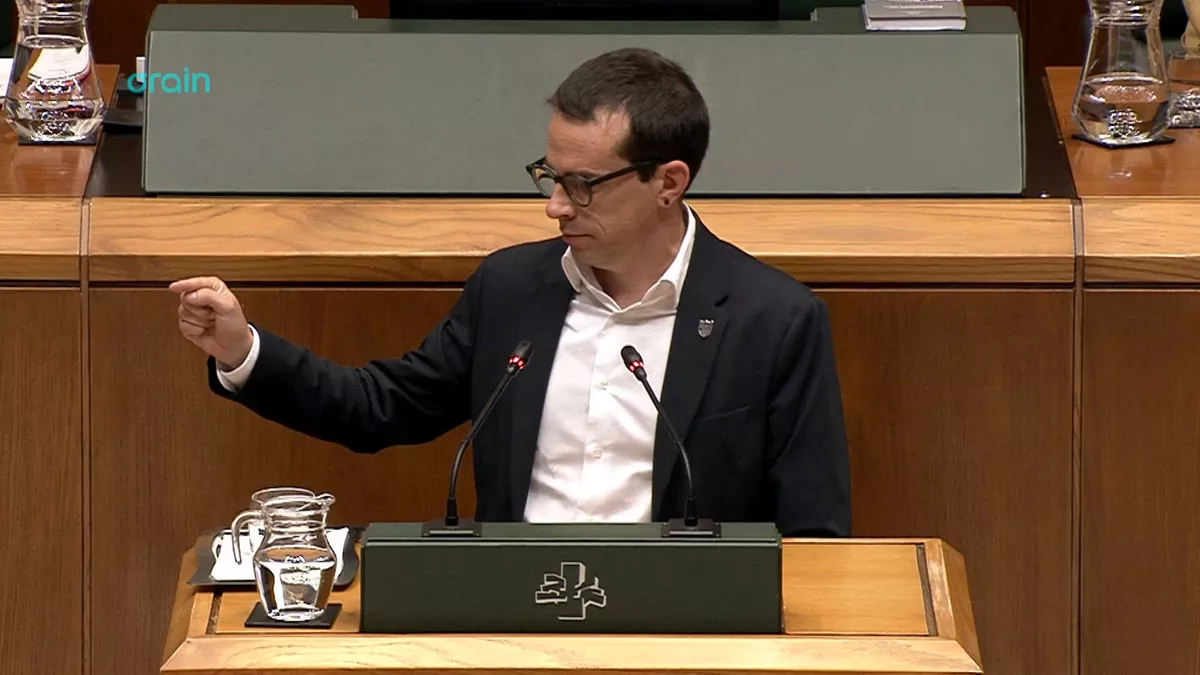
Meanwhile, PSE-EE leader Eneko Andueza has said that the new statute will have to fit within the Constitution, "or not."
He has acknowledged that his party has disagreements with the PNV, but has made it clear that the formula of collaboration between the two parties has given "stability" to the Basque Country and that they will continue to work on both. "Euskadi does not need noise or diagnosis, but decisions," he said.

For his part, the president of the Basque PP, Javier de Andrés, has been very critical of the lehendakari and has accused him of "mismanagement." "Success is not having more self-government, but managing well."
The popular leader believes that Pradales has been making "promises of transformation" for "too long."
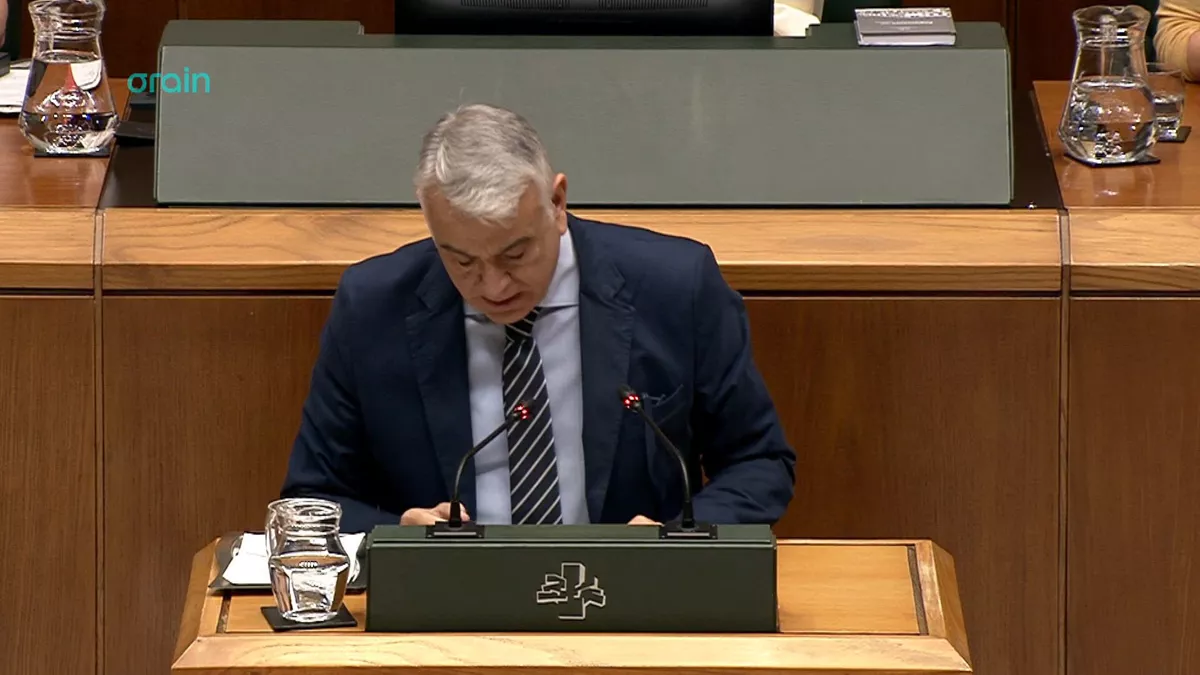
Since Sumar, MP Jon Hernández has complained that the Basque Government is moving "to the right" on social issues.

Finally, Vox MP Amaia Martinez has described the Pradales era as a "real failure" for the Basque Country, accusing it of "ruining" public services and "impoverishing" the Basque people.
He also said that crime has increased and that educational outcomes are declining.

You might like
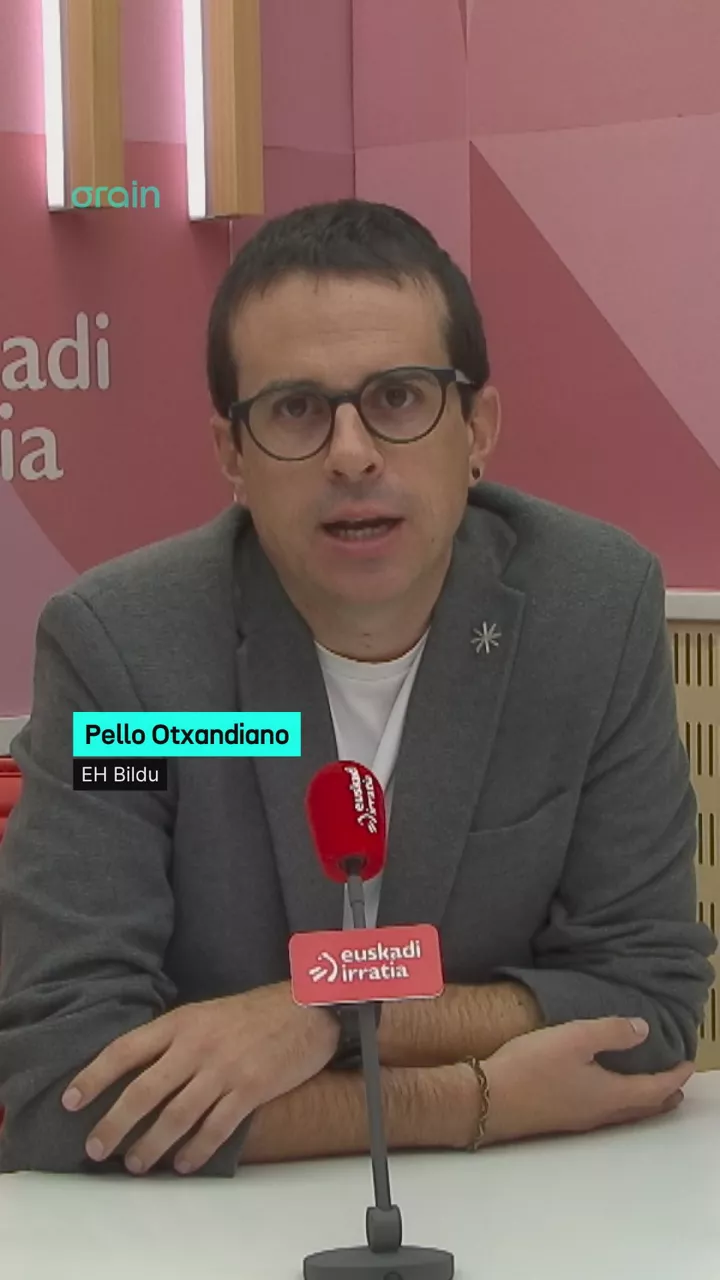
Otxandiano: "There are conditions for a major mobilization of the left"
The Official Gazette of Spain has already published the decree bringing the elections forward to 29 November
They will be news: electoral advance, housing decrees and the Bilbao Museum of Fine Arts
How will the parties get to the polls?
The TC provides for amnesty for the offence of embezzlement of public funds
The Public Prosecutor's Office has appealed the award of the third degree to Idoia Mendizabal

What Sanchez has not done: approve the 2027 budgets, comply with the Statute and complete the processing of various laws
What happened in the last legislature? Measures and laws adopted by the Government of Spain
Chivite, about the election: "We will mobilize and regovern."