Asymmetric checks (A2/B1, B1/B2, B2/C1...) are under way: What are they and how can they be verified?


The Basque language accreditation system will undergo a small revolution in the autumn. The Governing Council of the Basque Government has today approved the new model of accreditation of the knowledge of the Basque Country, which will be in force from the October call. The main novelty of this new model will be that asymmetric checks will also be offered for the first time.
As a result, from autumn onwards, it will be possible to certify the language level in one area and another competence in another, adding to the possibilities thus far.
A new system.
It should be remembered that until now the accreditation of a language level (A2, B1, B2, C1 and C2, according to the European Framework of Reference) had to be the same in four areas: reading comprehension, hearing comprehension, writing and speech.
For more than two decades, however, experts have begun to question the idea that a person should have the same level in all language skills. The idea of asymmetry, fully compatible withthe European Reference Framework, has been gaining weight, and in the autumn it will reach the Basque language certification system.
From the month of October asymmetric checks will make it possible to prove both oral and written skills without having to have the same level in all skills, so that if a person has different levels in writing and oral, these skills can be recognized more accurately.
For example, a person can have a level B1 in reading comprehension and writing, but a level B2 in hearing and speech.
Verification of admissibility
For the time being, the following checks will be offered: A2/B1 (reading and writing, A2; hearing and writing, B1); B1/B2 (reading and writing, B1; hearing and writing, B2); B2/C1 (reading and writing, B2; hearing and writing, C1); and C2/C1 (reading and writing, C2).
As the Basque Government has pointed out, this new system has a clear starting point: not all people develop language skills in the same way, and the accreditation system must respond to this reality.
Partial checks
Partial accreditation,a certification system adapted to persons with disabilities, shall also be accepted. In the event of a disability, the Government shall extend the possibility of submitting to this system in the event that a particular skill cannot be developed or accredited, in which case only written or oral skills may be accredited.
Thus, if a person with hearing impairment is unable to evaluate the hearing, he or she may prove his or her ability in written skills, and in cases where, due to other special disabilities or needs, it is not possible to evaluate a particular skill, he or she may also prove his or her written or oral abilities.
As explained by the Basque Government, the aim of this measure is to make the accreditation of the Basque language more accessible and to enable all people to recognise their skills.
Thus, beyond normal verifications, persons who pass the examination shall be certified according to their proven abilities, and in the case of asymmetric verifications, the certificate shall include the level of reading and writing comprehension and hearing and speech.
You might like

The TSJPV has ruled that the villa built by Xabi Alonso in Igeldo is legal
UPV/EHU will not renew its partnership agreement with CAF after five years of running
Lack of resources is the main cause of teacher stress in the ACV, according to a study
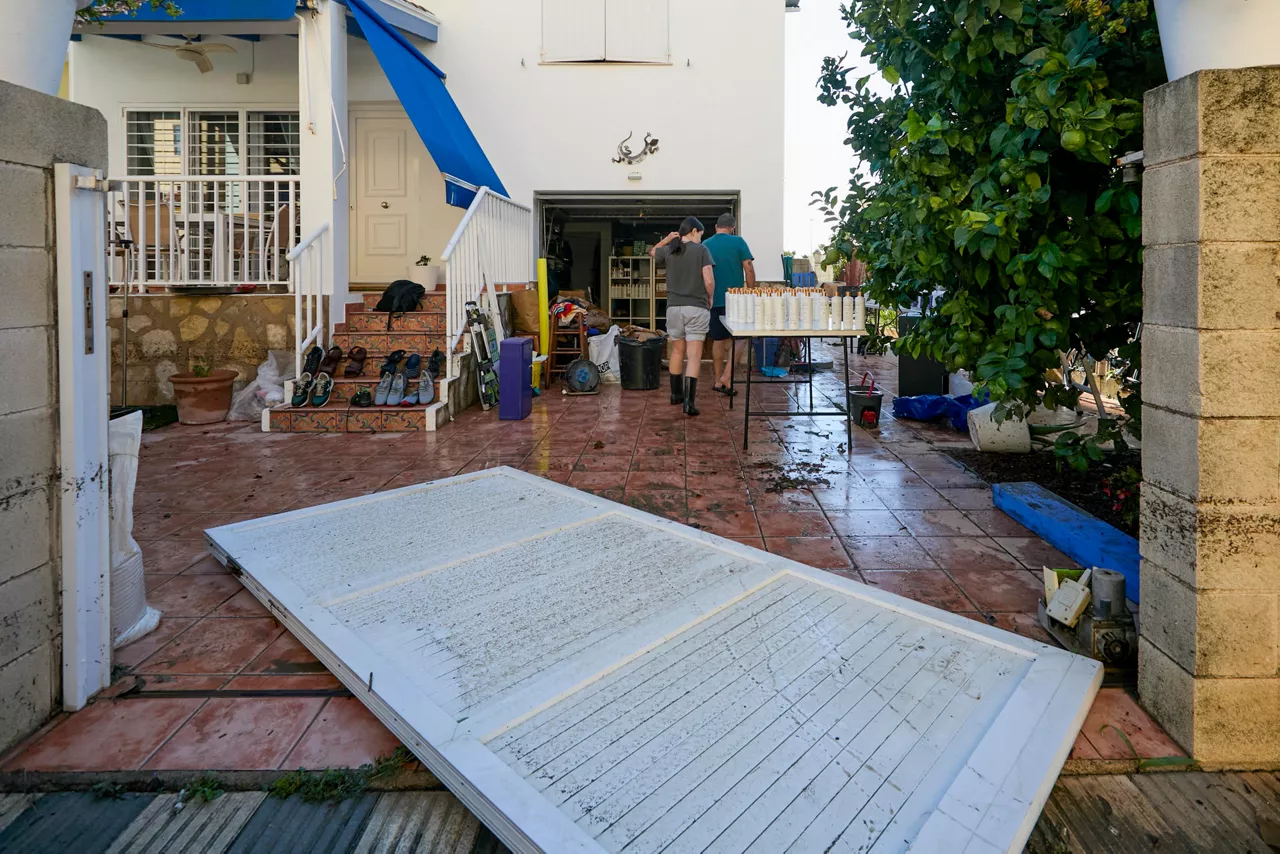
Residents are working to clean up the municipalities most affected by the isolated depression in the Adam Heights
Benta Berri residents will remain on protected rental terms
The Council will launch a virtual league between Guipuzcoan municipalities to promote healthy ageing

The storm has left two dead in Valencia, where the government is preparing a restraining order
The remains of Neanderthals have been found for the first time in Navarre in the caves of Abaunz

There will be news: Vaccinations in the ACV and flu vaccination in Navarre, Adam GOIDI and protests in France