A Guide to Safely Enjoying the Historic Eclipse That Will Cast The Basque Country Into Darkness
This Wednesday, August 12, there will be a total solar eclipse, a phenomenon that we haven't had since 1905. Here we will explain a number of things: where to see, how to watch times and how to watch our eyes, among other things.
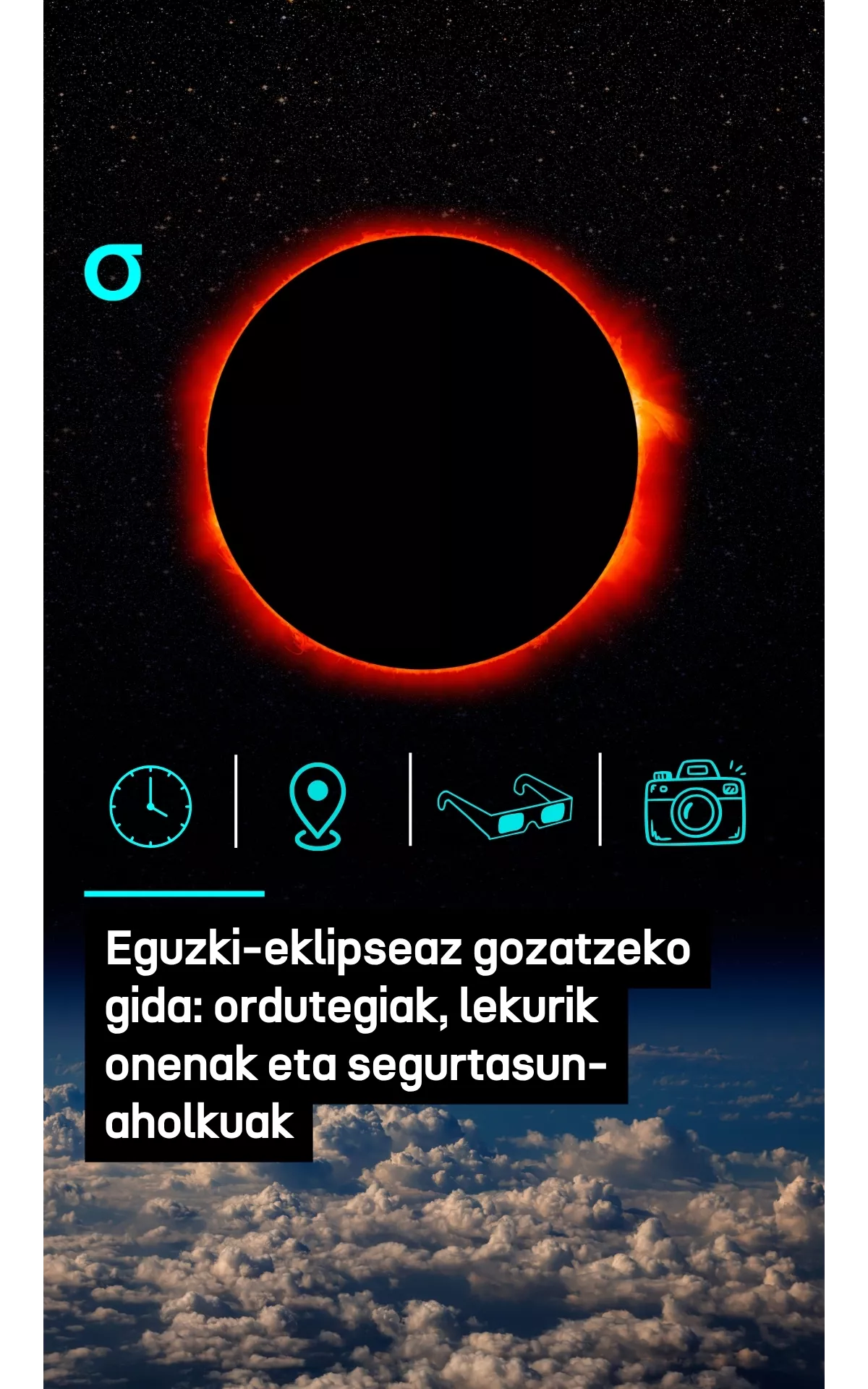

Withthe total solar eclipse that will leave the Basque Country in the dark this Wednesday, the 12th, we have a historic date. More than a century ago a complete eclipse was last seen in the Basque Country, and the next one will be in 375 years.
Next, we collect what the phenomenon consists of, the best viewing points for the eclipse, schedules and safety recommendations.
What is the eclipse and what will happen?
The total eclipse of the Sun is an astronomical phenomenon that occurs when the Sun, the Moon, and the Earth align perfectly and millimetrically. In a few minutes that will last, the light will almost completely disappear.
At the stage where the eclipse iscomplete, it is common for birds to stop tweeting, because they believe that night has come. On the contrary, nightbirds and amphibians activate their activity earlier than usual, and they may come out of their hideouts and start sounding.
Where will it look best?
Bilbao, Vitoria-Gasteiz and a large area of Bizkaia and Álava will be fullyvisible, while 99 % ofthe sun will be covered in Donostia, Pamplona and Baiona.

For detailed information on the visibility of each municipality (source: Instituto Geográfico Española), please refer to:
Because the event coincides with the end of the day, the Sun will be very low in the sky, so that it will be best seen from the place where the western horizon is perfectly clear, looking where the Sun is hidden.
Do not go to the valleys, and look for the coast or high places like Gorbeia, Urbasa, Bardenas, and cliffs.
In the event of travel to any of these wilderness areas, the authorities recommend that the route be planned in good time, arrive on time and, if possible, use public transport, since the observatories will be filled up to their necks.
The Ministry of Transport of the Spanish Government, Renfe, Aena and the DGT will deploy special security devices in anticipation of a significant influx.
The last time a complete eclipse was seen in the Basque Country was on 30 August 1905.
Schedules
The eclipse will begin at 7.31 p.m. and the darkest moment will be at 8.27 p.m.
Safety recommendations
Ophthalmology experts warn that looking directly at thesun can cause serious and irreversible damage to the eyes.
- Use approved glasses (EN ISO 12312-2: 2015). Sunglasses and X-rays are useless.
- Don't stare long: stop looking at me every three minutes.
- Take off your glasses at the time of total darkness, but only if you're in 100% range.
- If you're not in that area, don't take them off, because that 1% of light is dangerous to the eye.
- If you're gonna record it with your cell phone, put a filter on your lens, or you're gonna burn the camera.

The next eclipse will be in 375 years.
What if it happens you're driving?
If you are driving at the time of the eclipse, the DGT recommends following the following recommendations:
- Increase safety distance and adjust speed
- Don't use your phone or camera to capture images.
- Keep the short lights on until dark.
- Don't look straight at the sun, or watch the eclipse while you're driving.
- Use the vehicle umbrella, if necessary, to avoid glare.
- Reduced speed around observation points due to possible presence of pedestrians
Where to follow it live?
For those who prefer to enjoy both from home and outside the Basque Country, Oraine and EITBwill broadcast live from the best visible places in our territory.
On the other hand, in order to bring science closer to the citizens, the Basque Government has launched various exhibitions and outreach activities related to the eclipse , which are available on the website Eklipsea Euskadi.

What happens if the sky's not clear?
The Geographic Institute of Spain warns that not only the cloud, but alsothe height of these clouds, which, if there are fog on the horizon, may conceal the peak of the eclipse.
According to AEMET and IGN statistical models, the probability of clear skies on the cantabrian side during eclipse hours is between 35% and 45% (80% in the interior of the peninsula).
Euskalmet and Meteo Navarra will update detailed weather forecasts by municipality over the previous 48 hours.

You might like
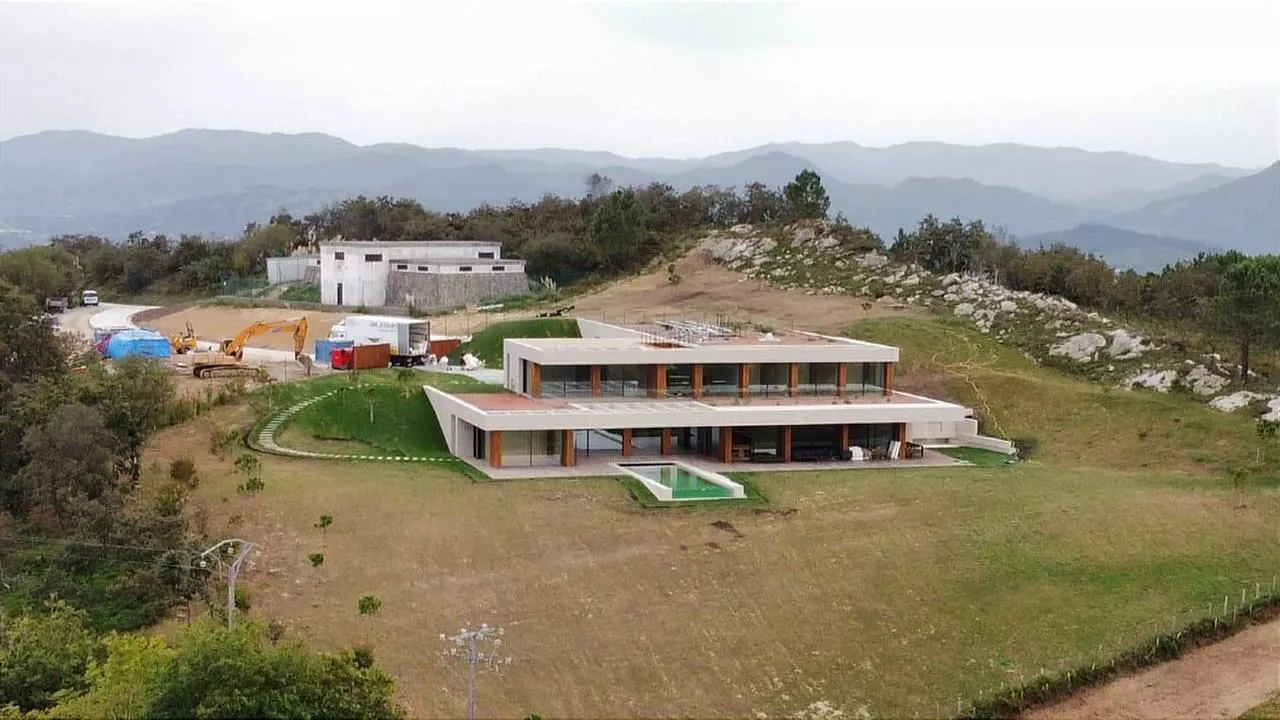
The TSJPV has ruled that the villa built by Xabi Alonso in Igeldo is legal
UPV/EHU will not renew its partnership agreement with CAF after five years of running
Lack of resources is the main cause of teacher stress in the ACV, according to a study
Residents are working to clean up the municipalities most affected by the isolated depression in the Adam Heights
Benta Berri residents will remain on protected rental terms

The Council will launch a virtual league between Guipuzcoan municipalities to promote healthy ageing
The storm has left two dead in Valencia, where the government is preparing a restraining order
The remains of Neanderthals have been found for the first time in Navarre in the caves of Abaunz

There will be news: Vaccinations in the ACV and flu vaccination in Navarre, Adam GOIDI and protests in France