
50 years since the events of Montejurra: the clash between carlists, Italian neo-fascists and... State complicity?
It was not only an internal conflict of carlism, but a conspiracy driven by the post-Franco powers behind the murders in Montejurra, along with other elements of the extreme right.

Images of events in Monterjurra. Photo: EITB Media

It was not only an internal conflict of carlism, but a conspiracy driven by the post-Franco power behind the murders in Montejurra.
The fact that the name of the Italian neo-fascist Stefano Delle Chiaie was linked to the events of Montejurra was enough to arouse suspicion: rather than an internal conflict, there were many obscure intrigues and interests behind what happened. Time has confirmed these suspicions.
Stefano Delle Chiaie was a dark figure, a well-known far-right militant and criminal whose name appears to be linked to some of the most violent operations and actions of the last decades of the 20th century. The coordinated repression of South American dictatorships in the context of Operation Condor, the actions of the Italian extreme right, the massacre of lawyers in Atocha... all include Delle Chiaie, directly or indirectly.
Before embarking on the criminal strategy of the Latin American dictatorships, Delle Chiai had a close and obscure relationship with the Basque Country. Since the late 1970s he had participated in various acts of dirty war against ETA, including the former member of the Algerian OAS Jean-Pierre Cherid, who had previously been in Montejurra on 9 May 1976, 50 years ago.
Events
Several chronicles of the time presented Montejurra as a clash between two branches of carlism: on the one hand, the supporters of Sixtus Enrique de Borbón, and on the other hand, the followers of Carlos Hugo de Borbón-Parma.
The Carlist sectors linked to the Traditional Communion — supporters of Sixto Enrique — shot their opponents in the context of the political romerie in Montejurra, which resulted in the shooting of two people, Aniano Jiménez Santos and Ricardo García Pellejero.
As the Minister of the Interior of the time, Manuel Fraga, put it, a "fraternal struggle."
Fracture in Carlism
The question, however, had a clear political component, related to the political and ideological fracture that was taking place in those years within the carlism.
On the contrary, the sector associated with the Carlist Party was increasingly shifting towards socialist, self-managed and federalist positions, seeking to join the workers' movement and anti-Francoism and, in the case of the Basque Country, to build closer ties with national clamors.
In Montejurra, followers of both tendencies clashed. "Instead of singing Oriamendi, they chanted International, Els Segadors and Gora Euskadi," a chronicle published by El Correo picked up.
Conspiracy
A book published in 1998 by journalist Santiago Belloch revealed the conspiracy "Operation Reconquista" based on testimonies from numerous sources.
The purpose of this conspiracy was to blow up the acts of Montejurra and to provoke a clash between the various branches of carlism. The main aim of the strategy was to weaken socialist and self-management carlism, while bringing the movement around Sixtus Enrique de Borbón closer to the orbit of the monarchy and the post-Franco powers.
The plan was supported by the SECED secret services created by Carrero Blanco and was approved by Minister Manuel Fraga and Chief Executive Carlos Arias Navarro.
In 2023, documents entitled "Papers of Ruiz de Gordoa", linked to the former civil governor of Navarre José Ruiz de Gordoa, confirmed the story. The events in Montejurra were not a spontaneous confrontation within the carlism, but an operation organized with the participation of state apparatus.
The role of Italian neo-fascism
Another aspect that has been fully confirmed over the years is the involvement of Italian neo-fascists and international anti-communist networks in this operation through mercenaries or militants. Josu Chueca, a former professor at the UPV and a doctor in history, made an important contribution to identifying them through photographs taken in Montejurra itself.
"They were international mercenaries working for the Ministry of the Interior. In the case of Jean-Pierre Cherid, he would continue to work for the State until 1983 on this type of action until the time of the GAL," ETB explained in a report on the occasion of the 50th anniversary of the events.
In the same work, Manuel Martorell, author of the book Carlistas contra Franco, highlights the responsibility of the higher levels of the State: "The Carlist Party opted for the political integration of Navarre into the Basque Country. And the fact that the only Carlist organization acted in this way did not amuse those of the Government of Arias Navarro."
Although they managed to identify the material perpetrators of the killings, they were all released following the 1977 amnesty. Stefano Delle Chiaie himself was identified as having been in Spain during the days of the operation, but was never convicted of the events in Montejurra.
In subsequent years he intensified his criminal activity, first in the Basque Country and then in South America. Before his death he published a memoir, obscuring his performance in a kind of "neo-fascist international".
You might like
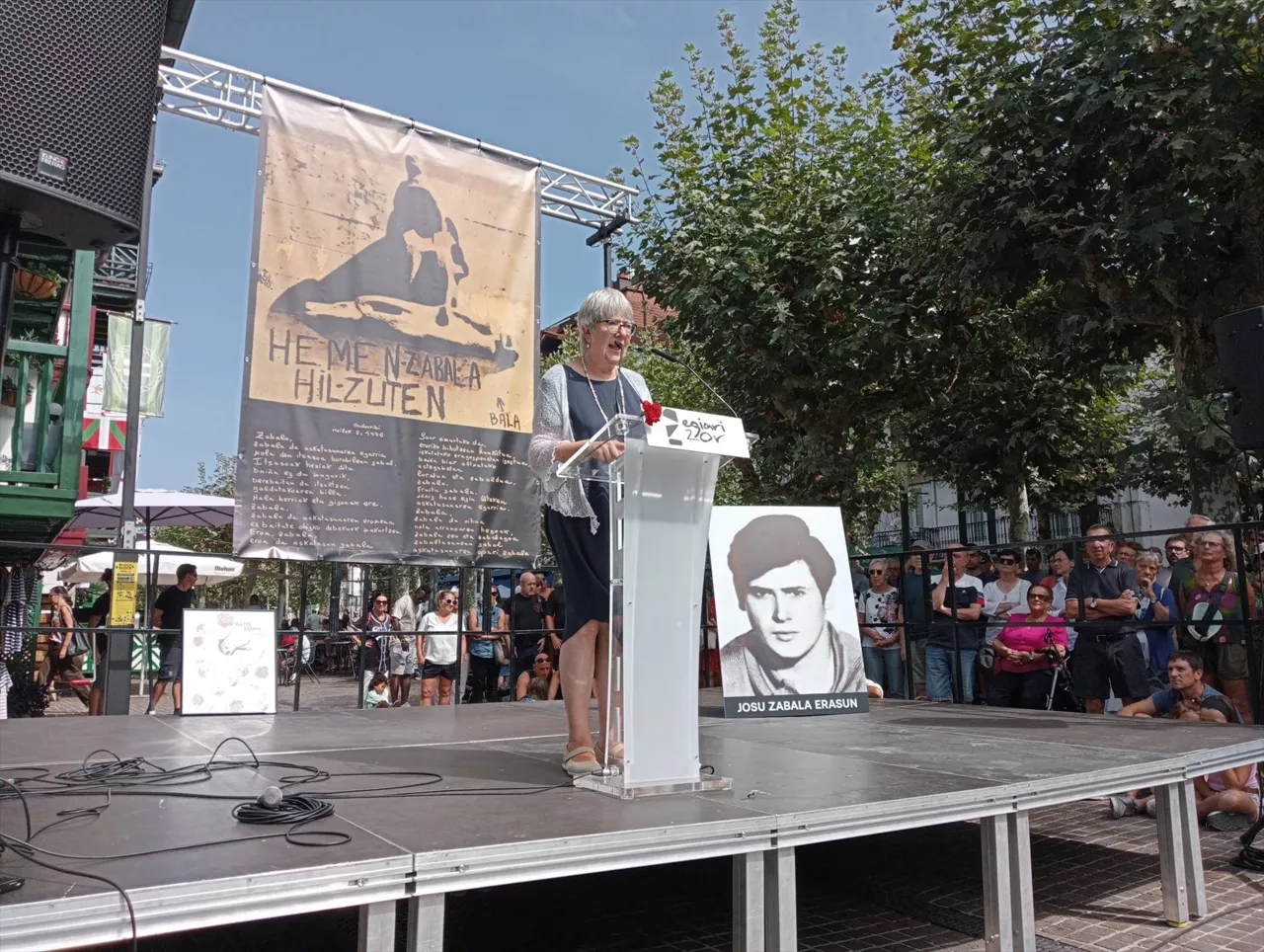
Josu Zabala Erasun was remembered in Hondarribia on the 50th anniversary of his death
Josu Zabala Erasun was shot dead by the Civil Guard in 1976 during a demonstration against the kidnapping of ETA member Eduardo Moreno Bergaretxe, 'Pertur'.
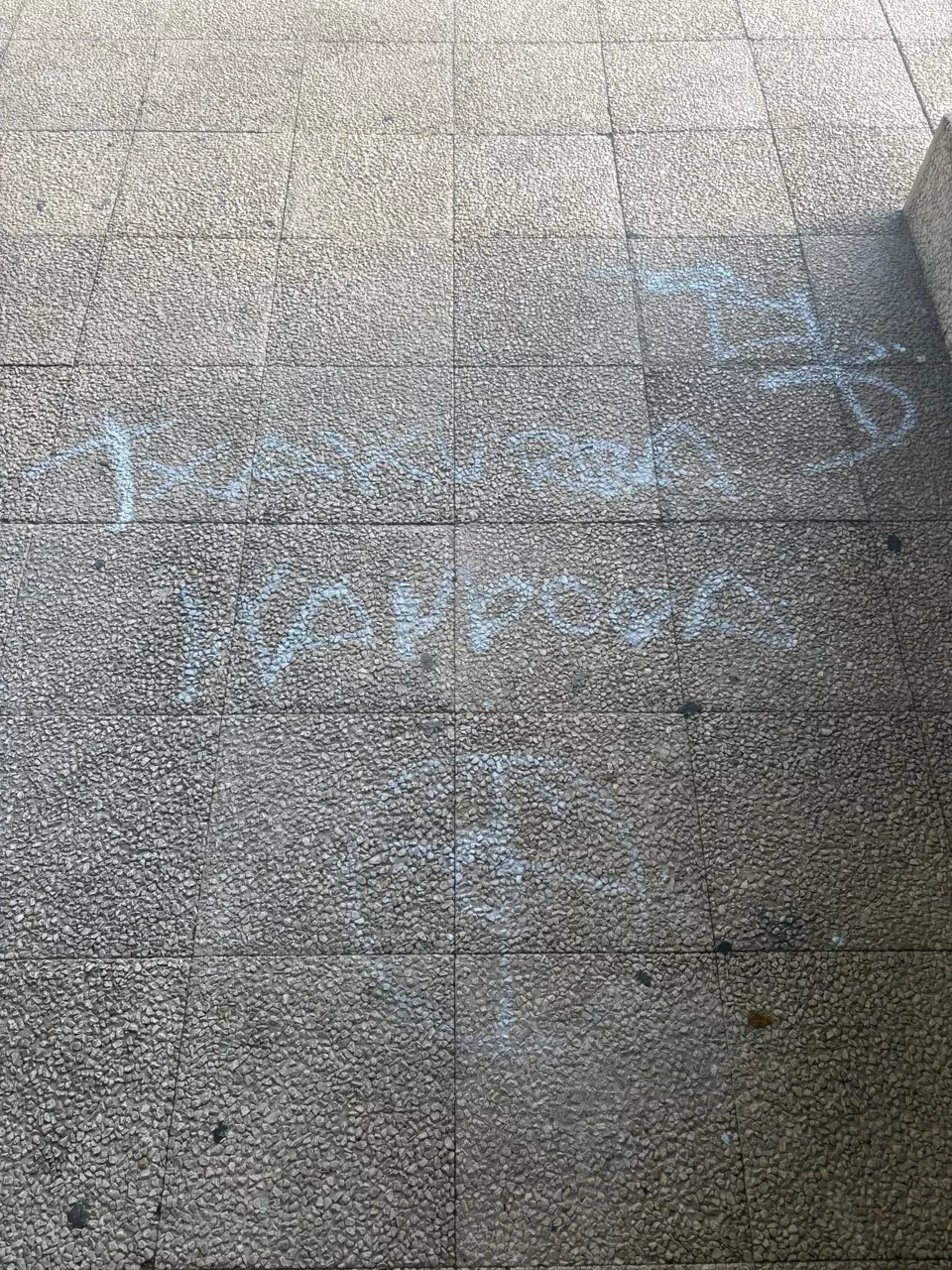
A painting against an ertzaina appears near his home in Vitoria-Gasteiz
The Department of Safety and Security has condemned "the threats and threats to the police, which recall past times and attack not only the said officer and the Ertzaintza, but also the foundations of democracy and coexistence".
Agirre has called for a "public repair" of Irura's Bat Palace on the grounds that "progress" is not enough
According to the mayor, for months the debate has gone beyond the legal issue, with very serious accusations being made against the people affected and against the PNV, so he has clearly said that it is not enough to leave what happened behind.
The President has assured us that there is no organized crime in the Basque Country today
Interviewed in the Faktoria programme of Euskadi Irratia, the President of the Basque Government, Imanol Pradales, has pointed out that the murders of recent years are mainly related to the deterioration of personal relations caused by drugs, addictions or gender-based violence, and has stressed that there is currently no organized crime in the Basque Country.
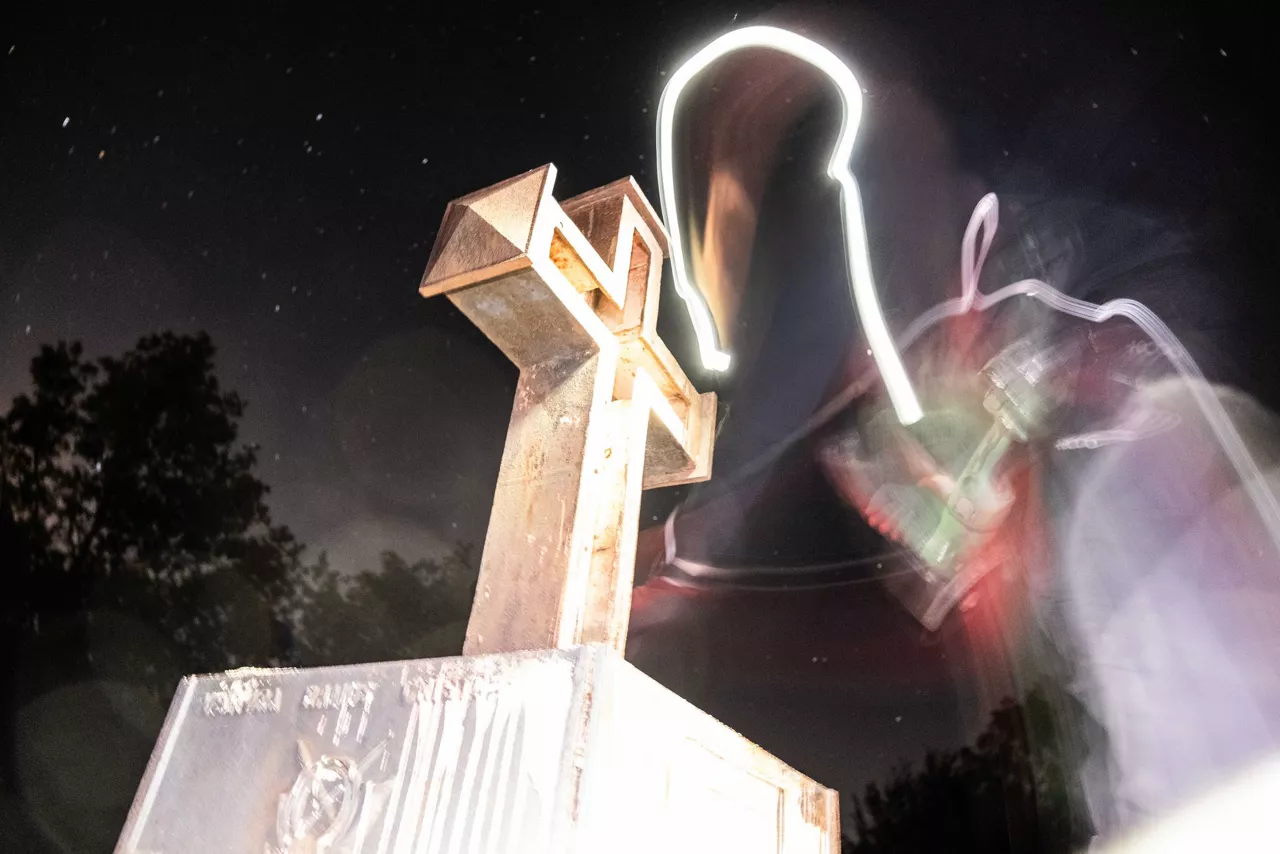
Ernai launches the Francoist cross of Mount Isuskitza
Ernai has shot down and videotaped the 1940 cross on Mount Isuskitza (Álava) in memory of the Franco requetés. The youth organization has claimed that fascism has no place in our country and has called for participation in the demonstration that will take place on 13 September in San Sebastian.

Nora Abete (PSE-EE) presents her candidacy for mayor of Bilbao
The current deputy mayor of the Bilbao City Council and spokesperson for the PSE-EE has explained that his candidacy stems from "proximity, listening and decision-making."
Gipuzkoa's Provincial Council will begin negotiating fiscal budgetary measures next week
Gipuzkoa MP Eider Mendoza has advanced her intention to start a round of talks with opposition groups to begin negotiations on the territory's budgets and some fiscal measures.
The President shall propose economic, self-government and housing agreements in his round of meetings with the parties and social partners
The meetings will take place from 8 to 15 September with the aim of strengthening dialogue and fostering partnerships in a context marked by international uncertainty and the electoral cycle of 2027.
Iker Casanova will again be EH Bildu's candidate for Bizkaia's MP
EH Bildu's Bizkaia Political Bureau believes that baracaldés is the right person to represent the project of left-wing sovereignty.
Zupiria believes that there is no political tint in the recent incidents between young people and the Ertzaintza
The Security Adviser of the Basque Government, Bingen Zupiria, has linked the incidents to young men, the consumption of alcohol and other substances and the "disinhibition" of night leisure. Asked about Ceuta, he regretted that Morocco was not asked to "assume its responsibility".